

 Phoenix 24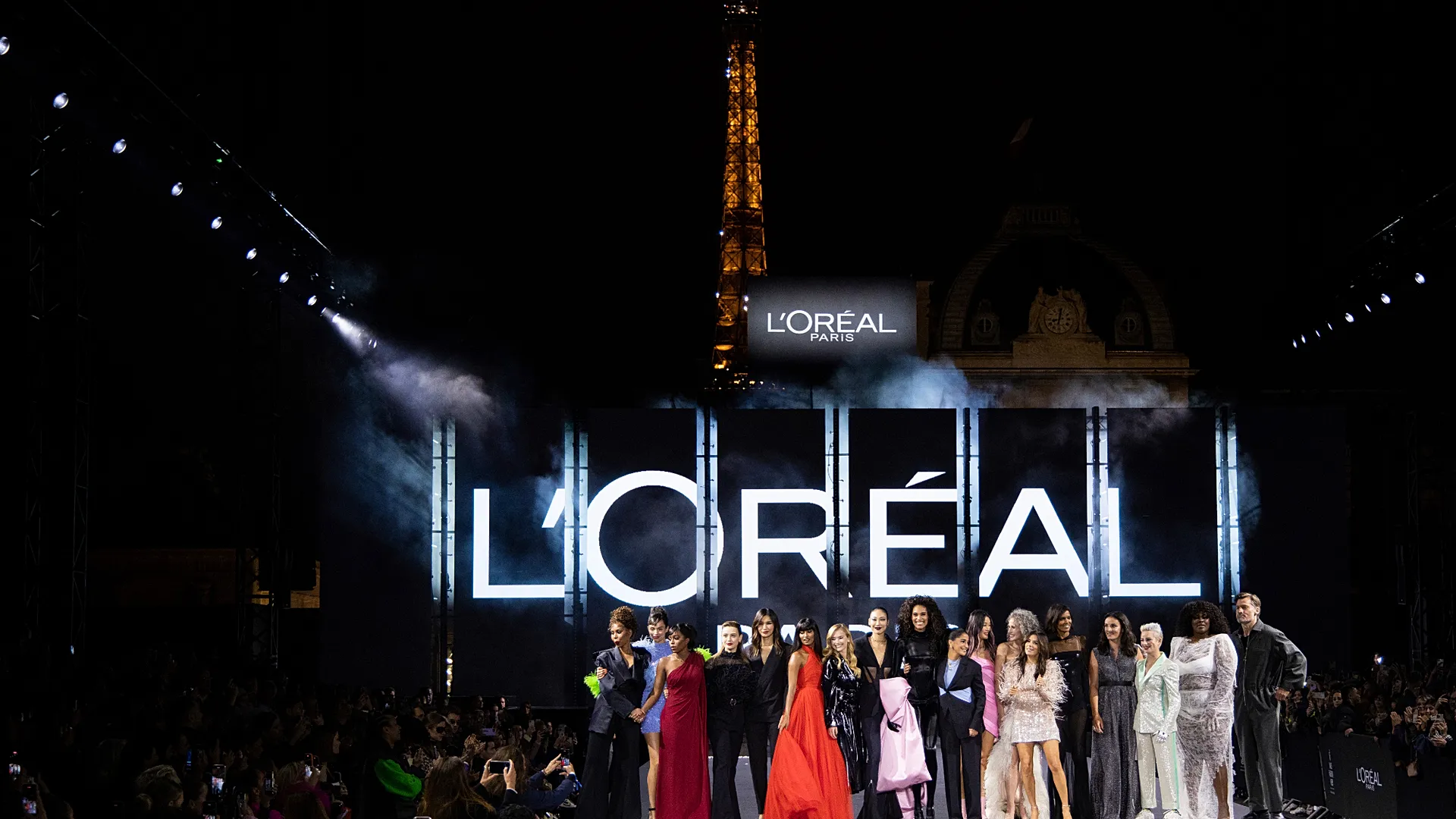
When fashion sheds its skin and beauty buys its soul, the balance of global luxury quietly shifts back to Paris.
Paris, October 2025.
Beneath the refined choreography of corporate diplomacy, a single transaction has redefined the balance of power in global luxury. The French cosmetics giant L’Oréal S.A. has reached an agreement to acquire the entire luxury-beauty division of Kering S.A. for €4 billion, absorbing high-end fragrance lines and the coveted licences tied to Gucci, Balenciaga, Bottega Veneta and Alexander McQueen.
The operation is not just another merger; it marks the quiet repatriation of beauty sovereignty to France. After years of fragmented alliances between fashion conglomerates and cosmetics empires, the deal consolidates L’Oréal’s dominance at the top of the beauty hierarchy while freeing Kering to refocus on its core business in fashion and leather goods.
Executives within Kering describe the move as an act of financial discipline. The group, which reported a €9.5 billion debt load by mid-2025, has faced declining margins amid an oversaturated luxury market. According to Luca de Meo, the new chief executive who took office in September, divesting beauty assets “restores agility and coherence” to Kering’s portfolio. Analysts at BNP Paribas Exane interpret the sale as a recalibration that allows the company to shed peripheral activities and reassert creative control over flagship fashion houses such as Gucci and Saint Laurent.
For L’Oréal, the logic points in the opposite direction. The acquisition includes the niche fragrance brand Creed, a gem in the ultra-luxury sector, and extends 50-year licences to produce and distribute fragrances and cosmetics under the fashion houses’ names once existing agreements with Coty Inc. expire in 2028. Specialists at the Peterson Institute for International Economics describe the purchase as a vertical reinforcement that enables L’Oréal to control every layer of luxury, from research laboratories in Clichy to haute-parfumerie boutiques in Tokyo.
From the standpoint of European industrial policy, the transaction also reflects the resurgence of Paris as a central axis of soft-power capital. The European Commission’s Directorate for Competition has issued a preliminary review but is not expected to oppose the acquisition. Behind the formality lies a broader ambition: positioning France as the uncontested global leader in high-end beauty and fragrance manufacturing, a field historically divided with Italian and American groups.
Market analysts note that the luxury-beauty segment continues to outperform mass cosmetics, with annual growth rates of nearly 11 percent driven by strong demand in the Asia-Pacific region and the Gulf. The Bank for International Settlements points out that fragrance, wellness and skincare remain among the few luxury sectors resilient to inflationary cycles. For L’Oréal, buying Kering’s beauty assets means securing long-term access to the most profitable niche consumers in the world.
Integration, however, will not be frictionless. Kering’s licences carry distinct brand philosophies that may resist assimilation into L’Oréal’s industrial rhythm. “The challenge will be to protect identity without flattening exclusivity,” said a consultant at the Centre for Luxury Research in Lausanne. If mismanaged, the consolidation could turn artisanal prestige into corporate uniformity, a paradox that haunts every luxury merger.
The cultural dimension is equally significant. Kering, steward of houses synonymous with avant-garde aesthetics, has traded intangible creative power for liquidity. “This is not merely a financial divestment but a psychological one,” observed a French fashion historian at Sciences Po. By contrast, L’Oréal’s absorption of luxury licences signals a shift toward beauty as empire, where branding merges with technology, sustainability and wellness innovation.
The acquisition also includes clauses for collaborative research in beauty-technology and longevity, linking L’Oréal’s biotech division with Kering’s design labs. Insiders refer to it as the silent birth of the wellness-luxury complex, a convergence of aesthetics, health and status consumption. The OECD Innovation Forum in Paris recently highlighted such partnerships as crucial to the next decade of European competitiveness.
Global markets reacted swiftly. L’Oréal’s stock climbed 4.3 percent on the Paris Bourse, while Kering’s rose 2 percent, signalling investor approval of the mutual redefinition. In Milan and Madrid, competitors such as Estée Lauder, LVMH and Puig began revisiting their licensing strategies, anticipating a wave of consolidation across the sector. Analysts at Reuters suggest this may trigger a continental correction that redistributes capital toward integrated European giants capable of competing with U.S. conglomerates.
Beyond financial charts, the deal exposes a deeper cultural truth. The centre of global luxury remains cyclical, and it has once again returned to France. From the perfumed salons of the Right Bank to the R & D hubs of Clichy, Paris has reclaimed its symbolic monopoly on the scent of aspiration. For Mexico, Brazil and other Latin American markets, L’Oréal’s expanded distribution network could reshape access to high-end cosmetics and alter the balance of regional exclusivity.
Ultimately, the €4 billion transfer is less a transaction than a strategic metamorphosis. Kering purifies its brand DNA by removing what does not wear fabric. L’Oréal fortifies its empire by mastering what cannot be worn but must be felt. Between them, the global luxury economy witnesses an exchange of souls disguised as corporate efficiency.
The gates of French luxury have shifted once again, and the scent of power lingers in the air.
Analysis that transcends power. / Análisis que trasciende al poder.