

 Phoenix 24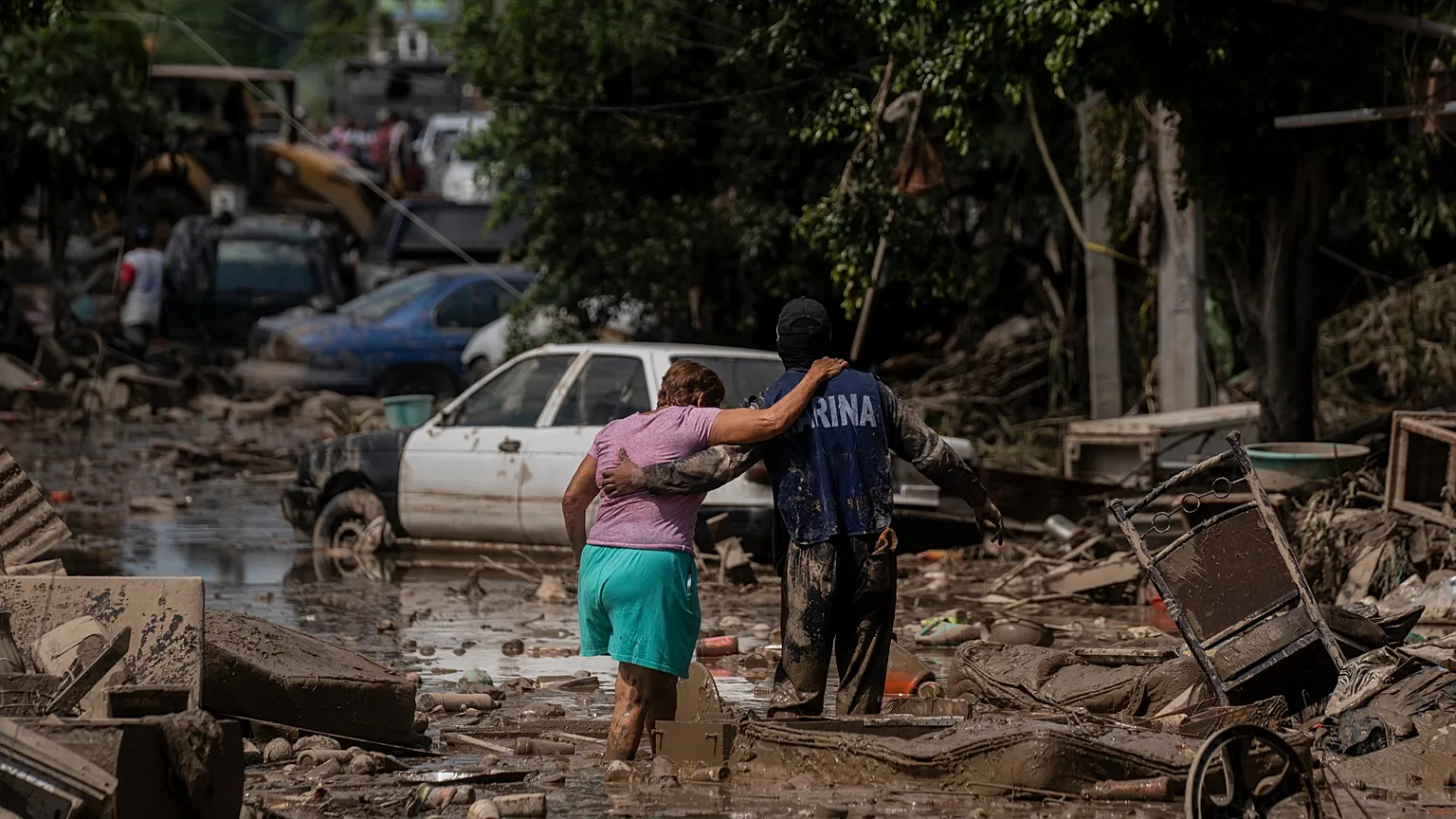
When rain stops being relief and becomes the border between life and loss.
Veracruz, October 2025
The torrential rains that swept across much of Mexico in recent days have left at least sixty-four people dead and more than sixty missing, according to data from the National Civil Protection Coordination. The states of Veracruz, Hidalgo, Puebla, and Querétaro recorded the highest number of victims, with entire communities cut off, homes destroyed, and thousands displaced amid mud and silence.
In Veracruz, the most affected state, more than twenty-nine thousand homes were damaged and eighty-one communities left isolated. The rainfall resulted from the interaction between Hurricane Priscilla and Tropical Storm Raymond, systems that although now dissipated released their power over infrastructure unable to withstand such intensity.
The federal government deployed an air bridge to deliver food, medicine, and emergency assistance. The president toured the devastated zones and promised that no family would be left behind. However, rescue teams admit that access to many areas remains almost impossible and that the risk of disease outbreaks increases with every passing hour.
The scale of the disaster reveals a troubling pattern. Mexico is facing increasingly violent and frequent climate events. Reports from the United Nations Development Programme and the Intergovernmental Panel on Climate Change warn that extreme rainfall in Latin America has risen significantly over the past decade, accompanied by growing social vulnerability.
In Europe, the State Meteorological Agency has reported a similar rise in extreme weather events across the Iberian Peninsula, while in Asia the Japan Meteorological Agency has documented a thirty-percent increase in torrential rains during the monsoon season. Climate change is no longer a projection but a tangible reality eroding the certainties of the twenty-first century.
Temporary shelters in Veracruz are housing nearly three thousand people, while nationwide there are more than five thousand displaced residents distributed across one hundred forty-six refuges. Reconstruction will demand a sustained effort. Repairing roads, power lines, and homes represents a cost that, according to World Bank estimates, could reach hundreds of millions of dollars.
Despite the tragedy, signs of resilience are emerging. In small riverside communities, residents have organized support networks, communal kitchens, and neighborhood brigades to help those most affected. Along the coast of Veracruz, fishermen and farmers have offered their boats to transport food and medicine to towns that remain isolated.
Once again, the country faces an uncomfortable question. How prepared is its infrastructure for an increasingly unpredictable climate. Prevention can no longer be secondary or delayed. The next storm, inevitable and perhaps even stronger, will test not only the state’s capacity to respond but also its political will to learn from disaster.
Phoenix24: truth is structure, not noise. / Phoenix24: la verdad es estructura, no ruido.