

 Phoenix 24
Her voice, rooted in rebellion and memory, now echoes across the global literary stage.
New York, October 2025
Argentine writer Gabriela Cabezón Cámara, one of the most provocative and original voices in contemporary Latin American literature, has been named a finalist for one of the most prestigious literary awards in the United States. The nomination marks a significant milestone not only for her career but also for the visibility of Spanish-language fiction in a literary market historically dominated by English-speaking authors.
Known for her sharp feminist perspective, her fearless exploration of identity and power, and her stylistic experimentation, Cabezón Cámara rose to international prominence with novels such as Las aventuras de la China Ironand La Virgen Cabeza. Her work blends political commentary, historical revisionism, and lyrical language to challenge conventional narratives of nationhood, gender, and colonialism. Critics have described her style as a fusion of literary sophistication and raw social critique, a hallmark that has positioned her as one of the essential figures of Latin America’s literary renaissance.

The recognition from the U.S. literary establishment represents a profound shift in the global cultural landscape. While Latin American literature has long been celebrated for magical realism and canonical authors like Gabriel García Márquez or Julio Cortázar, Cabezón Cámara’s work belongs to a new wave that refuses to be defined by past expectations. Her narratives engage directly with contemporary issues — from queer identity and class inequality to environmental destruction and indigenous resistance — bringing the region’s realities to audiences far beyond its borders.
The award for which she is nominated, often described as a “literary Pulitzer for international fiction,” has historically been dominated by Anglophone writers. The inclusion of a work originally written in Spanish — and deeply rooted in Argentine cultural and political context — signals a growing openness in the U.S. literary world to linguistic diversity and global perspectives. For publishers, it is also a recognition of the growing demand for translated literature, which has seen a remarkable surge in readership in recent years.
In Argentina, the news of her nomination has been met with widespread celebration. Literary critics and fellow authors view it as validation not only of Cabezón Cámara’s career but also of a broader shift in the country’s cultural exports. “Her writing dismantles stereotypes and forces us to see Latin America on its own terms, not through a colonial gaze,” said one Buenos Aires literary critic. “This nomination is as much about political imagination as it is about literature.”
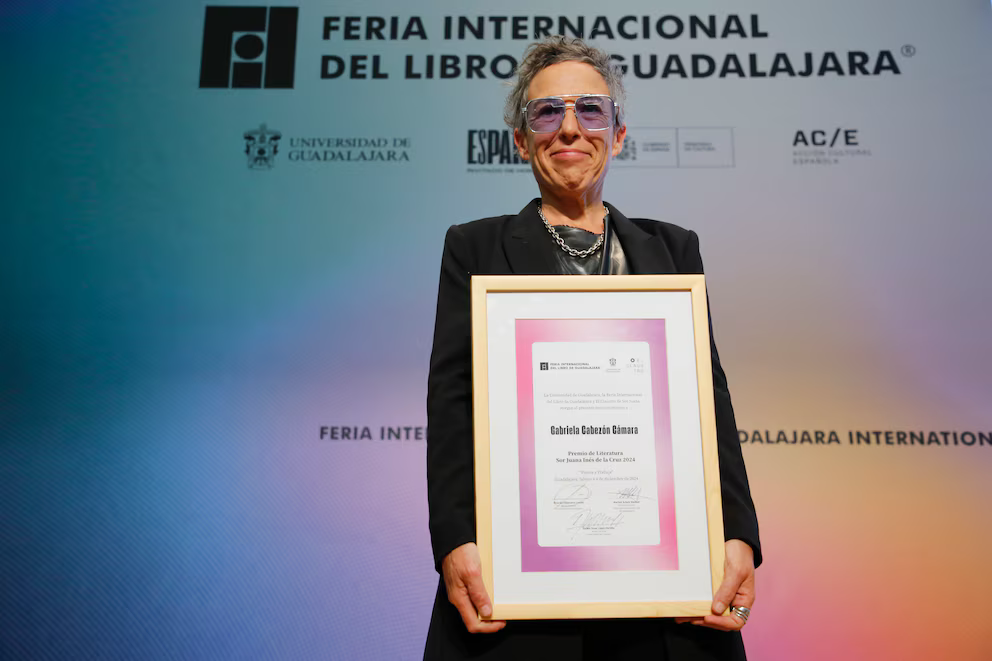
Cabezón Cámara’s own path has been anything but conventional. Initially trained as a journalist, she has long combined literary creation with activism, speaking out on issues ranging from gender-based violence to indigenous rights and environmental justice. Her storytelling is often intertwined with her political convictions, creating narratives that do not just entertain but provoke, question, and unsettle. This duality — the merging of art and activism — has become one of the defining characteristics of her work and one of the reasons it resonates with a global audience increasingly interested in literature that engages with urgent social questions.
Her nomination also reignites a larger conversation about the place of translation in world literature. For decades, language barriers have limited the reach of Latin American writers, with many works going untranslated or being adapted for foreign markets in ways that dilute their cultural specificity. Cabezón Cámara’s success suggests that audiences are now more willing to engage with narratives that do not conform to Western literary expectations and that retain their original political and cultural texture.
Beyond its symbolic value, the nomination could have tangible consequences for Latin American authors seeking broader recognition. Publishers are likely to see this as a signal to invest more heavily in translation projects, while literary festivals and academic programs may expand their focus to include more voices from the region. The result could be a more dynamic and pluralistic global literary scene, one that reflects the complexity of a world no longer centered solely on the English-speaking West.
For Cabezón Cámara, this recognition is not merely a personal triumph. It is a testament to the power of literature as a tool of resistance, a bridge between cultures, and a vehicle for transforming how societies understand themselves and each other. In her words, storytelling is “an act of rebellion, a way to carve space for those who have been erased.”
Whether or not she ultimately wins the prize, her place among the finalists ensures that her work — and, by extension, the voices of countless Latin American writers — will continue to challenge and enrich global literary discourse. And in doing so, Gabriela Cabezón Cámara reminds us that literature is not just about words on a page. It is about whose stories get told, whose voices are heard, and whose imaginations shape the future.
Beyond the news, the pattern. / Más allá de la noticia, el patrón.