

 Phoenix 24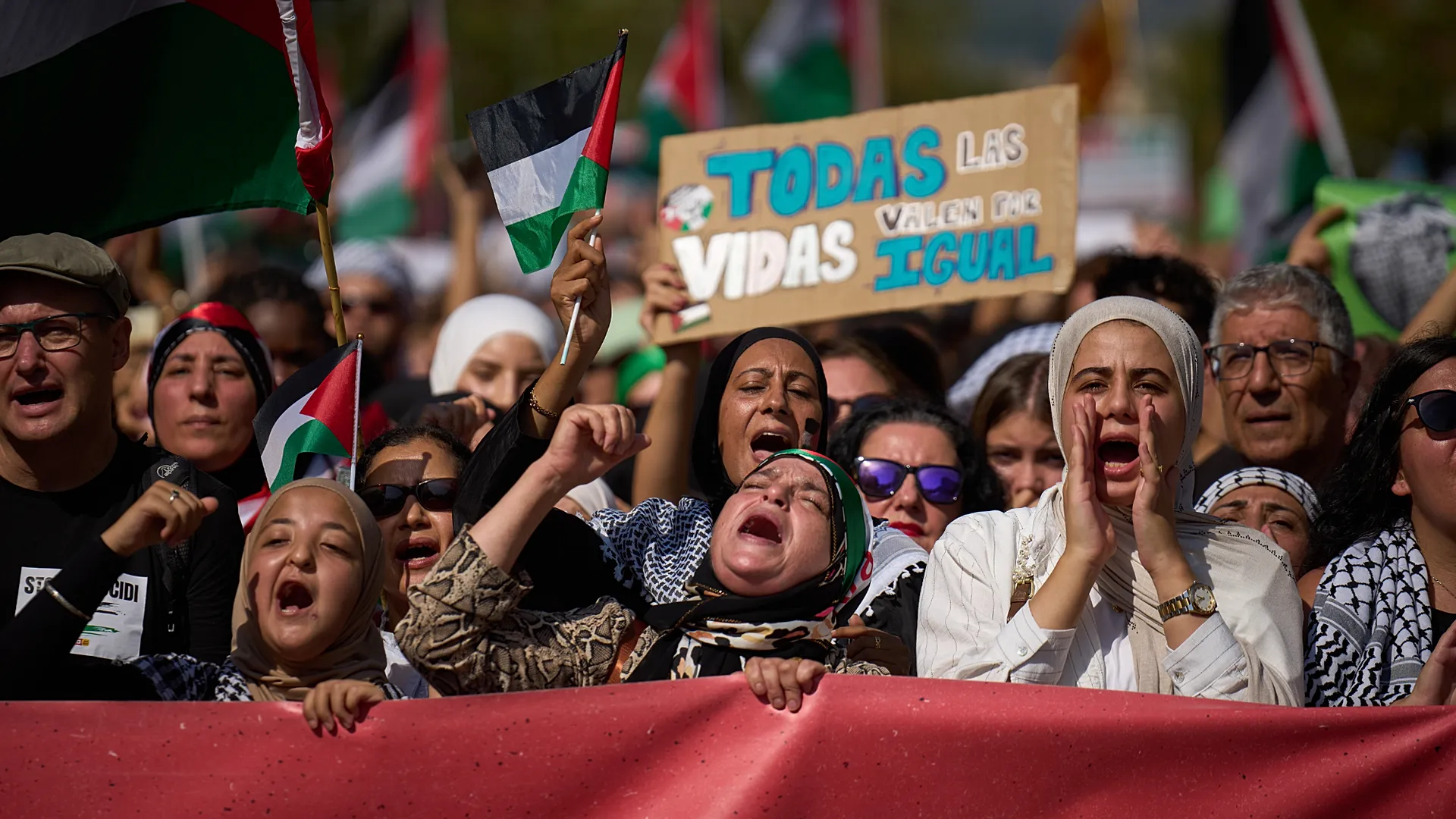
A sea of mourners dressed in black swept through the heart of Barcelona, their chants echoing against the facades of the city as a call for justice and liberation reverberated far beyond Spain’s borders.
Barcelona, October 2025. Tens of thousands of demonstrators flooded the streets of Catalonia’s capital to protest Israel’s ongoing occupation of Palestinian territories and to demand the immediate release of the Global Sumud Flotilla, recently intercepted in the Mediterranean. Local police estimated attendance at around seventy thousand people, while organizers claimed the figure exceeded three hundred thousand. The march, organized by more than six hundred unions, civil associations, and solidarity groups, began on Passeig de Gràcia and wound through the city’s historic center before converging at the Drassanes, where a permanent solidarity camp remains in place.
Participants marched in silence or chanting slogans that have become symbols of resistance: “Free Palestine,” “Boycott Israel,” and “From the river to the sea.” At the Arc de Triomf, Natàlia Abu-Sharar, president of the Palestinian Community in Catalonia, addressed the crowd, denouncing what she described as “a plan of extermination disguised as peace negotiations” and calling for international sanctions and a complete diplomatic break with Israel.
The movement was not confined to Barcelona. Similar demonstrations erupted in cities across Spain, including Pamplona, Seville, León, and Santander. In Seville, prominent cultural figures joined the march, while in León members of the Socialist Party demanded “an immediate end to what is undeniably genocide.” In Pamplona, the president of Navarra walked alongside demonstrators holding banners calling for an economic boycott of Israel.
The protests come amid escalating diplomatic pressure on Madrid to take a stronger stance on the conflict. Human rights groups and civil society organizations have accused the Spanish government of failing to act decisively as Israeli military operations intensify in Gaza. Political analysts in Madrid argue that the protests highlight a widening gap between public sentiment and official policy. The people, they say, see inaction as complicity.
For many demonstrators, the interception of the Global Sumud Flotilla — a civilian convoy attempting to deliver humanitarian aid to Gaza — served as a catalyst for renewed mobilization. Activists argue that the raid was not only a military operation but also a symbolic attempt to suppress global solidarity. Protesters contend that by targeting a civilian initiative, Israel sought to delegitimize a movement that poses a political challenge rather than a physical threat.
The symbolism of mourning attire was deliberate and deeply political. Marchers sought to embody collective grief, not just for the thousands of Palestinians killed since the war began but also for the silence of the international community. Many banners carried a dual message: condemnation of Israeli actions and criticism of European governments for their perceived passivity. The call for action extended beyond demonstrations, urging European states to suspend arms sales, apply targeted sanctions, and push for accountability in international courts.
Observers noted the diversity of the mobilization. Labor unions, human rights organizations, feminist collectives, youth movements, and unaffiliated citizens formed a united front without a single party or leader dominating the narrative. That pluralism, analysts suggest, lends the movement a moral weight that makes it harder for political institutions to dismiss or neutralize.
Sunday’s protest was more than a show of solidarity; it was a strategic message aimed at multiple audiences. It warned Israel that public opinion in Europe is shifting. It told European governments that their diplomatic caution has consequences. And it reminded the world that even amid geopolitical paralysis, civil society retains the power to shape discourse and influence policy.
As the chants faded into the night, one truth remained: the streets of Barcelona, dressed in mourning, had become an arena where memory, resistance, and political will converged. The demand was clear — end the occupation, free the flotilla, and restore a path to justice that has been blocked for far too long.
More than news, the pattern. / Beyond the news, the pattern.