

 Phoenix 24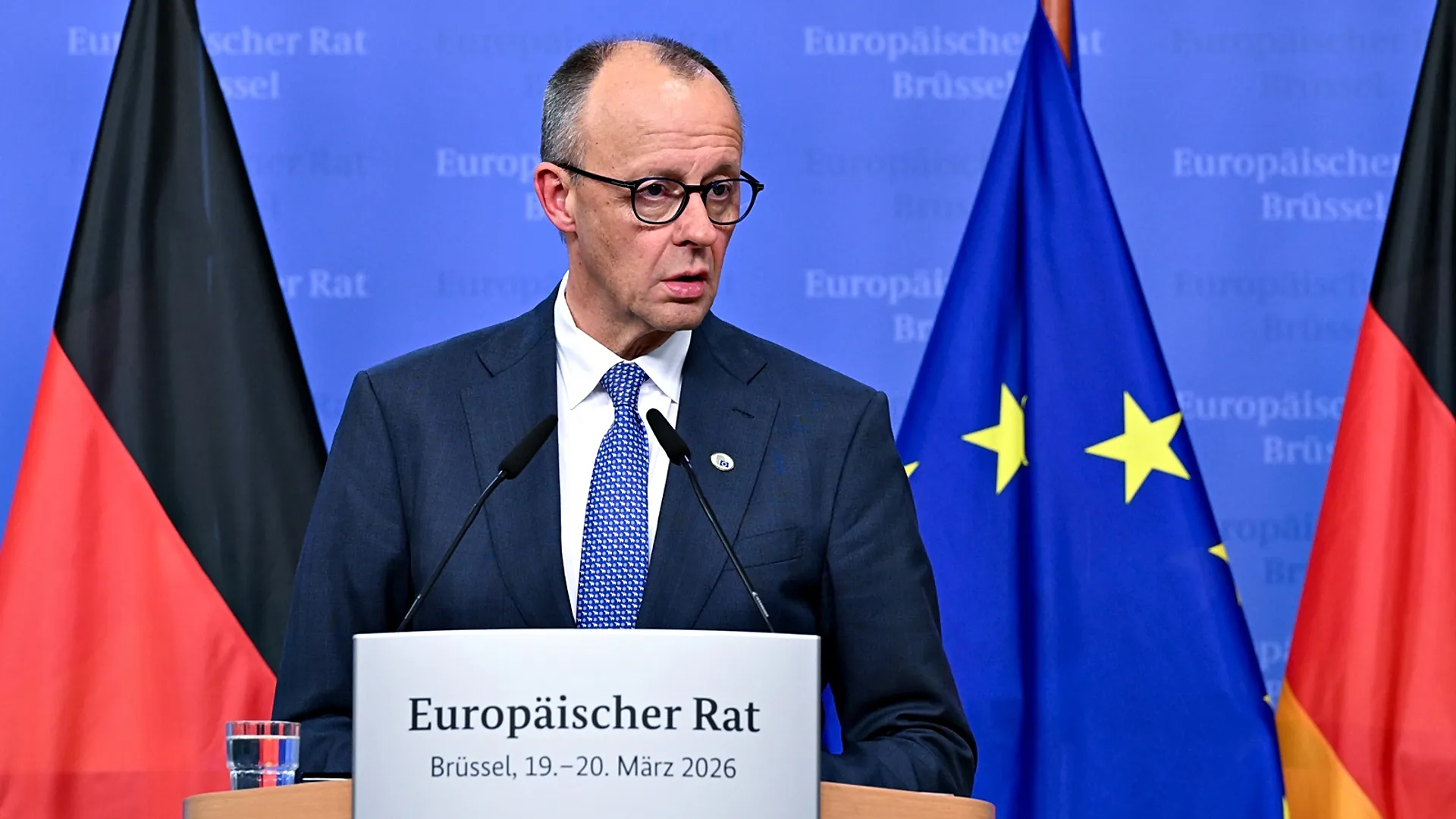
Europe’s promise now carries a harder price.
Brussels, April 2026. German Chancellor Friedrich Merz has opened one of the most delicate debates in Europe by suggesting that Ukraine’s path toward European Union membership could eventually be linked to territorial concessions in a peace settlement with Russia. His remarks landed at a moment of diplomatic compression, with Kyiv pressing for a clear accession timetable and Brussels trying to balance political solidarity with the legal and institutional weight of enlargement. Merz argued that Ukraine’s proposed entry date of January 2027 is unrealistic, and he went further by stating that even January 2028 does not appear feasible while the country remains at war. The message was not simply procedural; it reframed EU accession as part of a broader geopolitical negotiation over borders, sovereignty and the limits of Western commitment.
The most sensitive element in Merz’s position was the suggestion that a future ceasefire or peace treaty could leave parts of Ukraine outside Ukrainian control. Around one fifth of Ukrainian territory remains under Russian occupation, making any discussion of territorial loss politically explosive for Kyiv and strategically alarming for countries bordering Russia. Merz indicated that if such an agreement were ever placed before the Ukrainian public, President Volodymyr Zelensky might need a referendum to legitimize it domestically. That formulation shifts the debate from battlefield endurance to democratic consent, placing the moral burden of peace not only on leaders but on a society that has paid for resistance with territory, infrastructure and lives.
Zelensky has rejected any symbolic or diluted version of EU accession, insisting that Ukrainian soldiers are not defending Europe symbolically but physically. His argument is designed to prevent Brussels from converting Ukraine’s candidacy into a political gesture without institutional consequences. Kyiv wants full membership, a clear timeline and the opening of negotiations without artificial delay. For Ukraine, the EU is not merely a market or a regulatory bloc; it is the strategic architecture through which postwar survival, reconstruction and security guarantees could acquire permanent form.
The European Union, however, remains trapped between historic obligation and procedural rigidity. The European Commission has not approved a fixed accession date, maintaining that enlargement is based on merit, reforms and unanimous approval by member states. Ursula von der Leyen and António Costa have praised Ukraine’s reform efforts but warned against artificial deadlines, reinforcing the institutional line that accession cannot be reduced to wartime symbolism. This creates a contradiction at the center of Europe’s Ukraine policy: the bloc politically treats Ukraine as part of Europe’s future while legally maintaining the slow machinery of candidate-state discipline.
Merz’s alternative idea of offering Ukraine observer status inside EU institutions without voting rights reflects that contradiction. It would give Kyiv a visible place in Europe’s political architecture while withholding the full sovereignty-sharing rights that come with membership. The proposal may appear creative, but it also risks creating a second-tier European identity at the exact moment Ukraine is asking to be treated as a full member of the democratic order it claims to defend. For Kyiv, observer status could become a diplomatic waiting room; for Brussels, it could become a pressure valve to avoid immediate enlargement decisions.
The territorial dimension changes the stakes entirely. If EU membership becomes implicitly connected to a peace formula that freezes Russian gains, the bloc would face accusations of turning accession into compensation for territorial loss. Moscow is reportedly pressing for recognition of occupied territories as Russian in practice and for Kyiv to surrender remaining parts of Donbas it does not control. Zelensky’s rejection of that logic is rooted in a broader legal principle: rewarding aggression would weaken international law and set a precedent that force can redraw borders if the political cost is eventually normalized.
The debate also exposes Germany’s evolving role inside the European security order. Merz is not merely commenting on accession mechanics; he is signaling how Berlin may seek to shape the endgame of the war through controlled realism rather than maximalist declarations. That posture may appeal to governments worried about enlargement fatigue, fiscal exposure and permanent confrontation with Moscow. But it also risks unsettling Eastern European states that see territorial concession not as realism, but as the first stage of future coercion.
For the European Union, Ukraine has become both a candidate country and a test of strategic credibility. If Brussels accelerates accession without resolving institutional, agricultural, budgetary and security questions, it risks internal fracture. If it delays too long or offers only symbolic integration, it risks confirming the perception that Europe can praise sacrifice without absorbing its consequences. The problem is not only whether Ukraine can enter the EU, but whether the EU can politically survive the meaning of bringing a large, wounded, militarized and partially occupied state into its core.
Merz’s remarks therefore mark more than a diplomatic controversy. They reveal a deeper shift from the moral language of solidarity toward the transactional grammar of postwar settlement. Ukraine’s European future is now being discussed not only in terms of reform benchmarks and institutional chapters, but also in relation to ceasefires, referendums, occupied territories and the price of ending war. That is the hardest turn in Europe’s Ukraine debate: the promise of belonging is beginning to collide with the geography of loss.
Behind every datum, there is intent. Behind every silence, a structure.