

 Phoenix 24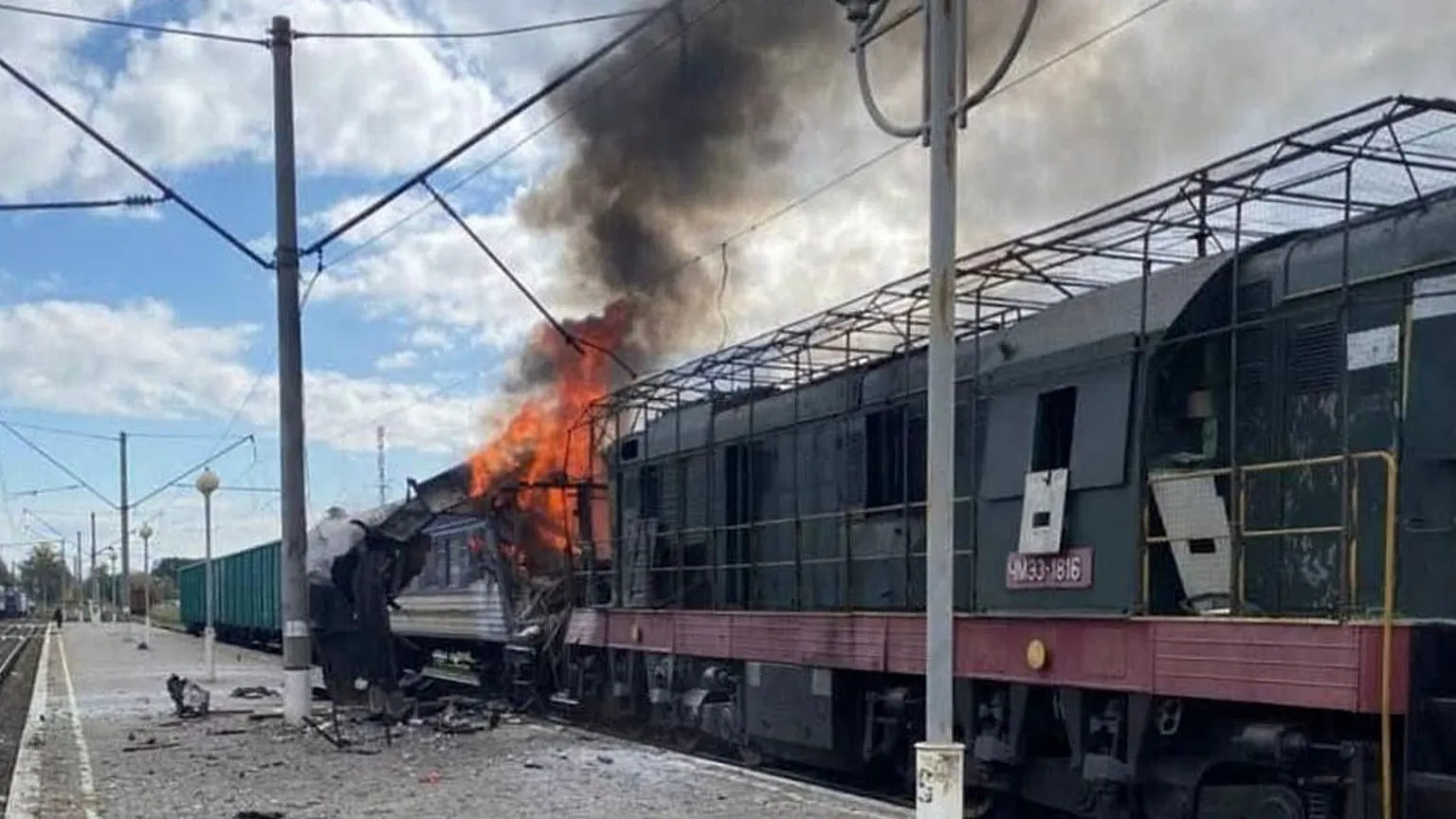
The whistle of incoming drones shattered the quiet of a routine afternoon, transforming a civilian railway hub into a scene of fire, panic, and shattered steel.
Shostka, October 2025. The northern Ukrainian city near the Russian border awoke to devastation after a series of Russian drone strikes targeted its main railway station, injuring more than thirty people and leaving the transport artery in ruins. According to Ukrainian authorities, the assault unfolded in two waves. The first barrage struck trains and platforms filled with passengers. The second hit minutes later, just as rescue teams and firefighters arrived, magnifying the casualties and sparking uncontrollable fires across the facility.
President Volodymyr Zelensky condemned the strike as “savage” and “deliberate,” accusing Moscow of systematically targeting civilians and first responders. Emergency services reported that several train cars were destroyed, tracks were severely damaged, and power lines feeding the station were knocked out. The resulting fire spread rapidly through nearby structures, forcing evacuations and shutting down a critical transport route used for both civilian mobility and military logistics.
The attack follows a disturbing strategic pattern that Western security analysts have been tracking for months. According to the European Council on Foreign Relations, Moscow has increasingly relied on kamikaze drones and ballistic missiles to disrupt Ukraine’s infrastructure, aiming to cripple supply chains and weaken public morale. Ukrainian air defense units reported that a total of 109 drones and three Iskander ballistic missiles were launched overnight. At least 73 drones were intercepted, but those that penetrated the defenses struck rail networks, energy infrastructure, and residential areas.
The Pentagon condemned the assault and reaffirmed Washington’s commitment to bolstering Ukraine’s air defense capabilities. The British Foreign Office described the strikes as war crimes and pledged to document them for submission to the International Criminal Court. Meanwhile, Japan’s Ministry of Foreign Affairs denounced the targeting of civilians as a “gross violation of international law” and urged stronger coordinated sanctions against Moscow.
For Ukraine, the consequences go beyond immediate destruction. The Ministry of Infrastructure reported that at least five trains are now out of service, and several major routes remain suspended until further notice. Emergency crews continue to battle fires and clear debris, though officials warn that full restoration of services could take weeks. The station’s destruction also poses logistical challenges for the Ukrainian military, which relies heavily on the rail network to transport troops and equipment to the eastern front.
Human rights organizations including Human Rights Watch and Amnesty International condemned the strike, highlighting that deliberate attacks on rescue personnel violate the Geneva Conventions. They also warned that the so-called “double-tap” tactic — striking once to hit civilians and again to target responders — has become an increasingly common feature of Russia’s campaign. Such tactics, they argue, aim not only to maximize casualties but also to spread fear and disrupt emergency response capacity.
Military observers in Brussels and Seoul noted that the Shostka strike reflects a broader evolution in warfare, where civilian infrastructure is deliberately targeted to achieve strategic ends without direct confrontation. The destruction of railway systems is particularly significant, as these networks remain the backbone of Ukraine’s logistical resilience. By dismantling them, Russia seeks to slow troop movements, disrupt aid distribution, and weaken public confidence in the state’s ability to protect its people.
The devastation in Shostka is more than another entry in the long list of Russian attacks. It is a calculated strike against the daily life of a nation under siege. Every halted train, every blackened railcar, every passenger caught in the flames is a reminder that the conflict is not confined to the front lines. The battle extends into the spaces where civilians travel, work, and live. And as long as those spaces remain targets, the war will continue to wage not only on the battlefield but in the heart of Ukrainian society.
Phoenix24: clarity in the grey zone. / Phoenix24: claridad en la zona gris.