

 Phoenix 24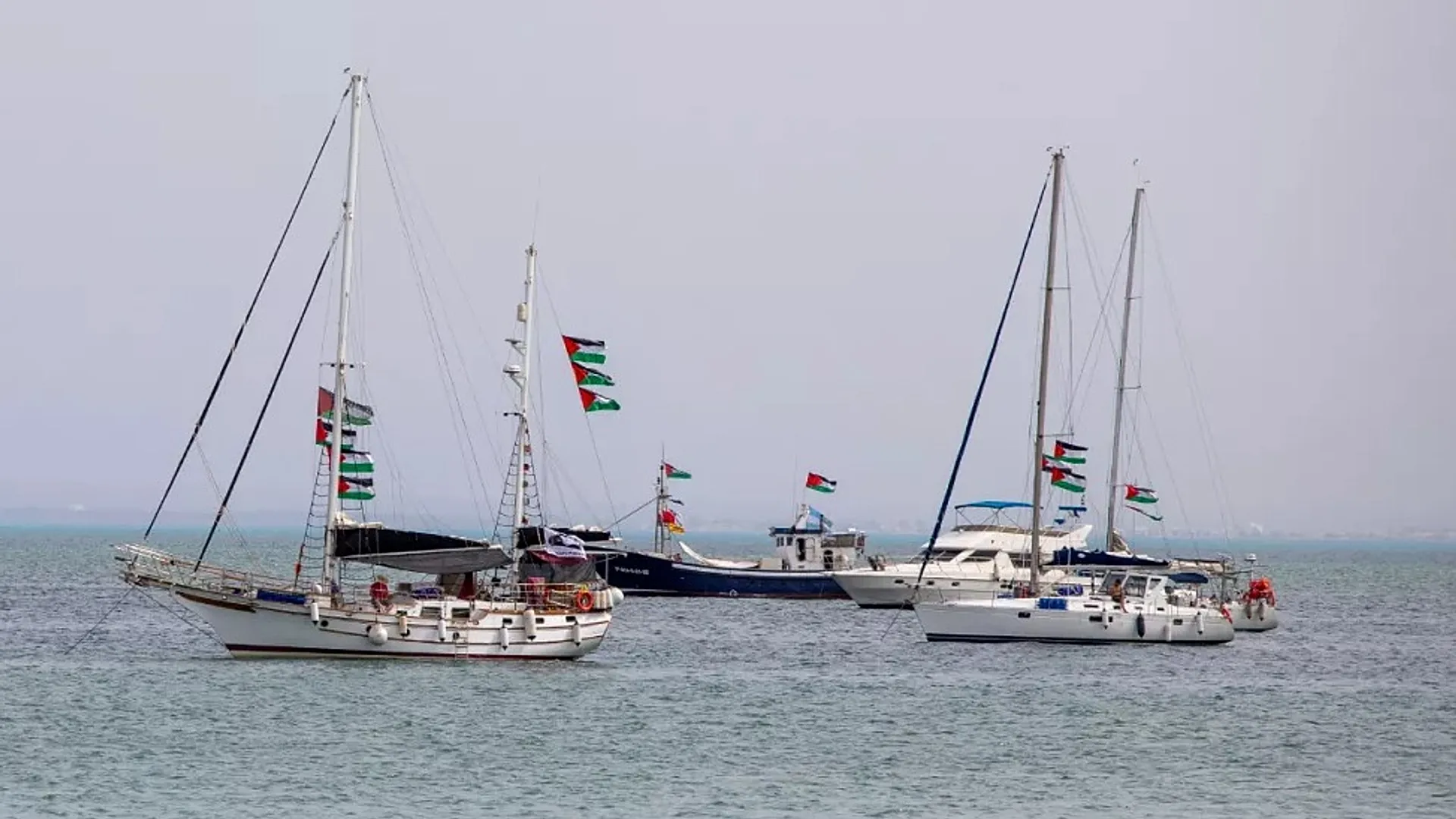
When streets halt in protest, their silence becomes a weapon sharper than any speech.
Rome, October 2025
Italy entered a state of paralysis as a nationwide strike spread across the country in solidarity with Gaza and the humanitarian flotilla approaching the besieged enclave. Coordinated by trade unions, civil organizations, and activist networks, the mobilization shut down transportation, schools, and public services, transforming cities into arenas of political expression. At the heart of the movement lies a powerful warning: any attempt to attack or block the flotilla will not only be condemned as a violation of international law but could be considered an act of war.
The “Sumud” flotilla, carrying food, medical supplies, and water, departed from several Mediterranean ports with the goal of breaking the blockade and delivering aid directly to Gaza’s civilian population. Organizers from Spain, Italy, and Turkey emphasize that the mission is strictly humanitarian, protected under maritime law and supported by human rights conventions. Yet Israeli authorities have reiterated their intention to intercept the ships, citing security threats and the risk that weapons or militants could be on board. That announcement ignited public outrage across Europe and set the stage for Italy’s massive response.
In cities like Milan, Naples, Florence, and Turin, transport networks came to a standstill as metro lines, buses, and regional trains suspended operations. Major airports reported cancellations, and entire sectors of the public workforce walked out. The education system was hit particularly hard, with thousands of teachers and students abandoning classrooms to join marches demanding that Italy stand firmly against any aggression toward the flotilla. Demonstrations reached their peak in Rome, where tens of thousands gathered in Piazza Venezia waving Palestinian flags and chanting for an end to the blockade. The scale of the protest, according to union leaders, exceeded initial expectations and reflected “a tipping point” in public opinion.
Labor leaders from CGIL, USB, and other organizations declared that the strike was not merely symbolic. They insisted that Italy’s government, led by Prime Minister Giorgia Meloni, must adopt a clear diplomatic position: condemning any potential interception and using its influence within the European Union and United Nations to protect the flotilla’s passage. Foreign ministry officials, caught off guard by the scale of the mobilization, acknowledged that Italy could face a domestic legitimacy crisis if it remains silent. “If a state’s flagged vessel is attacked while carrying humanitarian cargo, that is more than a political incident. It is a matter of sovereignty,” said one senior legal adviser to the parliament’s foreign affairs committee.
Across Europe, Italy’s strike has become a catalyst for wider action. In Madrid, Paris, and Berlin, activists announced parallel demonstrations, and several major unions are considering synchronized strikes in the coming days. International human rights groups echoed the protesters’ demands, stressing that the blockade violates fundamental humanitarian principles. Amnesty International stated that blocking the flotilla would “amount to collective punishment,” while the International Federation for Human Rights argued that interference with civilian ships should be treated under maritime law as an act of aggression.
Within Italy’s political establishment, the strike has triggered sharp divisions. Government officials labeled the mobilization “irresponsible” and accused organizers of exploiting a foreign conflict for domestic political gain. Opposition leaders countered that the strike was an expression of democratic will and a legitimate call for accountability. Former Prime Minister Giuseppe Conte argued that Italy “must stand with law, humanity, and the principles of the Geneva Conventions” rather than “turning a blind eye to illegal blockades.” The heated debate is now placing unprecedented pressure on Meloni’s cabinet, which has tried to balance relations with Israel and the United States while maintaining Italy’s role as a humanitarian actor.
Geopolitical analysts at the European Council on Foreign Relations warn that the implications extend beyond Italy. If Israeli naval forces intercept the flotilla, European governments could face surging public anger, potentially forcing shifts in foreign policy and leading to coordinated sanctions or diplomatic isolation. Conversely, if the ships reach Gaza successfully, the precedent could empower grassroots movements and reshape the dynamics of humanitarian intervention in conflict zones. Either outcome will redefine Europe’s approach to the Israeli-Palestinian conflict and could mark a turning point in how civil society influences foreign policy.
For many Italians, the strike is about more than Gaza. It is also a statement about sovereignty, legality, and the boundaries of acceptable state action. Blocking humanitarian aid at sea, they argue, is not just a geopolitical maneuver; it is an attack on the very notion of international law. In that sense, the protest represents a new phase in Europe’s response to the war, where public opinion no longer accepts neutrality as a viable option.
As the flotilla sails closer to the blockade zone, the tension continues to rise. Naval preparations on both sides suggest that the coming days could bring confrontation. But whatever happens at sea, Italy’s streets have already delivered their verdict: obstructing aid will not pass without consequences, and the public will demand accountability from any government — friend or foe — that chooses force over humanity.
The visible and the hidden, in context. / Lo visible y lo oculto, en contexto.