

 Phoenix 24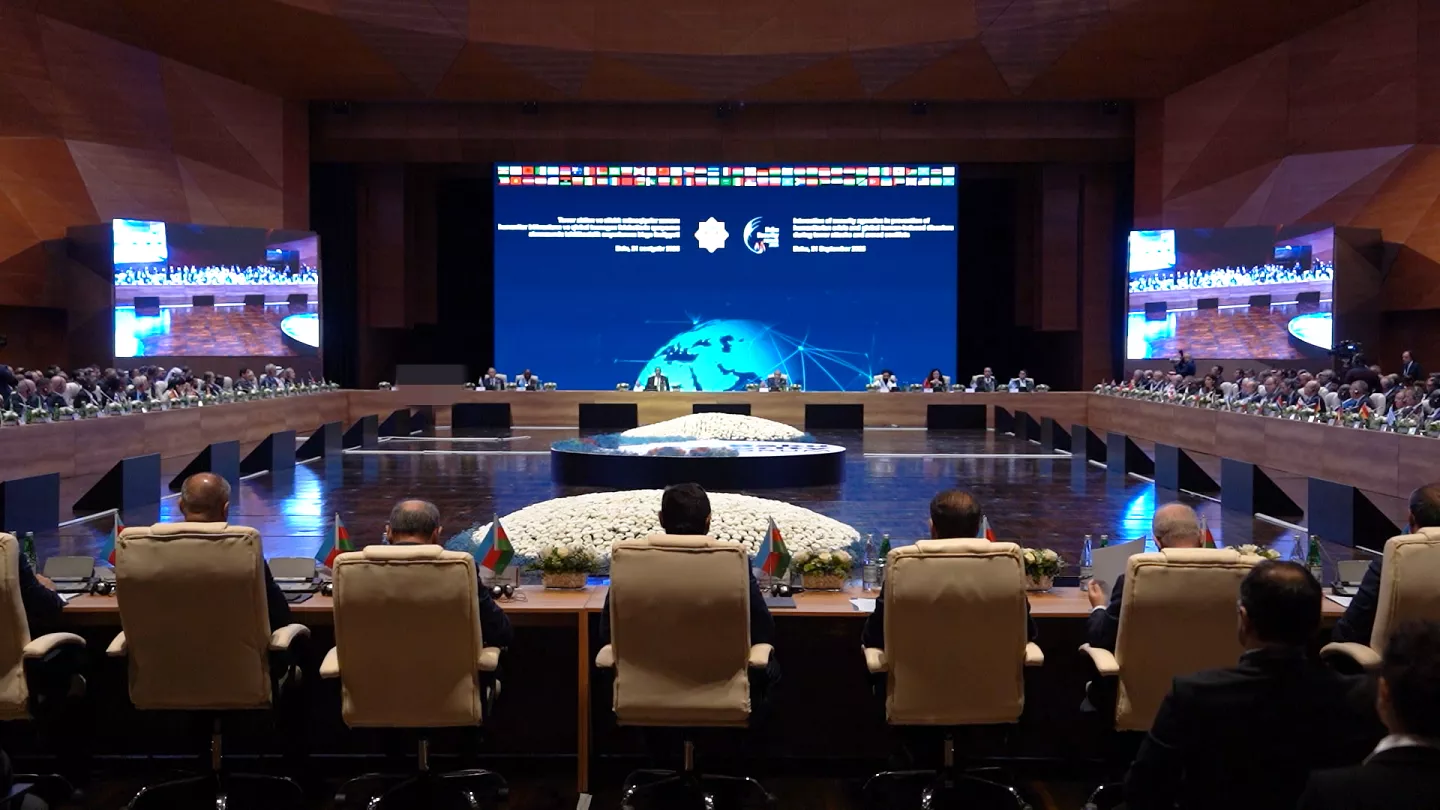
When security evolves beyond borders, cooperation becomes the most strategic form of defense.
Baku, September 2025.
The 2025 Baku Security Forum gathered senior officials, intelligence leaders, and defense strategists from over eighty nations to confront a rapidly evolving security landscape defined by terrorism, cyberattacks, disinformation campaigns, and escalating humanitarian crises. Hosted by Azerbaijan’s State Security Service, the forum aimed to deepen cooperation on transnational risks and create a unified approach to the most complex threats of the twenty-first century.
Participants agreed that contemporary security challenges no longer respect national boundaries. Terrorist networks have diversified their tactics, shifting from localized insurgencies to transnational operations supported by digital infrastructure. Cyber threats now target not only state institutions but also critical infrastructure, financial systems, and civilian networks. At the same time, large-scale humanitarian disasters and climate-related disruptions have amplified vulnerabilities, providing both cover and opportunity for hostile actors to operate undetected.
One of the most notable aspects of this year’s forum was the participation of the United Nations, which signaled an increased appetite for multilateral engagement on security issues traditionally handled at the bilateral or alliance level. Senior UN officials emphasized that without coordinated intelligence-sharing, global resilience would remain incomplete, and early warning mechanisms would be insufficient to prevent future crises.
Delegations from Europe, Africa, Asia, and the Middle East presented national strategies and case studies, illustrating how interconnected the security environment has become. African representatives highlighted the growing use of paramilitary groups and mercenaries in conflict zones, while European officials warned that hybrid threats, including state-sponsored cyber operations, are eroding conventional deterrence models. Middle Eastern participants focused on how regional instability can trigger secondary effects far beyond their borders, including migration pressures and cross-border radicalization.
A key theme running through the discussions was the convergence of threats. Speakers noted that terrorism often intersects with digital warfare, while humanitarian disasters can serve as platforms for covert operations and proxy influence. These overlapping risks, they argued, require a holistic approach that combines military, technological, legal, and diplomatic tools under a shared framework of accountability.
Azerbaijani President Ilham Aliyev opened the conference by stressing his country’s strategic role as a bridge between Europe, Central Asia, and the Middle East. He positioned Baku as a natural hub for collaborative security dialogue, capable of facilitating communication among states with differing strategic priorities. Officials proposed the establishment of a permanent secretariat to ensure continuity between forum editions and to oversee the implementation of multilateral initiatives agreed upon during the sessions.
Despite the spirit of cooperation, divergent perspectives surfaced during the debates. Nations with advanced cybersecurity capabilities advocated for more aggressive digital countermeasures, including offensive cyber operations against hostile actors. Others, particularly developing states, called for capacity-building programs and knowledge transfer as a means of leveling the playing field. Legal experts also urged the creation of clearer international norms governing intelligence activities and digital conflict, warning that existing frameworks lag behind technological realities.
Observers view the Baku Security Forum as an emerging pillar in the global security architecture. As traditional alliances like NATO adapt to asymmetric threats and non-state actors, regional gatherings like Baku offer more flexible, adaptive platforms for policy coordination. The inclusion of humanitarian issues, climate-related risks, and technological disasters demonstrates a widening definition of security that goes far beyond traditional notions of defense.
Ultimately, the success of the forum will depend on what follows. Declarations and speeches must translate into tangible outcomes such as joint exercises, shared intelligence databases, and cross-border crisis response protocols. The participation of multilateral organizations raises expectations that some of the proposed measures could evolve into formal treaties or collaborative operations.
In an era defined by unpredictable threats and rapid technological change, Baku’s gathering reflects an urgent global truth: no state can secure itself in isolation. The real test lies in whether words spoken in conference halls can become coordinated actions capable of shaping a safer, more stable world.
Analysis that transcends power. / Análisis que trasciende al poder.