

 Phoenix 24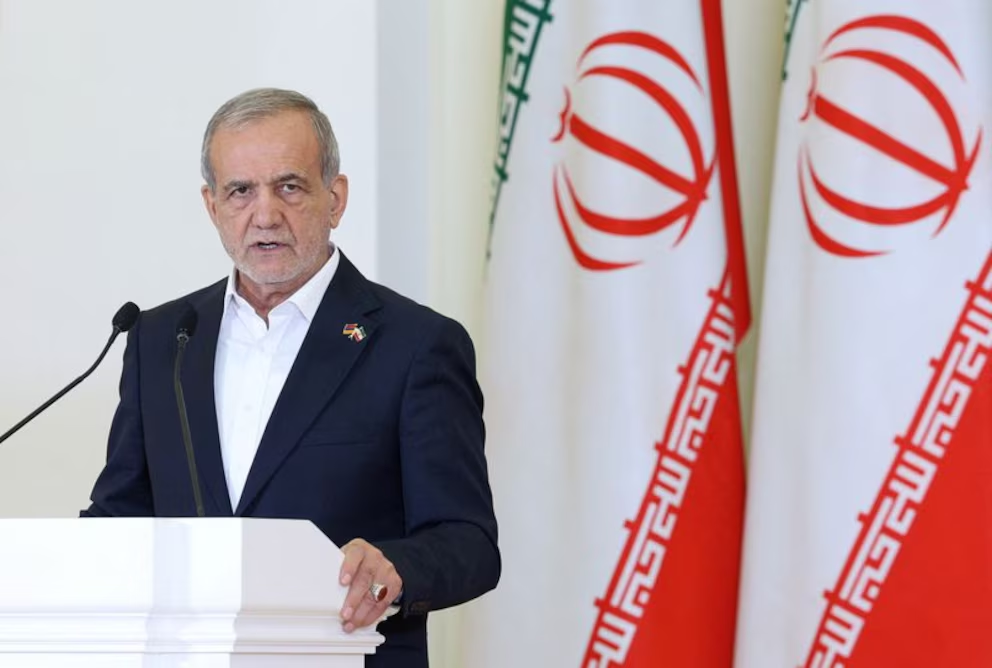
The legal argument is also a pressure tactic.
Tehran, May 2026
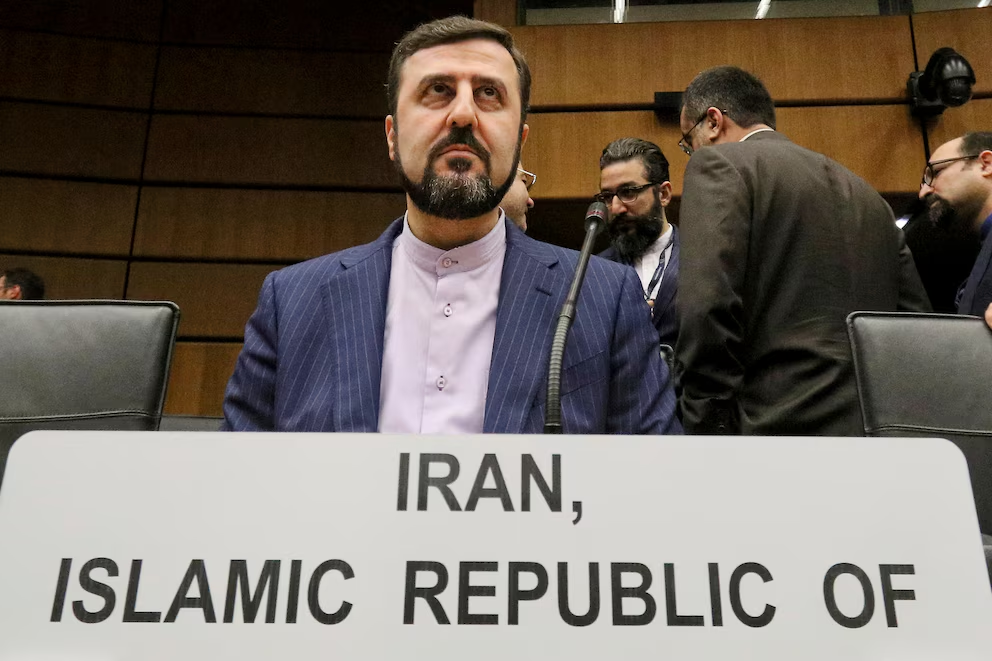
Iran has defended the legality of its uranium enrichment program at the United Nations, arguing that international law does not prohibit enrichment levels as long as nuclear activity remains under the supervision of the International Atomic Energy Agency. The statement came amid renewed pressure over Tehran’s nuclear file, with the United States and Western governments warning that Iran’s expanding enriched uranium stockpile has moved the dispute far beyond a technical debate.

The Iranian mission to the UN framed the issue as a matter of sovereign rights under the Nuclear Non-Proliferation Treaty, insisting that there has been no diversion of nuclear material toward weapons use. That position seeks to shift the argument away from suspicion and toward legality, but it collides with a deeper concern: inspectors have faced limited access in recent years, and the IAEA has repeatedly warned that verification gaps weaken confidence in the peaceful nature of the program.
The timing is politically charged. Washington and Tehran remain locked in a broader confrontation shaped by nuclear negotiations, regional escalation and competing claims over security in the Gulf. Iran’s legal defense is therefore not only a diplomatic statement; it is also an attempt to define the terms of the next negotiation before its adversaries impose them.
The most sensitive issue is enrichment at higher levels. Uranium enriched to 60 percent is below weapons-grade material, but it is far above what is normally required for civilian nuclear power. That gap is where diplomacy becomes fragile, because Iran can argue legality while its rivals argue strategic risk.
For the United States and its allies, the concern is not just what Iran says its program is for, but how quickly technical capability could become military leverage. For Iran, the central claim is that pressure, sanctions and threats cannot erase a right it says is protected under the treaty system. Between those two positions, the nuclear file has become a contest over law, trust and coercive power.

The result is a familiar but dangerous deadlock. Iran insists that enrichment is legal. The West insists that legality without credible verification is not enough. In that space, the nuclear dispute stops being only about uranium and becomes a test of whether international law can still restrain strategic fear.
Detrás de cada dato, la intención. / Behind every data point, the intention.