

 Phoenix 24
When investment becomes a geopolitical statement technology stops being neutral
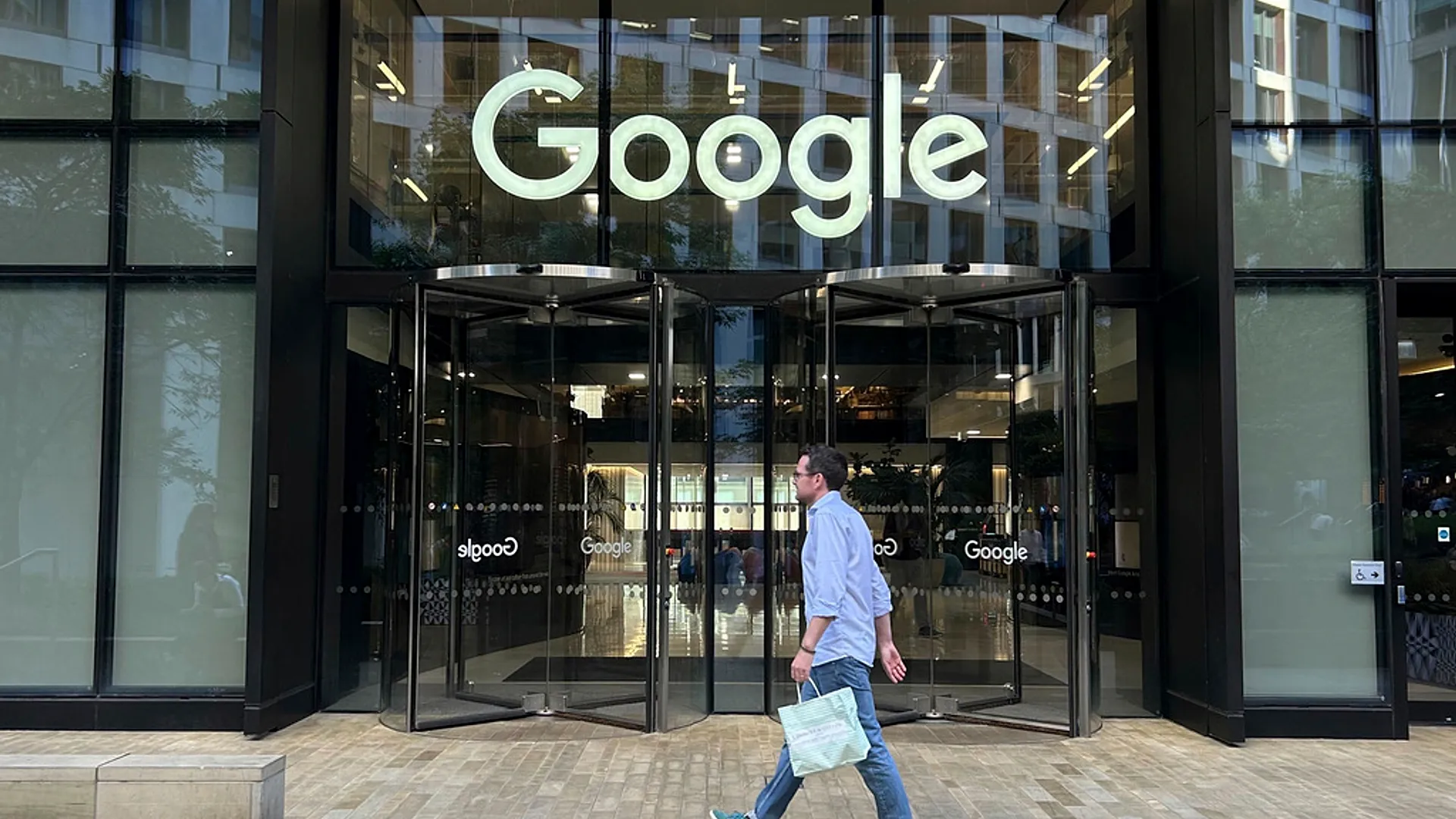
London September 2025 — Google has announced a commitment of more than five billion pounds to expand artificial intelligence development and infrastructure across the United Kingdom over the next two years. The announcement coincided with the inauguration of a new data centre in Hertfordshire and with the state visit of the President of the United States, framing the investment not only as a corporate decision but as a geopolitical gesture.
The pledge comes at a time when the United Kingdom is striving to consolidate itself as a leading hub for AI innovation amid competition from the European Union, the United States, and Asia. Government officials framed the project as a sign of confidence in the British economy, arguing that it will strengthen both technological sovereignty and economic resilience. According to official estimates, the initiative could generate more than eight thousand direct and indirect jobs each year and accelerate the growth of professional sectors linked to science, engineering, and digital services.
At the heart of the project lies Google DeepMind, the London-based research unit that has become one of the company’s most valuable assets. The new funding will allow the division to scale its work on health, education, and climate applications, consolidating the UK’s role as a nerve centre for AI research. The initiative also includes the construction of additional data centres and the reinforcement of cloud services infrastructure, expanding the reach of products such as Workspace, Search, and Maps.
British authorities highlighted the investment as part of a broader strategy to reindustrialize the country in high-value sectors. Economic officials described it as a turning point, claiming that AI could contribute hundreds of billions of pounds to the national economy by the end of the decade. Beyond the numbers, the political discourse portrayed the investment as evidence that the UK remains attractive to global capital despite years of post-Brexit uncertainty and structural challenges.
Still, analysts warn that the five billion pound figure, while significant, is relatively modest when compared to Google’s global capital expenditure, which has surpassed tens of billions annually. In this sense, the announcement functions as much as a political message as it does a technological investment. It allows Google to strengthen its ties with London at a moment when governments are competing for a place in the global AI value chain.
The timing of the announcement is strategic. The state visit of the U.S. president amplified its symbolism, presenting the UK as a natural partner of Washington in both technology and security. This alignment comes with potential benefits but also with risks, since closer technological dependence on American firms may limit the country’s ability to develop autonomous regulatory frameworks. Critics argue that while jobs and infrastructure are welcome, the long-term question is whether sovereignty over data, algorithms, and governance will remain in British hands or be subordinated to corporate strategies designed in California.
Environmental and regulatory concerns also accompany the investment. Data centres require enormous amounts of electricity and water, raising questions about sustainability and climate commitments. Google has promised to incorporate energy-efficient design and renewable sources into its new facilities, but watchdog groups remain skeptical about the net environmental cost of such projects. Civil society organizations demand transparency not only in the carbon footprint but also in the ethical use of AI, warning about issues such as algorithmic bias, data privacy, and uneven distribution of benefits.
From the perspective of labour markets, the promise of more than eight thousand jobs per year generates expectations but also doubts. Experts emphasize that many of these positions may require advanced skills, leaving behind segments of the population that lack access to high-quality training. Unless the government and Google implement robust programs of education and inclusion, the risk is that the investment could deepen inequalities rather than reduce them.
For the United Kingdom, the political impact is undeniable. The government can present this announcement as proof of its ability to attract foreign capital and to place the country at the forefront of innovation. It also helps counter narratives that Brexit left the nation isolated and less competitive. Yet the deeper reality is that the country remains vulnerable to global power struggles over technology, regulation, and capital flows.
For Google, the move represents an opportunity to expand its influence at a European scale, using London as a gateway to both continental and global markets. At the same time, it reinforces its brand as a pioneer in AI at a moment when rival corporations are racing to dominate the field. The investment, therefore, is not only financial but symbolic, reinforcing a narrative of technological inevitability that serves its long-term strategic interests.
What remains uncertain is whether the benefits will be distributed equitably or concentrated in already privileged sectors. The AI revolution promises to transform industries and daily life, but without strong safeguards it may exacerbate social fractures. For many citizens, the essential question is not how much Google invests, but how this investment will change their lives, their jobs, their privacy, and their environment.
As the UK celebrates the arrival of billions in promised capital, it must also confront the paradox of technological dependence. Every pound invested in AI comes with a demand for vigilance, regulation, and critical debate. What is at stake is not only economic growth but also the legitimacy of a future where machines and algorithms increasingly define the boundaries of human agency.
Detrás de cada dato, hay una intención. Detrás de cada silencio, una estructura.
Behind every piece of data, there is an intention. Behind every silence, a structure.