

 Phoenix 24
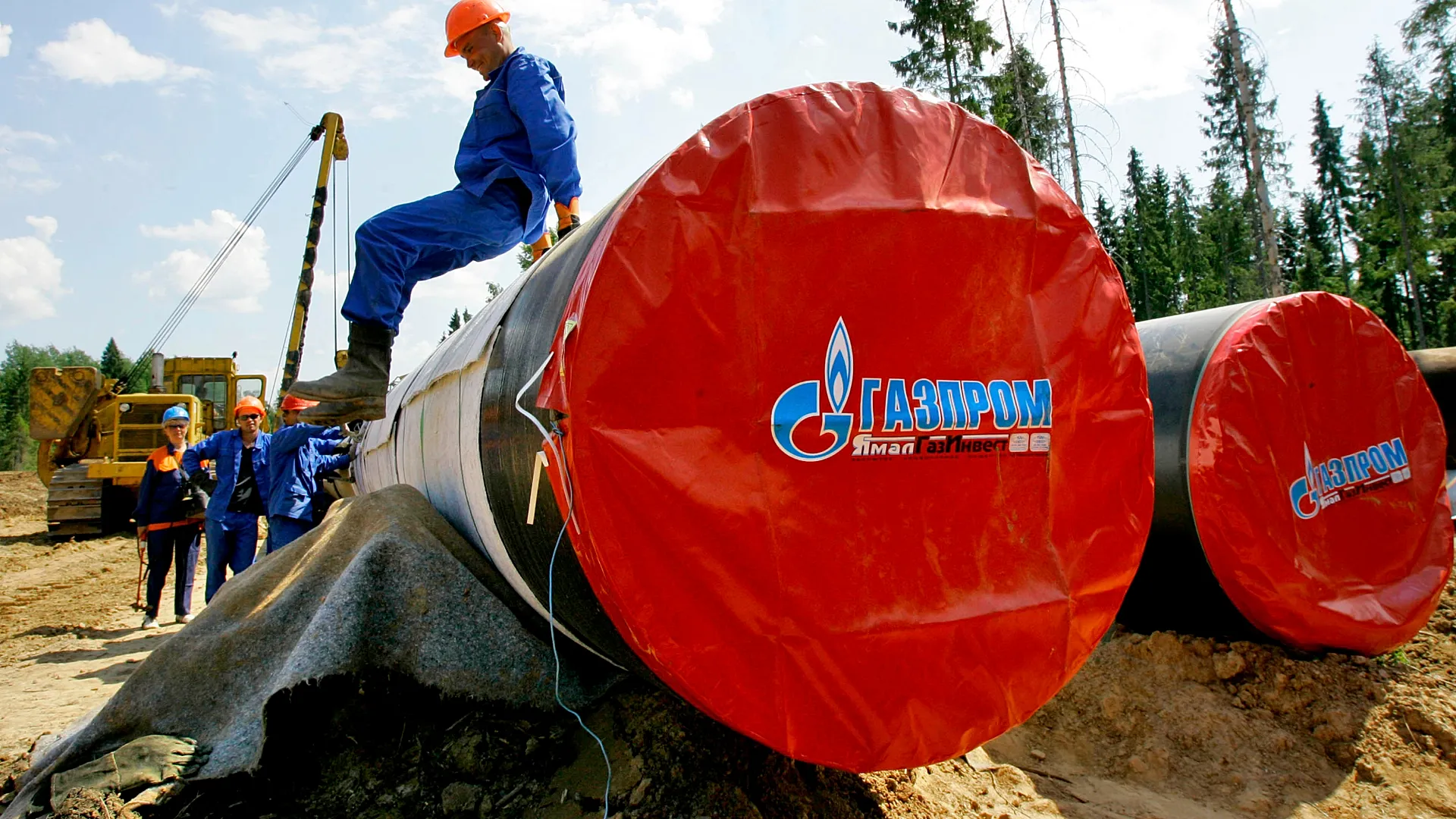
A seismic shift in mutual exchange reshapes European resilience.
Brussels, September 2025
Trade between the European Union and Russia has shrunk to its lowest level in more than twenty years, signaling a profound reorientation fueled by sanctions, diversification strategies and the search for energy autonomy. In the second quarter of 2025, total trade amounted to just over fourteen billion euros, compared to nearly eighty billion at the start of 2022. For the first time in years, the EU recorded a modest trade surplus, not because exports soared but because imports from Russia collapsed more steeply than outgoing flows.
Russia’s share in Europe’s external trade has been reduced to a fraction of its former size. Exports to Russia, once exceeding three percent of EU foreign sales, now hover close to one percent. Imports tell an even sharper story: they have fallen from nearly ten percent to just above one percent. This transformation reflects not only punitive sanctions but also deliberate disengagement from commodities that once anchored the relationship.
The energy sector, the backbone of past exchange, has been fundamentally overturned. In mid-2022, Europe carried a deficit of more than forty billion euros in energy trade with Russia. By mid-2025, that gap narrowed to barely four billion. Petroleum oil, which once represented almost a third of Europe’s supply, has dwindled to a negligible share. Natural gas, iron, steel and nickel follow similar trajectories, their space occupied by suppliers in the Middle East, North Africa and North America.
The rupture was accelerated by both political and infrastructural events. Since early 2022, the EU has imposed successive sanctions restricting imports of Russian raw materials, while also targeting investment and logistics. In parallel, Ukraine ended the transit of Russian gas across its territory, cutting a critical artery that once fed Europe’s energy grid. These combined measures forced governments and corporations to rebuild supply chains, often at high cost, but with a strategic aim of eliminating vulnerability.
What remains of EU–Russia trade is fragmented and selective. Fertilizers, certain industrial inputs and specialized metals still move across borders, but volumes are small compared with the pre-war era. The European Commission is advancing legislation to prohibit new contracts for Russian gas by 2025 and to end fossil fuel imports entirely by 2027 or 2028, depending on the resource. This strategy, embedded in the REPowerEU framework, represents not just a sanctions regime but a permanent structural adjustment.
Globally, the implications are wide. Europe is no longer tied to Russia as a primary energy partner, which alters not only commercial flows but also geopolitical alignments. For decades, energy interdependence acted as a stabilizing factor between Brussels and Moscow, even amid political tension. The current decoupling breaks that logic. Industrial sectors in Germany, France and Italy now recalibrate toward liquefied natural gas from the United States, renewable energy expansion and raw material imports from Africa and Latin America.
Russia, for its part, redirects exports toward Asia, primarily China and India, seeking to compensate for the loss of its European markets. But transport costs, discount pressures and limited infrastructure reduce profitability. The asymmetry leaves Moscow more dependent on a narrow set of buyers, which weakens its bargaining position. Europe, conversely, faces higher short-term costs but gains flexibility in the long term.
Economists across Europe argue that the collapse in bilateral trade, while disruptive, provides an opportunity to accelerate energy transition and industrial modernization. Some analysts caution that the adjustment is uneven: while northern states with diversified economies adapt relatively smoothly, countries in central and eastern Europe absorb higher energy prices and face slower restructuring. Even so, the consensus is that the trajectory of disengagement is irreversible.
The figures are striking but the political symbolism is even stronger. The EU’s modest trade surplus with Russia, once inconceivable, reflects a reversal of power dynamics. Instead of being hostage to Russian energy leverage, Europe now positions itself as a consumer with options. The balance is fragile, however, as global volatility in oil and gas prices can still undermine stability. Yet policymakers in Brussels emphasize that resilience is not measured by low prices alone but by the capacity to withstand external pressure without political compromise.
At the societal level, the shift is less visible yet no less important. Consumers still feel the impact of higher energy bills, and industries dependent on cheap Russian inputs confront restructuring costs. Over time, though, the expectation is that diversification and renewable energy investment will mitigate these shocks. The narrative in Brussels is that the pain of adjustment is the price of sovereignty, a message repeated in both parliamentary debates and official communications.
In sum, the EU–Russia trade relationship has been turned upside down. Where there was once robust interdependence, there is now cautious disengagement. Where deficits once marked vulnerability, surpluses now signal resilience. This inversion is not the result of chance but of deliberate political choices taken under extraordinary circumstances. The future of European trade will continue to be defined less by Moscow and more by a global network of suppliers that reflects strategic diversification.
Truth is structure, not noise.
La verdad es estructura, no ruido.