

 Phoenix 24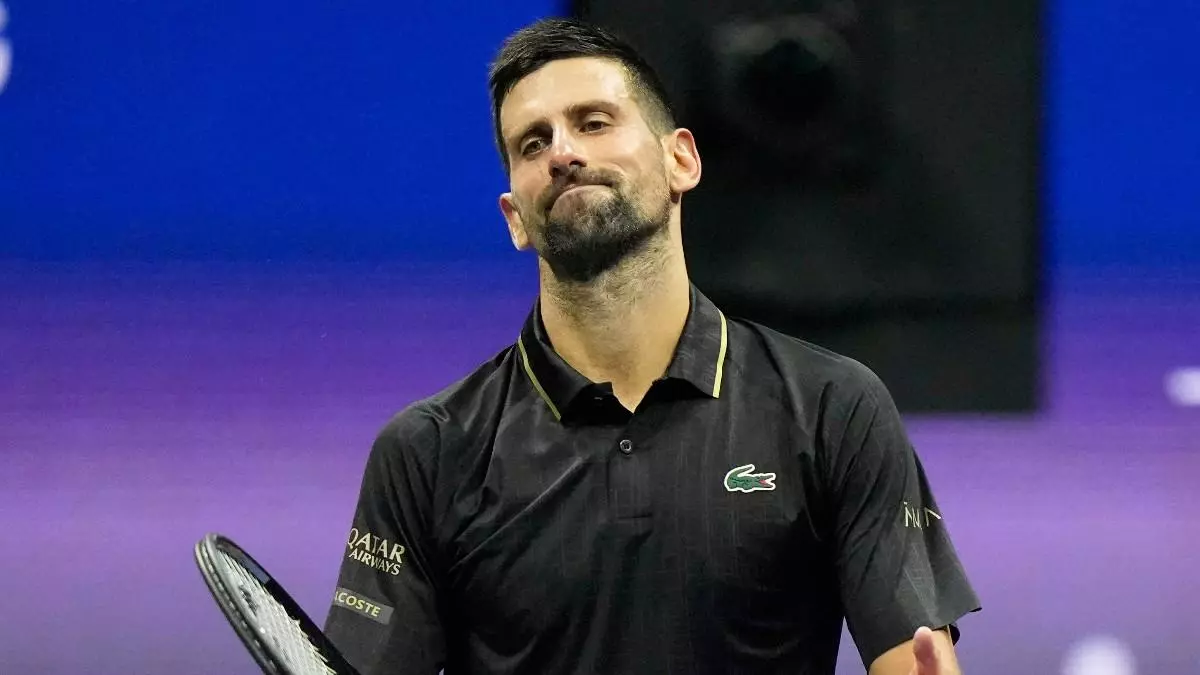
Sometimes distraction arrives not from an opponent across the net, but from the crowd itself. For Novak Djokovic, the issue in New York was not the game plan of his rival but the air he breathed during a tense evening at Flushing Meadows.
New York, August 2025
The Serbian champion, chasing yet another major title, paused during his second-round match at the US Open to complain about what he described as a pervasive smell of marijuana drifting through the stands. The episode unfolded at Louis Armstrong Stadium, where Djokovic faced a spirited challenger but seemed more unsettled by the atmosphere than by the rallies themselves. He turned toward the umpire and, in front of cameras, remarked that the smell was distracting, sparking an immediate reaction among spectators and across social media.
Djokovic later explained that the odor had been noticeable in previous matches at the same venue, suggesting it was not an isolated incident. He clarified that while he respects personal choices in different parts of the world, he believes tennis matches require an environment of concentration, especially at a Grand Slam where the stakes and expectations are enormous. For him, the issue was less about legality and more about respect for athletes performing at the highest level.
Tournament organizers acknowledged they had received similar complaints in past years. While cannabis consumption is legal in New York under certain conditions, smoking is not permitted inside the grounds of the US Open. Enforcement, however, remains complex when dealing with crowds of thousands. Security staff have instructions to prevent visible violations, but odors can drift from surrounding areas or from less supervised corners within the complex. The challenge illustrates the tension between local law, sporting regulation, and spectator behavior.
This is not the first time a player has raised concerns about marijuana smoke at Flushing Meadows. Past editions of the tournament saw remarks from other athletes noting similar distractions, though Djokovic’s stature ensures that his words resonate more widely. For many fans, the complaint raised questions about whether organizers are doing enough to ensure an appropriate environment for competition. Others argued that in a city as diverse and permissive as New York, athletes must learn to cope with a wide range of external factors.
From a sporting perspective, Djokovic managed to overcome the distraction and secure victory, advancing to the next round with his trademark resilience. Yet his reaction underscored the mental precision required at elite levels. Tennis, unlike many team sports, isolates players with little buffer against environmental disruptions. Every sound, every movement, every smell can alter focus during crucial points. In that context, Djokovic’s irritation reflects not only personal preference but also the delicate balance between sport as performance and sport as entertainment spectacle.
Beyond the court, the incident touches broader cultural debates. The legalization of marijuana in many jurisdictions has shifted social norms, yet international athletes travel across environments where rules vary. What is permitted in one city may remain banned in another. Athletes often adapt to local customs, but when those customs intersect with performance, conflicts emerge. Djokovic’s comment thus becomes part of a larger conversation about how sports adapt to evolving cultural landscapes.
For New York, the challenge is amplified by the US Open’s identity as a global showcase. The tournament thrives on energy, noise, and spectacle, projecting itself as the most vibrant of the four Grand Slams. That very vibrancy, however, makes control of the environment more difficult. Flushing Meadows courts are famous for their rowdy crowds, unlike the stricter atmospheres of Wimbledon or Roland Garros. What for some is charm and character can for others become distraction.
Djokovic himself has always been sensitive to the atmosphere around him. He thrives on crowd engagement, often drawing energy from cheers or even boos. Yet the episode at Armstrong Stadium revealed a limit: while sound and passion may fuel him, the physical intrusion of smoke or odor proved disruptive. It also highlighted the paradox of modern tennis stars: expected to perform flawlessly while navigating conditions they cannot control.
The debate now shifts to how tournament authorities will respond. Increased patrolling of seating areas, stricter enforcement at entry points, or clearer announcements about prohibited behavior may follow. Still, with legalization embedded in the city’s fabric, total control seems unlikely. The reality may be that athletes competing in New York must accept a degree of unpredictability as part of the package.
In the end, Djokovic advanced, his focus restored enough to carry him through. Yet the incident lingers as a reminder of the fine line between the player’s sanctuary on court and the crowd’s freedom off it. For tennis, which constantly balances tradition and modernity, the question remains: how much of the city’s character should enter the court, and how much must be kept outside to preserve fairness and focus.
Beyond the headline, what endures is the image of one of the greatest champions in history pausing mid-match, not for injury or equipment, but to complain about the air he was breathing. It is a small story in a long career, yet it captures the complexities of sport in a world where cultural shifts inevitably spill into arenas once considered insulated.
The visible and the hidden, in context.
Lo visible y lo oculto, en contexto.