

 Phoenix 24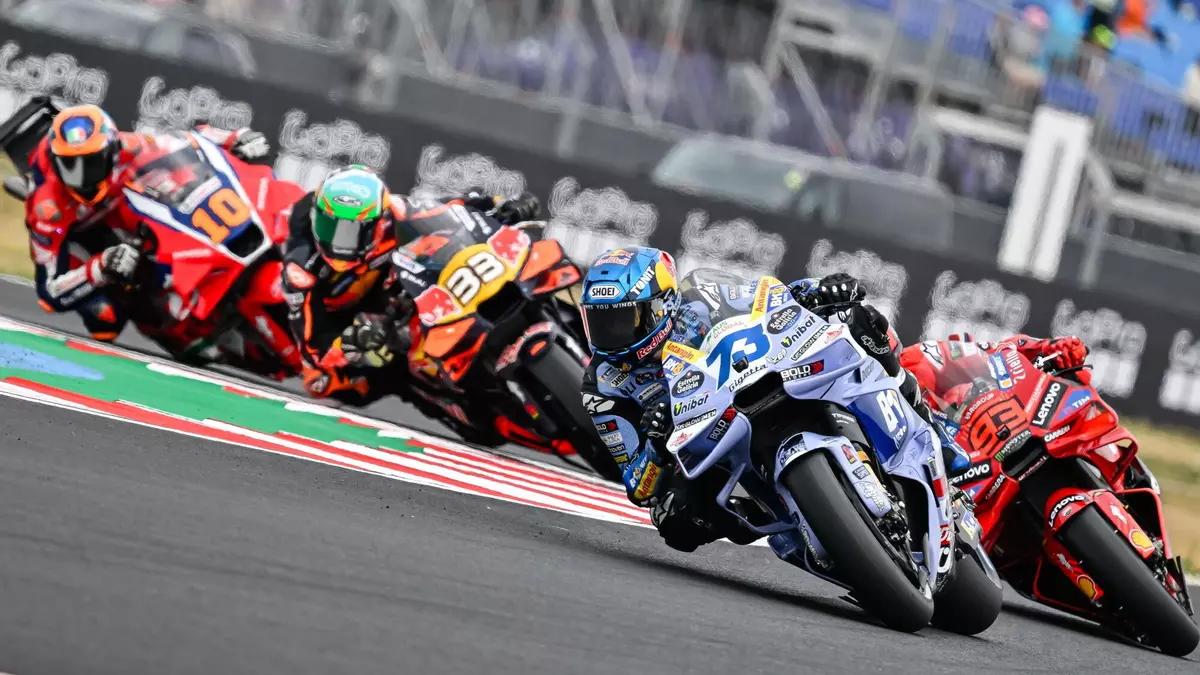
Practice drama turns into real consequences as two riders face sanctions at Balaton Park.
Balaton Park, August 2025.
The Hungarian Grand Prix weekend, already loaded with expectations as MotoGP explores a new venue, began with turbulence. Álex Márquez of Gresini Racing and Jack Miller of Pramac were handed three-place grid penalties after race direction determined both had impeded Francesco Bagnaia during a crucial fast lap in free practice. Stewards concluded that riding at a slow pace on the racing line had obstructed the reigning champion, an infraction that, while subtle, carries serious tactical implications in a sport defined by milliseconds.
The decision reverberated through the paddock. Márquez, who secured a victory earlier this season and has positioned himself as a growing force in the mid-field, now faces an uphill climb. Miller, still balancing flashes of competitiveness with bouts of inconsistency, sees his starting position compromised at a circuit where track position is proving vital. Bagnaia, though not directly penalized, made it clear his preparation was disrupted by what he described as “avoidable traffic.” The incident illustrates the razor-thin line between competitive aggression and procedural discipline that MotoGP enforces with increasing rigor.
Stewarding consistency has become a recurring point of debate in global motorsport. In MotoGP, penalties for impeding are not common, but the governing body has signaled a stricter stance this season. Analysts in Europe note parallels with Formula 1, where similar slow-driving penalties have reshaped qualifying sessions. In Asia, specialist outlets have highlighted how crowded practice sessions at newer circuits magnify the risk of interference. Meanwhile, American commentators stress that sanctioning high-profile names reinforces the championship’s credibility, ensuring rules apply evenly across the grid regardless of reputation.
From a sporting perspective, the three-place drops alter strategy in ways that transcend qualifying. At Balaton Park—a technical track with limited overtaking zones—the difference between starting seventh or tenth may determine whether a rider spends half the race trapped in traffic or emerges in contention for points. Engineers adapt setups differently when a rider begins further down the order, shifting emphasis toward race pace and durability instead of maximizing one-lap performance. It is a reminder that grid penalties, though numerical, reshape competitive logic.
Historical comparisons deepen the picture. In 2019, Valentino Rossi was similarly penalized for slow riding during practice at Silverstone, an incident that sparked debate on whether veteran intuition should grant leeway. In 2022, Fabio Quartararo clashed with rivals over blocking accusations in Mugello, though no sanction followed. Those precedents show how stewarding evolves—what was once overlooked is now codified as a breach. By penalizing Márquez and Miller together, the stewards have reinforced a standard: practice etiquette matters as much as race conduct.
Team dynamics also absorb the shock. Gresini Racing, already adapting to a demanding calendar, must restructure Márquez’s weekend to focus on recovery through tire strategy and aggressive opening laps. Pramac, in the midst of a season where consistency is paramount, faces an additional layer of tension: Miller’s sanction compounds pressure on the garage as they balance the needs of both their riders. Within such contexts, even minor regulatory decisions ripple into logistical recalculations.
Fans and sponsors interpret these sanctions differently. Some view them as excessive, pointing out that practice sessions are inherently chaotic. Others applaud the clampdown, seeing in it a push for fairness and safety. Neutral observers argue the message is aimed as much at public perception as at riders: MotoGP cannot afford accusations of partiality, especially when expanding into new markets like Hungary where credibility is under construction. The penalties, then, are not just about Márquez and Miller—they are about the image of the championship itself.
Looking ahead, the scenario sharpens. If Márquez and Miller adapt quickly, the sanctions may be remembered as minor obstacles rather than decisive blows. But if either loses momentum in Hungary, the penalty will linger as a pivotal turning point. Continuity would suggest that both rebound, preserving their season trajectories. A disruption could emerge if grid drops expose weaknesses in tire management or overtaking. And a bifurcation scenario arises if a rival seizes the opportunity to consolidate championship points, widening a gap that late-season races may not close.
In sum, a fleeting episode in practice has escalated into a moment with broader implications: team strategies reshuffled, rider reputations scrutinized, and MotoGP’s regulatory framework reinforced. At Balaton Park, the first Hungarian round of the modern era, the sanctioning of Márquez and Miller will be remembered less for its numerical value and more for what it signals—the uncompromising demand for discipline at every stage of competition.
Facts that do not bend.
Facts that do not bend.