

 Phoenix 24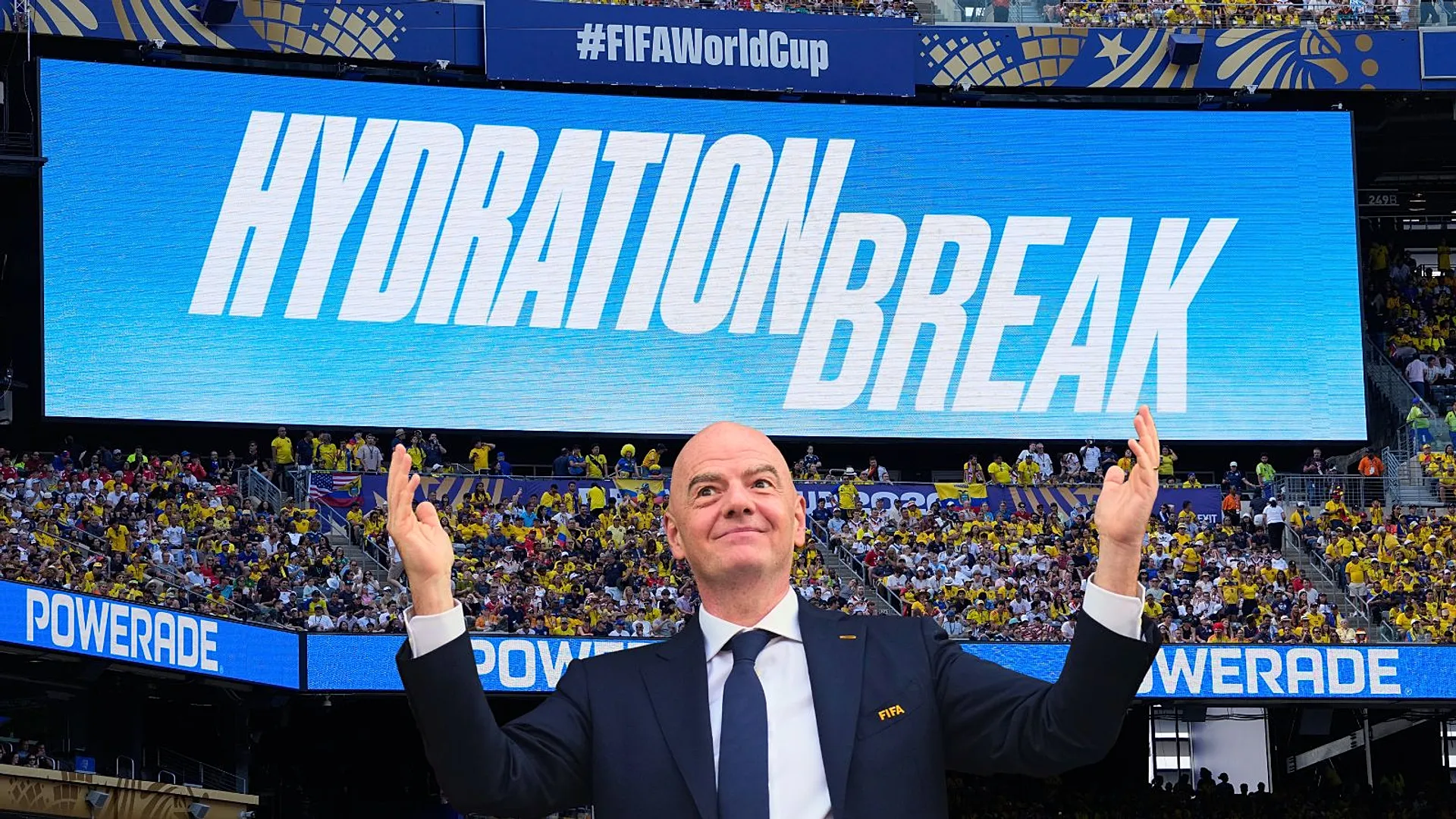
A safety measure has become a wider dispute over football’s rhythm and commercial future.
New York, June 2026
FIFA’s mandatory hydration breaks have become one of the most controversial features of the 2026 World Cup. Every match now stops for approximately three minutes around the 22nd and 67th minutes, regardless of temperature, humidity or whether the stadium is climate-controlled. FIFA presents the policy as a player-welfare measure designed for a tournament played across the United States, Mexico and Canada during intense summer conditions. Many players, coaches and supporters suspect that the pauses also serve another purpose by creating predictable windows for television advertising.
The medical argument is not difficult to understand. Several host cities have experienced temperatures above 30 degrees Celsius, with humidity pushing perceived conditions considerably higher. Heat stress can reduce physical performance and increase the risk of dehydration, cramps, exhaustion and heatstroke. The expanded 48-team tournament also includes 104 matches across large geographic distances, placing additional strain on players already arriving after demanding club seasons.
Mandatory pauses ensure that every player receives an opportunity to drink, cool the body and briefly recover. A universal rule also avoids disputes over whether the conditions at a particular venue are severe enough to justify a break. FIFA president Gianni Infantino has defended the policy on those grounds, arguing that identical treatment prevents one team from receiving an advantage because of a referee’s subjective decision.
The controversy begins with the decision to apply the rule in every match. Breaks have occurred during games played in moderate weather and inside enclosed or air-conditioned stadiums. Critics argue that a health intervention should respond to actual environmental conditions rather than become an automatic feature of the competition. A pause that appears necessary in extreme heat can look artificial when players are competing under comfortable conditions.
Football’s continuous structure is central to the objection. Unlike many major American sports, the game ordinarily develops through two uninterrupted 45-minute halves. Momentum shifts gradually, fatigue accumulates and teams must solve problems without regular tactical timeouts. Mandatory stoppages divide each match into four distinct playing periods, altering the rhythm that coaches and players have traditionally expected.
A team controlling possession and pressing an opponent can lose momentum when the pause arrives. A side under pressure gains time to reorganize, recover physically and receive detailed instructions. Coaches can use the break almost like a basketball or American football timeout, correcting positioning and changing the tactical direction of the game without using a substitution. The interruption therefore affects more than hydration.
This tactical consequence has divided managers. Some welcome the opportunity to speak directly with players during difficult conditions. Others believe it rewards teams that are struggling and weakens the importance of endurance, concentration and in-game adaptation. The same pause can be viewed as responsible protection or as external interference, depending on the match situation.
Supporters have also objected to the way broadcasters use the interruption. Some networks continue showing players and coaches, while others immediately cut to commercials. The predictable timing makes the breaks unusually valuable because advertisers know they will receive two guaranteed windows during every match. This has encouraged the belief that player welfare provides convenient cover for a commercial innovation.
FIFA rejects that accusation. Infantino has said the organization receives no additional income from the pauses because its commercial agreements were completed before the tournament. That explanation does not eliminate the financial benefit for broadcasters, which can sell advertising during periods when viewers are unlikely to leave. The distinction between FIFA’s direct revenue and the wider commercial value of the policy has therefore failed to end the debate.
The tournament’s North American setting has intensified the reaction. American football, basketball, baseball and hockey all include frequent stoppages that accommodate advertising and tactical intervention. European and Latin American fans often regard football’s uninterrupted flow as one of the qualities distinguishing it from those sports. The hydration policy is consequently being interpreted by some critics as part of a broader Americanization of the game.
That suspicion extends beyond the breaks themselves. High ticket prices, elaborate stadium entertainment and plans for a World Cup final halftime show have already produced concern that the tournament is being redesigned around the expectations of the host market. Mandatory pauses fit easily into that narrative, even when genuine medical reasons exist. The issue has become symbolic of a larger struggle over who controls football’s future.
The criticism can sometimes overlook the seriousness of the heat. Players have previously reported dizziness and breathing difficulties during summer competitions in the region. Referees, substitutes and stadium workers face the same conditions. Climate research has warned that extreme heat will increasingly affect sporting calendars, making cooling protocols more necessary rather than less.
A three-minute drink break, however, is not a complete heat-management strategy. Medical specialists emphasize the importance of acclimatization, shaded benches, cold towels, appropriate scheduling and accurate monitoring of temperature and humidity. Matches played during the hottest parts of the day may remain dangerous even with two short interruptions. The pauses can reduce risk without resolving the conditions that created it.
This creates an uncomfortable possibility for FIFA. The organization may be implementing a medically defensible measure while avoiding more disruptive decisions, such as moving kickoff times, changing venues or postponing matches. Hydration breaks are easy to standardize and convenient for broadcasters. Protecting players through scheduling would carry greater financial and logistical consequences.
The strongest alternative would be a conditional system based on recognized heat-stress measurements. Breaks could be mandatory when temperature and humidity exceed defined thresholds, while referees and medical officials retain authority to introduce them when needed. Cooler matches could continue without interruption. Such a policy might better connect the measure to its stated health purpose.
FIFA prefers consistency, partly because conditional rules can produce disputes over competitive fairness. Two teams playing at different venues might face different match structures during the same round. Weather can also change rapidly, and measurements taken before kickoff may not reflect conditions later in the game. Uniformity offers administrative clarity, even if it creates unnecessary pauses.
The anger surrounding the breaks therefore comes from several sources at once. Fans dislike the interruption, coaches recognize its tactical influence and viewers distrust the commercial incentives surrounding it. The medical justification is real, but the universal application and immediate use of the pauses for advertising make the policy appear less transparent.
Football is increasingly forced to adapt to extreme heat, expanded competitions and the financial demands of global broadcasting. Hydration breaks sit directly at the intersection of those pressures. They protect players, alter tactics and generate commercial opportunities simultaneously.
The dispute is unlikely to disappear during this World Cup. Every hot afternoon will strengthen FIFA’s argument, while every unnecessary pause in a cool stadium will strengthen its critics. The deeper question is whether football can respond to modern health risks without allowing temporary safety measures to become permanent commercial architecture.
Cuidar el juego también exige proteger su esencia. / Protecting the game also means preserving its essence.