

 Phoenix 24
This musical gathering proves that Chopin’s spirit still shapes generations—and quietly powers a global cultural network.
Krakow, August 2025
In the mountain town of Duszniki-Zdrój, Poland, the soul of Frédéric Chopin was once again summoned through music. The 2025 edition of the Chopin International Festival—founded in 1946 and held each August—brought together dozens of young pianists from around the world for a celebration of artistry, pedagogy, and legacy. But this was more than just a concert series. It was a living network of cultural transmission, where the 19th-century composer’s legacy is kept alive not in marble or myth, but in the touch of each performer’s hand.
Organized under the umbrella of the Fryderyk Chopin Institute and its global satellite foundations, the festival offered an ambitious program combining masterclasses, public recitals, and high-level competitions for pianists under 30. Participants were mentored by international performers, professors, and competition laureates who emphasized not only technical skill, but fidelity to Chopin’s interpretive traditions: subtle rubato, transparent textures, articulate pedal work, and refined phrasing.
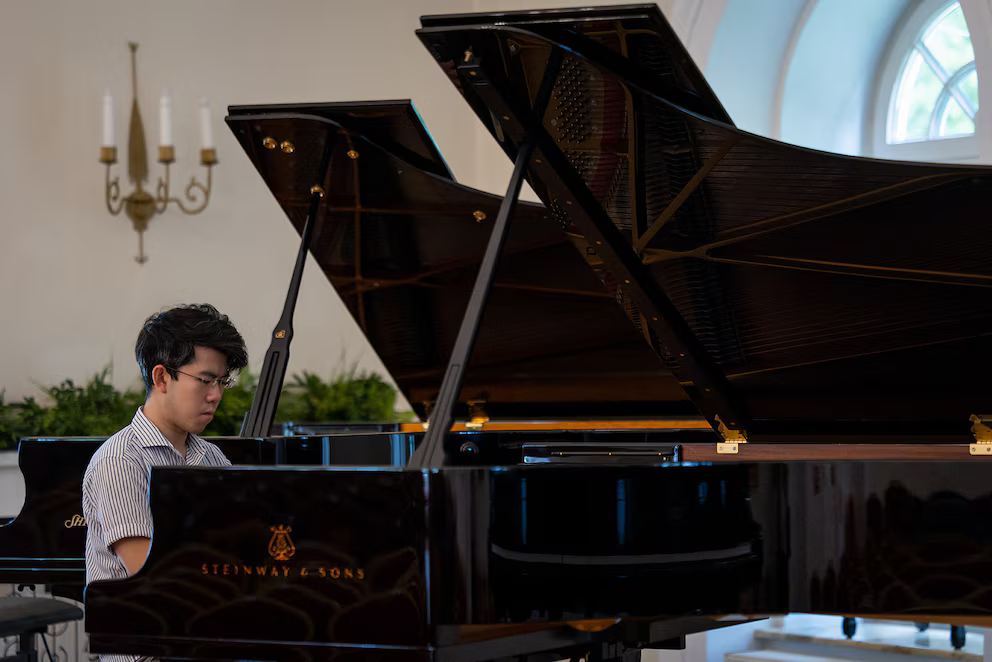
The 2025 cohort was a testament to the truly global reach of Chopin’s music. Young musicians from Asia, Europe, and the Americas converged in southern Poland, with particularly strong representation from China, South Korea, Japan, Russia, the United States, and Poland itself. This diversity has become a norm in Chopin festivals, especially since the rising dominance of Asian pianists in global competitions since the 2000s. It reflects not only musical excellence but also long-term investments by conservatories and national cultural programs across three continents.
Technical workshops were complemented by philosophical discussions about Chopin’s evolving place in modern repertoire. Instructors encouraged interpretations rooted in historical authenticity, distancing themselves from overly romanticized or virtuosic readings. “You don’t just play Chopin—you have to breathe his silences,” remarked one senior pedagogue. For many attendees, the experience was described as a “total immersion that teaches you to feel, not just perform.”
The competitive dimension also extended beyond Poland. Earlier this year, the U.S.-based Chopin Foundation hosted its 11th National Piano Competition in Miami, awarding scholarships and direct invitations to the XIX International Chopin Piano Competition in Warsaw, scheduled for October 2025. This transatlantic connection creates a powerful career platform for young musicians, transforming local laureates into global performers.

The anticipation surrounding the October competition—held at Warsaw’s National Philharmonic Hall and marking the centennial of the event—has added symbolic weight to this year’s activities. With over 160 preliminary candidates and 80 finalists expected, the Warsaw event has become not only a pinnacle of technical mastery but also a global stage for soft power and cultural diplomacy.
Viewed analytically, this festival and its allied institutions form a quiet but potent transnational system. Through scholarships, exchanges, and strategic alliances between conservatories, a structured mentorship model emerges—linking Poland with Asia, Latin America, and North America in a web of music education. It’s not only about artistic excellence; it’s about constructing a cultural infrastructure where heritage is codified, distributed, and renewed across borders.
Unlike isolated local festivals, the Chopin Festival in Duszniki-Zdrój embodies a curatorial ambition: to internationalize without diluting. Each young performer who steps onto its stage enters a lineage shaped by Rubinstein, Argerich, and Zimerman—but now filtered through hybrid identities, new interpretive schools, and the global dynamics of digital exposure.
From a strategic perspective, the festival is also a mirror of contemporary cultural diplomacy. Poland uses Chopin not just as a historical icon but as a cultural bridge. While governments compete over tech, trade, and security, institutions like the Chopin Institute offer a more subtle but enduring form of influence—exporting beauty, discipline, and heritage through the fingers of 21-year-olds seated at Steinways.

In sum, the legacy of Frédéric Chopin is not merely preserved—it is being rewritten in real time. Through young hands, reinterpreted scores, and collaborative encounters, his music continues to challenge, console, and inspire. What emerges from this festival is not nostalgia, but regeneration. Chopin is not a relic of the past—he is the medium through which a new musical future is being composed.
This piece was developed by the Phoenix24 editorial team using reliable sources, public data, and rigorous analysis in alignment with the current global context.
Esta pieza fue desarrollada por el equipo editorial de Phoenix24 con base en fuentes confiables, datos públicos y análisis riguroso, en coherencia con el contexto global vigente.