

 Phoenix 24
A railway disaster raises questions about criminal responsibility and safety.
ROUEN, FRANCE
French authorities have arrested four men in connection with a regional train derailment that injured 44 people in Normandy, marking a significant development in an investigation that began more than two months ago. The arrests took place on November 23 near Rouen, following the discovery of evidence suggesting that railway material may have been unlawfully removed and left on an active track. Prosecutors are examining possible organized theft, involuntary injuries and unauthorized interference with railway infrastructure, although investigators have not established whether the derailment resulted from deliberate sabotage or another criminal act.
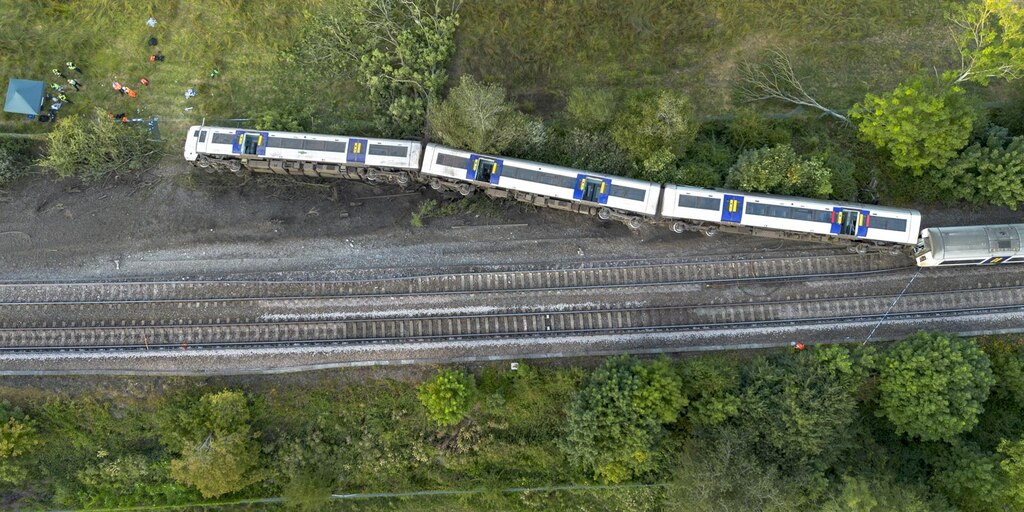
The accident occurred on September 11 near Cléon, in the Seine-Maritime department of northwestern France, when a regional express train traveling between Rouen and Caen struck an obstruction on the railway. The service was carrying 186 passengers when its locomotive derailed and overturned into a ditch, severely damaging the following carriages. Emergency authorities reported 44 injuries, including an 18-year-old woman who required urgent medical evacuation to Rouen University Hospital.
The scale of the incident prompted an extensive emergency response. Authorities activated France’s ORSEC mass-casualty emergency plan, mobilizing approximately 130 firefighters, five medical teams and 80 emergency vehicles. Rescue personnel worked to evacuate passengers, assist the injured and secure the damaged railway while investigators began reconstructing the circumstances of the collision.
Investigators subsequently identified a large section of railway track lying across the line. According to a local elected official, the metal fragment weighed approximately 300 kilograms, raising immediate questions about how such a substantial object had reached an operational railway. Its presence initially generated speculation about sabotage, but authorities have continued examining other possibilities, including the theft of railway materials and their abandonment near the tracks.
The latest police operation involved investigators from Rouen’s judicial police, supported by the Research and Intervention Brigade. Three suspects, a 45-year-old father and his 22-year-old twin sons, were detained in Cléon, while a fourth man was arrested separately near Saint-Aubin-lès-Elbeuf. Rouen prosecutor Sébastien Gallois confirmed that all four were placed in police custody as part of the continuing judicial investigation.
The prosecutor’s office indicated that the investigation encompasses suspected theft and attempted theft by an organized group, involuntary injuries, the placement of objects on a railway line and unauthorized entry into restricted railway areas. Investigators are also examining whether the suspects’ alleged actions created the dangerous conditions responsible for the derailment. Their detention does not establish criminal responsibility, and no final judicial determination has been announced.
A separate technical investigation conducted by France’s Land Transport Accident Investigation Bureau has identified additional safety concerns. The train driver reportedly detected an obstruction before the locomotive partially derailed, while the subsequent damage complicated communication with railway traffic controllers. A potentially more serious secondary incident was narrowly avoided when another train approaching from the opposite direction was stopped approximately two kilometers from the accident site.
The technical findings highlight the importance of emergency communication and coordinated responses during railway incidents. According to investigators, an accompanying railway employee promptly raised the alarm, assisted injured passengers and helped organize their evacuation. French railway operator SNCF subsequently emphasized the professionalism of its personnel and the importance of their actions in preventing further consequences.
Beyond the criminal investigation, the case raises broader questions about the protection of transportation infrastructure. Railway networks depend on continuous monitoring, controlled access and effective coordination between operators and security authorities. Deliberate interference, unauthorized material removal or the abandonment of heavy objects near active tracks can produce consequences extending far beyond the economic value of the materials involved.
The investigation also demonstrates why the distinction between criminal intent and criminal consequences remains essential. Authorities must determine whether the suspects deliberately sought to disrupt rail traffic or whether the dangerous obstruction resulted from another activity, such as attempted theft. Both possibilities carry serious implications, but they require different evidentiary assessments and must not be treated as interchangeable conclusions.
For the passengers injured in Normandy, the arrests represent progress toward understanding an incident that could have produced substantially greater loss of life. The coming stages of the investigation will determine whether sufficient evidence exists to establish individual responsibility and pursue formal criminal proceedings.
The case ultimately illustrates how a single obstruction can transform an ordinary railway journey into a major public safety emergency. Establishing what happened is necessary not only for judicial accountability, but also for identifying measures capable of preventing similar incidents across France’s transportation network.
Beyond the Headlines, Accountability Matters.