

 Phoenix 24
From underground resistance to international artistic recognition.
London, United Kingdom
London’s Saatchi Gallery has opened Beyond the Streets, an ambitious exhibition tracing six decades of graffiti, hip-hop, photography, fashion and urban activism. Bringing together more than 100 international artists and creators across over ten galleries, the exhibition explores how cultural movements once associated with marginalized communities have transformed contemporary art and influenced global popular culture.
Running from November 11, 2026, through May 5, 2027, the exhibition presents historical archives, rarely seen photographs, contemporary installations and interactive environments. Its return to London follows an earlier presentation in 2023, reflecting the continuing international interest in artistic movements that emerged outside established cultural institutions.
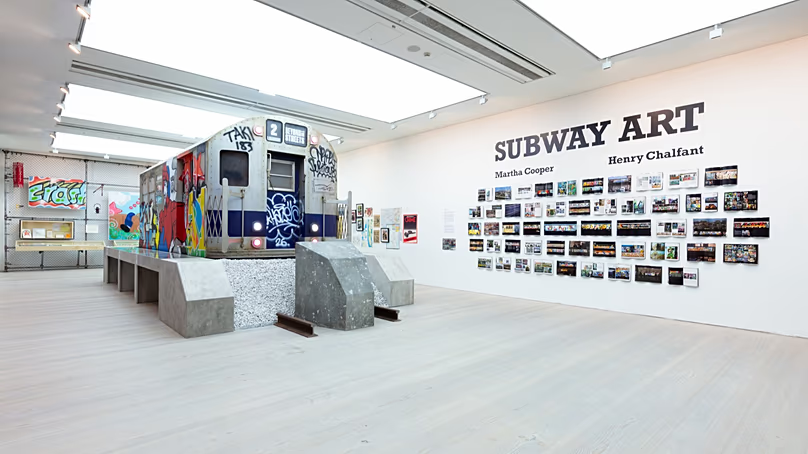
Among its central attractions is a reconstructed New York subway carriage, recalling the graffiti movement that transformed public transportation into an unconventional artistic platform during the 1970s and 1980s. Historical materials document the development of graffiti alongside the institutional responses it provoked, illustrating how expressions once regarded primarily as vandalism gradually acquired recognition within contemporary art.
The exhibition features influential figures including FUTURA 2000, LADY PINK, Shepard Fairey, Jenny Holzer, KAWS and the Guerrilla Girls. Their contributions demonstrate the diversity of urban artistic expression, connecting visual experimentation with political criticism, social identity and changing relationships between public space and creative freedom.
Music occupies an equally prominent position. British artist and producer Goldie, whose career developed through graffiti before his international success in jungle and drum and bass, is represented through an immersive recreation of a Metalheadz record shop. The installation connects the visual language of street art with the musical innovation that helped define Britain’s underground culture.
Photography provides another perspective on this transformation. Images by Normski document the development of British hip-hop, while American photographer Estevan Oriol examines the visual identities of Los Angeles communities, including the distinctive lettering associated with Latino street culture. Their work demonstrates how photography can preserve social histories that might otherwise remain outside conventional cultural archives.
The exhibition also revisits the political significance of the 2 Tone movement, which connected ska and punk music with anti-racist messages in late-1970s Britain. Other sections address feminist activism, social protest and the role of creative expression in challenging established authority.
Beyond its historical scope, Beyond the Streets raises questions about the relationship between cultural authenticity and institutional recognition. Graffiti and underground music developed through informal networks, contested public spaces and communities frequently excluded from mainstream artistic institutions. Their presentation inside a prestigious London gallery illustrates both their expanding cultural influence and the changing boundaries of contemporary art.
The exhibition ultimately presents street culture not as an isolated artistic phenomenon, but as an interconnected history of creativity, social resistance and cultural exchange. Its enduring significance lies in demonstrating how ideas originating beyond traditional centers of influence can reshape the artistic identity of entire generations.
Beyond the News, the Pattern.