

 Phoenix 24
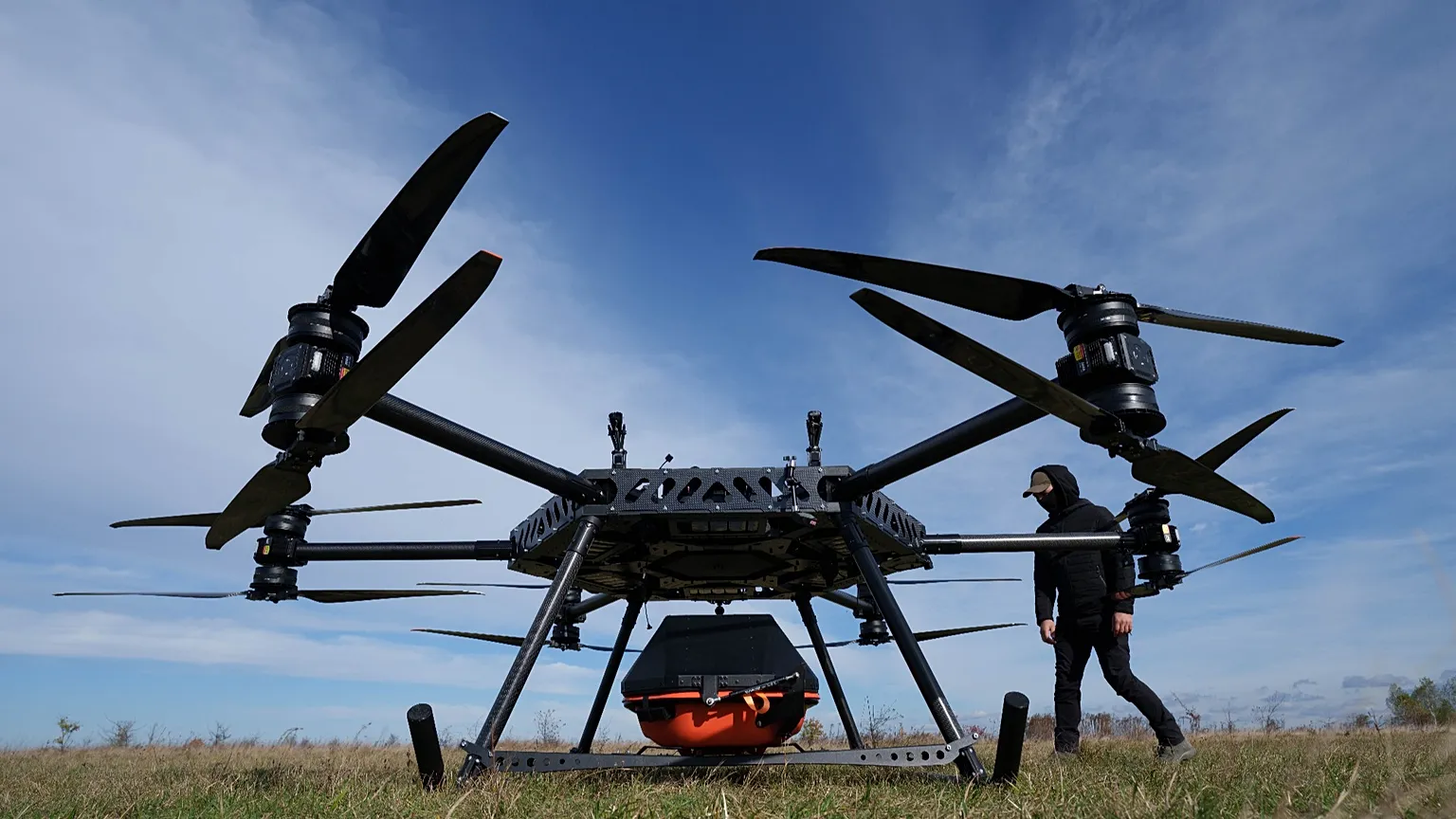
Unmanned aircraft offer a lifeline where conventional evacuations become impossible.
KYIV, Ukraine — November 2026. Ukraine is introducing a new generation of aerial evacuation drones capable of transporting wounded soldiers away from heavily contested front lines, marking a significant development in battlefield medicine and military robotics. The technology is designed to reach locations where mines, artillery fire and continuous drone surveillance make conventional rescue missions exceptionally dangerous.
One of the first soldiers rescued by the system was Yevgen, a Ukrainian serviceman who spent two days stranded after losing a foot to a landmine. Unable to escape safely by ground, he was evacuated inside a specially designed capsule carried by an unmanned aircraft. His experience, documented by AFP and Euronews, illustrates how technological innovation is becoming increasingly important to military medical operations.
The aircraft, called StarGate, was developed by Ukrainian manufacturer SkyFall following a request from the military’s CODE 9.2 assault regiment. Equipped with six rotors and a medical transport compartment, the drone can reportedly carry up to 150 kilograms, reach speeds of 105 kilometres per hour and operate across distances of approximately 30 kilometres. Each unit costs around $50,000, while the company aims to expand manufacturing capacity to as many as 1,000 aircraft monthly by the end of 2026.
Unlike conventional ground evacuation robots, which may require several hours to navigate damaged roads, minefields and difficult terrain, StarGate can transport casualties through the air in a fraction of that time. During Yevgen’s rescue, the operation reportedly lasted approximately 15 minutes, although repeated attempts were necessary because Russian attack drones threatened the aircraft before takeoff.
The mission also demonstrated the emerging role of artificial intelligence in military aviation. When Russian electronic interference temporarily disrupted communication between the drone and its remote pilot, onboard automated navigation reportedly maintained control until the connection was restored. This capability offers an additional safeguard, although the incident also revealed the vulnerability of remotely operated medical transport systems to electronic warfare.
Ukraine’s Ministry of Defence has documented several pioneering aerial evacuation missions since October, using both purpose-built medical drones and adapted heavy-lift aircraft. Ground robots remain central to frontline logistics, having completed more than 31,000 transport and evacuation missions during October alone, according to official Ukrainian figures.
Military personnel nevertheless acknowledge that aerial evacuation remains an emerging capability requiring further operational assessment. Weather conditions, payload limitations, electronic interference and exposure to enemy fire continue to present substantial challenges, while successful demonstrations do not yet establish reliability across different battlefield environments.
The development reflects a broader transformation of warfare in which unmanned systems increasingly perform tasks traditionally requiring direct human exposure to danger. For wounded soldiers, however, the significance is more immediate: a technology developed for military necessity may create another opportunity to survive injuries in areas where rescue once appeared impossible.
Where Innovation Meets Responsibility.