

 Phoenix 24
Europe’s technological ambitions collide with urgent diplomatic priorities.
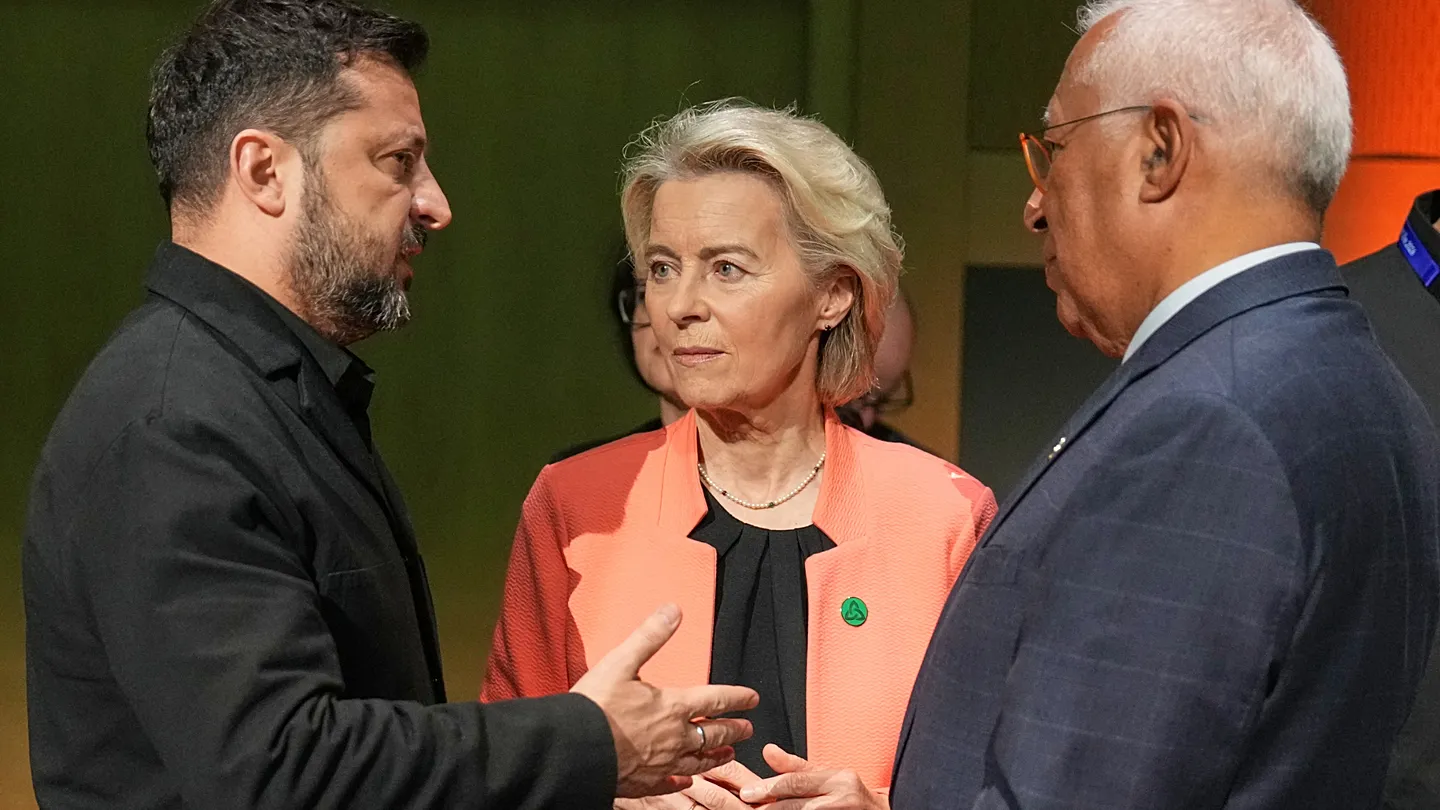
DUBLIN, Ireland. European Union leaders gathered in Dublin on November 13 for their first summit-level discussion dedicated to artificial intelligence, but disagreements over who should represent the bloc in negotiations to end Russia’s war in Ukraine threatened to dominate the meeting. The competing priorities exposed tensions between Europe’s technological ambitions and its ability to coordinate foreign policy.
European Council President António Costa introduced AI as a central topic for the informal gathering, intending to examine economic competitiveness, technological sovereignty and the societal implications of increasingly powerful systems.
However, Italian Prime Minister Giorgia Meloni urged Costa to establish a clearer European negotiating mandate, warning that overlapping diplomatic formats could undermine the EU’s credibility in discussions concerning Ukraine.
The proposal intensified an institutional disagreement involving Costa and EU foreign policy chief Kaja Kallas. Both maintain that their existing responsibilities provide a basis for representing European interests, while several national leaders favor relying on established diplomatic arrangements.
Luxembourg’s Prime Minister Luc Frieden identified Costa as a natural representative, whereas Kallas emphasized the division of responsibilities agreed upon when EU leaders appointed senior officials in 2024.
German Chancellor Friedrich Merz defended the existing E3 framework involving Germany, France and the United Kingdom, which also coordinates with Poland and Italy on security guarantees for Ukraine.
Ukrainian President Volodymyr Zelenskyy has urged European governments to clarify their representation before the end of November. The question remains unresolved, with no definitive appointment established in the summit’s initial discussions.
Meanwhile, the AI agenda brought together two influential figures representing different dimensions of technological development.
Arthur Mensch, chief executive of French AI company Mistral, was invited to discuss Europe’s competitiveness against American and Chinese technology companies. His participation reflects growing interest in strengthening European capabilities in advanced AI models and critical digital infrastructure.
Nobel laureate Geoffrey Hinton was invited to address AI’s societal implications, including the possibility that increasingly capable systems could develop beyond effective human control.
The discussions also coincide with European initiatives intended to strengthen domestic technology suppliers, including proposals concerning public procurement in strategically sensitive sectors.
The summit illustrates two distinct challenges confronting the European Union. In artificial intelligence, it seeks greater technological independence while remaining integrated into international markets. In foreign policy, it must reconcile national diplomatic interests with the need for a coherent European position.
Both debates ultimately concern Europe’s capacity to act collectively in areas increasingly shaped by external powers.
Behind Every Decision, a Larger Consequence.