

 Phoenix 24
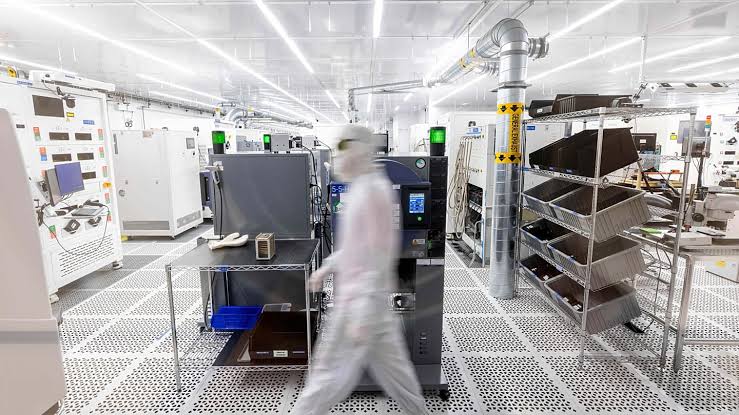
A transatlantic technology alliance faces a critical diplomatic test.
BRUSSELS, Belgium. The European Union is resisting a proposal by President Donald Trump’s administration to expand Pax Silica, a United States-led artificial intelligence supply chain initiative, into a broader economic security agreement. The disagreement has exposed differences over technological sovereignty, regulatory authority and the conditions under which Washington and Brussels should coordinate their responses to global competition in advanced computing.
The proposed declaration, reviewed by European Union ambassadors on November 11, would establish a common framework for protecting sensitive technologies, critical infrastructure and strategically important supply chains. Washington wants participating governments to endorse the agreement during a ceremony scheduled for November 15 in San Francisco.
Pax Silica was initially designed to strengthen cooperation in securing the materials and technologies essential to artificial intelligence development, including advanced semiconductors and critical minerals. The European Union joined the initiative in June, following the participation of several member states individually, although France had expressed reservations about the arrangement.
The latest American proposal would extend that cooperation into economic security, emphasizing coordinated responses to technological vulnerabilities and economic coercion. Its central argument is that national security increasingly depends on protecting the industrial and digital systems supporting economic activity.
European concerns focus primarily on the agreement’s broad definitions of sensitive technologies and critical infrastructure. Several member states are seeking more precise criteria, fearing that ambiguous provisions could give Washington substantial discretion to introduce restrictions affecting European companies or pressure allied governments to adopt similar measures.
The disagreement reflects earlier tensions over American export controls. In 2025, the Biden administration introduced the AI Diffusion Framework, which would have restricted access to advanced artificial intelligence chips for several European countries. Although the Trump administration withdrew those measures before implementation, the proposed restrictions generated concerns about their compatibility with the EU’s single market.
Such concerns remain relevant because advanced AI infrastructure depends heavily on technologies designed by American companies. Restrictions on access to specialized processors can influence research capabilities, data center investment and the development of commercially competitive AI systems.
Another point of disagreement involves terminology. Trump has promoted the expression superintelligence as an alternative to artificial intelligence, while the European Commission has proposed clarifying that references to the former should be understood within the established European legal definition of AI.
The distinction carries regulatory implications. The European Union’s Artificial Intelligence Act establishes a legal framework governing the development and deployment of AI systems, including obligations concerning transparency, risk management and regulatory oversight. Introducing alternative terminology into international agreements could create uncertainty about the relationship between diplomatic commitments and existing legislation.
Washington has criticized aspects of the European regulatory approach and is proposing a Pax Silica working group to examine policies intended to encourage technological innovation. European authorities, meanwhile, are seeking to preserve their ability to regulate AI independently while maintaining cooperation with the United States.
The dispute therefore concerns more than the wording of a diplomatic declaration. It raises questions about how technological alliances should distribute decision-making authority between partners whose economic interests overlap but whose regulatory priorities are not identical.
The United States occupies a central position in advanced AI semiconductor design and related technological infrastructure. Europe, despite its scientific capabilities and industrial expertise, remains dependent on non-European providers across several critical components of the digital economy. This imbalance complicates efforts to establish cooperation without reinforcing existing technological dependencies.
At the same time, both sides share concerns about supply chain resilience, access to critical materials and the strategic implications of China’s expanding technological capabilities. These common interests provide a foundation for negotiations, even as disagreements persist over implementation.
European governments have authorized the European Commission to represent the bloc in negotiations with Washington. However, that mandate does not automatically permit the Commission to sign the proposed declaration, and approval may not arrive before the planned San Francisco ceremony.
The distinction is significant. Negotiating participation demonstrates continued engagement, while withholding authorization to sign would indicate that unresolved concerns require further diplomatic discussion. Neither outcome necessarily constitutes a withdrawal from Pax Silica itself.
For the Trump administration, the challenge is developing a framework capable of strengthening technological coordination without creating additional resistance among European partners. For Brussels, the immediate priority is ensuring that cooperation does not undermine the legal certainty and regulatory autonomy underpinning its digital market.
The negotiations illustrate a broader transformation in international economic relations. Artificial intelligence is no longer treated exclusively as a commercial technology or scientific discipline. Its underlying infrastructure has become an increasingly important consideration in industrial policy, national security and diplomatic cooperation.
Whether the United States and the European Union reach an agreement will depend on their ability to reconcile shared security objectives with different approaches to technological governance. The outcome could influence how future international AI partnerships balance strategic coordination, economic competitiveness and national regulatory authority.
Where Facts Meet Perspective.