

 Phoenix 24
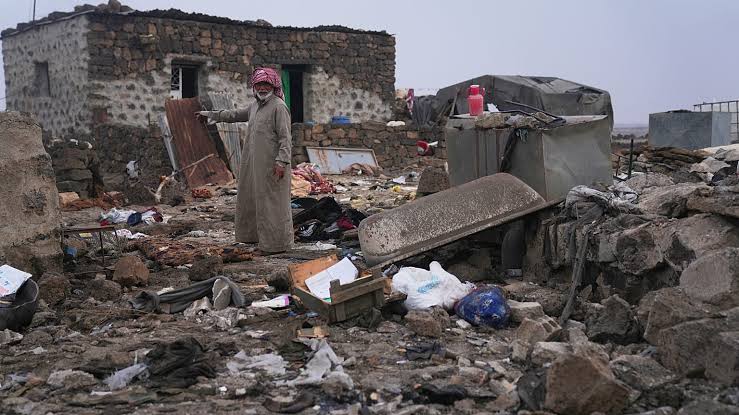
Cross-border military action exposes a fragile security partnership.
DAMASCUS, SYRIA.
Syria has condemned Jordanian airstrikes on its southern territory after an operation targeting suspected Islamic State militants left seven civilians dead, according to Syrian authorities. The strikes, carried out on Monday evening in the provinces of Daraa and Suwayda, have opened a diplomatic dispute between neighboring governments that otherwise share an interest in containing militant activity and protecting their common border.
Jordan acknowledged the military operation on Tuesday, saying its air force had attacked locations associated with Islamic State operatives. Government spokesperson Mohammad Al-Momani claimed that more than 20 militants were killed and a major weapons depot was destroyed. Amman described the strikes as a response to imminent security threats and linked the operation to a recent attack on a Greek Orthodox church in Jordan’s Karak governorate, where nine people were killed.
The military justification, however, has become inseparable from the civilian consequences. Syria’s civil defence authorities reported that five members of one family, including three children, were killed in Daraa. Two additional deaths were recorded in Daraa and neighboring Suwayda. The figures provided by Syrian authorities and Jordanian officials concern different categories of casualties and have not been independently reconciled.
Jordan expressed regret over the civilian deaths while maintaining that its forces had sought to avoid civilian locations. Al-Momani defended the operation as an intelligence-led response to threats against Jordanian security. That explanation has not resolved questions about the circumstances in which residential areas were struck or the intelligence used to identify the targets.
Damascus has challenged the operation on a separate but equally consequential basis. Syria’s Foreign Ministry said Jordanian aircraft entered Syrian airspace without advance notification or coordination, describing the action as a violation of national sovereignty. Jordanian military statements, meanwhile, have indicated that coordination took place, leaving the two governments presenting conflicting accounts of the arrangements preceding the attack.
The disagreement is significant because Syria and Jordan have maintained security cooperation against terrorism, weapons trafficking and cross-border drug smuggling. Both countries face risks from armed groups operating in border regions, where criminal networks and militant organizations have complicated efforts to establish lasting security. Military cooperation has therefore become an important element of their bilateral relationship, even as the latest incident exposes competing expectations over operational authority.
The attack on the church in Karak added urgency to Jordan’s security concerns. Authorities linked the violence to suspected extremists, although the full chain of responsibility and any direct operational connection to the locations subsequently bombed in Syria have not been independently established. The distinction matters because identifying an organization as a security threat does not, by itself, demonstrate that every targeted site was involved in a particular attack.
The strikes also occur during Syria’s continuing political and security transition following the collapse of Bashar al-Assad’s government in December 2024. Establishing control over territory, strengthening state institutions and managing relations with neighboring countries remain central challenges. An uncoordinated foreign military operation, as Damascus describes it, adds another complication to efforts to consolidate national authority.
Despite the confrontation, neither government has announced a suspension of bilateral security cooperation. Syrian officials have instead proposed an urgent joint field and security committee intended to prevent further incidents, strengthen border protection and clarify coordination procedures. Jordan has also expressed support for continued institutional cooperation, suggesting that both governments are seeking a mechanism to contain the dispute.
The proposed committee could become an important test of whether the two countries can reconcile immediate security objectives with respect for territorial sovereignty. Its effectiveness will depend on clear operational rules, reliable communication and a credible process for examining civilian casualties. Publicly available statements do not yet establish whether the governments will conduct a joint investigation into the strikes.
Beyond the diplomatic disagreement, the deaths in southern Syria highlight the consequences of military action in populated areas. Jordan maintains that its operation addressed an immediate terrorist threat, while Syria disputes the manner in which it was conducted. Both claims require scrutiny, particularly where civilian protection and the use of force across an international border are concerned.
The immediate challenge for Damascus and Amman is to prevent a security partnership from becoming another source of regional instability. Their response will reveal whether shared counterterrorism interests can coexist with enforceable limits on military operations and transparent accountability for civilian harm.
Beyond the Headlines, Accountability Matters.