

 Phoenix 24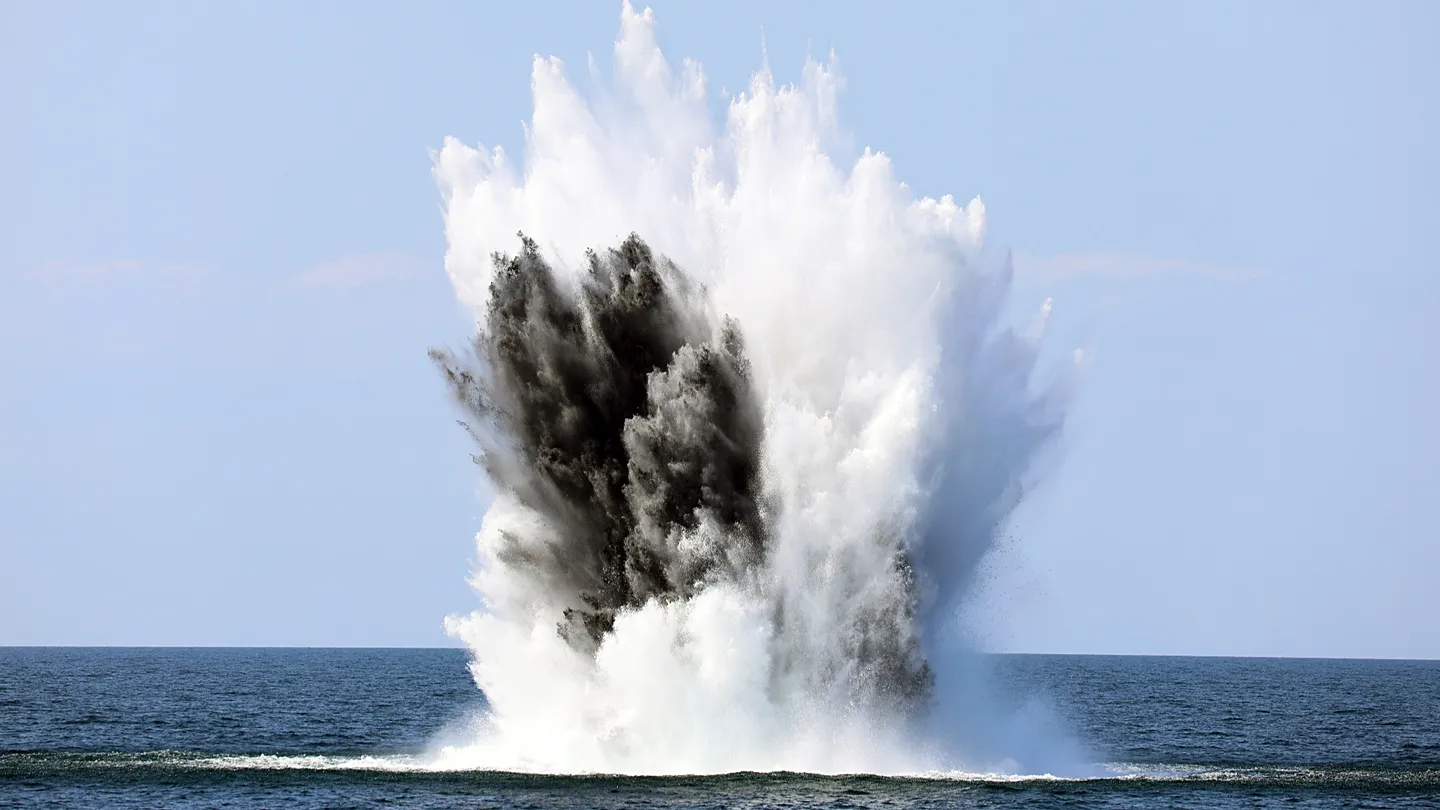
Five British naval mines still threaten navigation more than eight decades after the war.
Świnoujście
Polish military divers have begun a multi day operation to neutralize unexploded World War II mines discovered near the planned breakwater of a new outer port in Świnoujście, on the Baltic coast.
The operation started on October 5 and is expected to continue through October 8. It is being carried out by mine clearance divers from the 12th Minesweeper Squadron, operating under Poland’s 8th Coastal Defense Flotilla.
The five objects were identified as British air dropped naval mines of the Mark IV, V and VI types. Each is approximately three meters long and contains between 350 and 550 kilograms of explosive material. Together, they represent an explosive charge equivalent to roughly 2,500 kilograms of TNT.
The mines were originally designed to be dropped from aircraft into maritime areas and react to the acoustic and magnetic signatures of passing ships. Despite having remained underwater for decades, Polish military authorities still consider them a genuine danger to navigation and to future infrastructure planned for the area.
Their location adds complexity to the operation. The explosives lie roughly 1,000 meters from the breakwater serving the Świnoujście LNG terminal and at a depth of around 10 meters.
Safety zones have therefore been established across parts of Pomeranian Bay. Navigation restrictions are in effect, and entering the water is prohibited along a coastal stretch extending from Ahlbeck in Germany through Świnoujście to Międzyzdroje. The restricted maritime area extends as far as 8.8 kilometers offshore during operational hours.
Polish authorities have emphasized that remaining on beaches and nearby protected land areas does not pose the same level of danger. Vessel traffic must maintain a safety radius of 821 meters from the neutralization site.
Residents and tourists have also received emergency alerts instructing them to remain out of the Baltic waters while the work is underway and to follow directions issued by local authorities.
The discovery was made during preparatory work connected to construction of the future outer port. It is another reminder that Europe’s modern infrastructure continues to intersect physically with the unexploded legacy of the Second World War.
More than 80 years later, some battlefields have not disappeared. They have simply moved beneath roads, cities and coastlines.
Beyond the news, the pattern.