

 Phoenix 24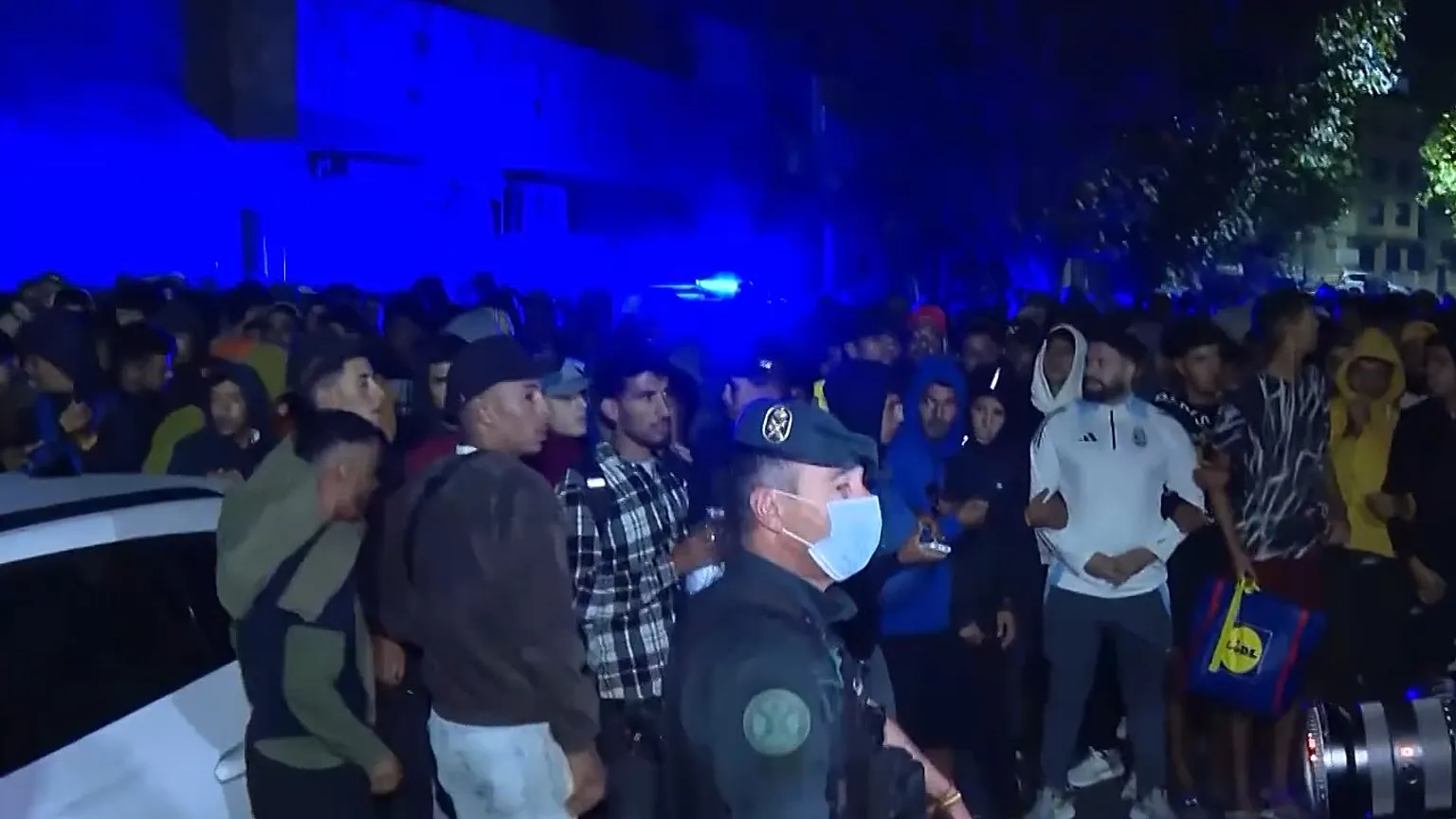
A humanitarian emergency exposes the limits of reception infrastructure.
Ceuta, Spain.
Ceuta is facing renewed pressure on its reception infrastructure after an operation to relocate thousands of migrants from coastal encampments exceeded the capacity of a newly established temporary shelter at the city’s port. The facility, designed to accommodate 1,700 people, could not absorb the more than 4,000 migrants living on Trampolín and Benítez beaches. According to Euronews, over 2,000 people were left without accommodation and returned to the shoreline, while government sources estimated that approximately 3,000 migrants remained on the city’s streets. The failed relocation has intensified concerns about humanitarian conditions and coordination between Spanish authorities.
The operation began early Friday with a substantial deployment of the Civil Guard and National Police. Authorities intended to clear the coastal settlements and transfer their occupants to the port facility, but the number of people requiring assistance far exceeded the available spaces. Tensions developed during the movement, prompting intervention by Spain’s Police Intervention Unit, whose officers fired warning shots into the air to contain the crowd. Local authorities reported no serious incidents despite the confrontation.
The consequences became visible almost immediately. Plans to clean the beaches were suspended because thousands of migrants had nowhere else to go, leaving improvised shelters, tents and temporary structures in place. Trampolín beach continues to accommodate makeshift kitchens, a small market selling essential goods and an area used as a mosque. Meanwhile, the 1,700 people admitted to the port facility spent their first night there without significant incidents.
Ceuta’s second deputy president, Kissy Chandiramani, criticized the relocation operation, arguing that the autonomous city’s government and port authorities had not received adequate advance notification. She explained that the lack of coordination created additional tensions, particularly because the operation coincided with the arrival of children at a nearby school. Chandiramani urged the Spanish government to accelerate migration procedures and request assistance from the European Union. Her assessment reflects the local administration’s position on an emergency involving several levels of government.
Administrative capacity represents another immediate challenge. According to Chandiramani, authorities are currently processing approximately 100 immigration cases daily, a pace she considers insufficient given the number of people requiring decisions. She argued that additional personnel and resources could substantially reduce processing times, potentially allowing the situation to be addressed within 15 days. That estimate remains a projection rather than an established operational timetable.
The emergency has also reached Spain’s national political debate. Enrique Santiago, a parliamentary representative of United Left, called for stronger border management while insisting that immigration legislation must respect human rights. His position comes amid discussion of possible changes to Spain’s immigration law following a Supreme Court ruling affecting the return of migrants who enter Ceuta by swimming. Any legislative reform would need to address the applicable legal safeguards alongside border-management objectives.
The situation exposes a fundamental capacity problem: relocating people does not resolve a humanitarian emergency when the destination cannot accommodate them. Reception facilities, administrative resources and coordination between institutions must function together to prevent displaced populations from returning to the same precarious conditions.
Ceuta’s immediate challenge is to provide adequate accommodation while processing individual cases in accordance with applicable law. The broader responsibility extends to Spain’s national authorities and the European institutions from which the city is requesting support.
Más allá de la noticia, el patrón. / Beyond the news, the pattern.