

 Phoenix 24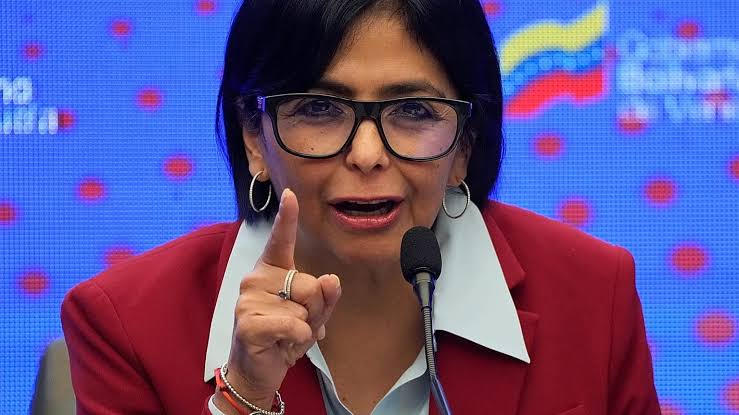
Digital freedom enters a new political negotiation.
Caracas, Venezuela.
Venezuela has begun restoring access to several independent news websites after years of government-imposed restrictions, coinciding with a new round of political negotiations between the interim administration and opposition representatives. The National Telecommunications Commission, known as Conatel, announced on September 17 that internet service providers had received technical instructions to remove blocks affecting selected national and international media outlets. The decision follows a recommendation from the government-backed Program for Peace and Democratic Coexistence to acting President Delcy Rodríguez. It represents a measurable change in access to information, although the broader system of digital restrictions remains in place.
According to the digital rights organization VE Sin Filtro, approximately ten news websites have regained accessibility, including outlets that had experienced prolonged restrictions. The Colombian magazine Semana is among those identified as accessible again, while other previously restricted publications include Efecto Cocuyo, El Pitazo and Crónica Uno. However, preliminary monitoring indicates that implementation remains inconsistent across telecommunications operators. Some websites continue to experience access problems despite the regulator’s announcement.
The scale of the remaining restrictions provides important context. VE Sin Filtro reported that approximately 200 internet domains were blocked in Venezuela before the latest measure, with news organizations accounting for a substantial proportion. The group has called for the removal of all remaining restrictions, including those affecting civil society organizations, political initiatives, communication platforms and virtual private networks. It considers the recent decision, alongside the restoration of access to X, a potentially significant reduction in internet censorship, while emphasizing that selective unblocking does not constitute unrestricted digital access.
The announcement coincides with the second round of negotiations between the Venezuelan government and opposition representatives, supported by the United States. Discussions are expected to address political guarantees, freedom of expression and institutional reforms associated with a potential political transition. The restoration of access to independent media introduces a concrete measure into a negotiating process whose broader outcomes remain unsettled. Whether the decision becomes part of a lasting institutional framework will depend on subsequent implementation and the commitments established by the participating parties.
The timing has particular significance for Venezuela’s information environment. Restrictions on digital publications affect not only journalists and media companies but also citizens seeking access to independent reporting and alternative accounts of public affairs. Removing selected blocks can expand the availability of information without necessarily resolving concerns involving press protections, regulatory discretion or future restrictions. The distinction between restoring access and establishing enforceable safeguards for freedom of expression remains central to assessing the measure.
The decision also illustrates the relationship between telecommunications regulation and political authority. Internet service providers are responsible for implementing Conatel’s instructions, making the practical restoration of access dependent on technical compliance across different networks. Independent monitoring will therefore be necessary to determine whether previously restricted publications become consistently accessible throughout the country. The announcement alone cannot establish that every affected website has been restored.
Venezuela’s latest measure introduces a verifiable change into an evolving political dialogue, but its institutional significance remains limited by the restrictions that continue to exist. The coming negotiations will provide an opportunity to address whether freedom of expression receives broader and more durable legal protections. For now, the restoration of selected news websites marks a partial reopening of the country’s digital information environment rather than the end of internet censorship.
Cada silencio habla. / Every silence speaks.