

 Phoenix 24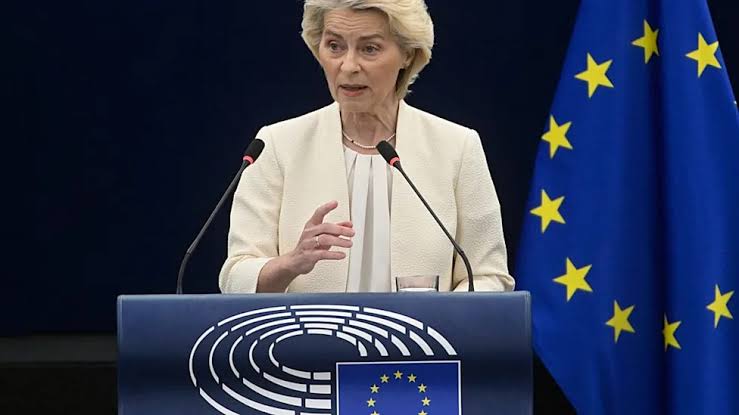
A border emergency tests Europe’s diplomatic cohesion.
Strasbourg, France.
The European Parliament has approved a resolution holding Moroccan authorities responsible for the mass migration crisis in Ceuta, bringing renewed scrutiny to relations between Spain, Morocco and the European Union. The measure passed with 339 votes in favor, 225 against and 16 abstentions, supported by the European People’s Party and right-wing parliamentary groups despite opposition from the Socialists. The decision follows the arrival of approximately 80,000 migrants in the Spanish enclave during July, an episode that overwhelmed local infrastructure and exposed vulnerabilities along Europe’s southern frontier. What began as a border emergency has become a dispute involving territorial sovereignty, migration policy and diplomatic accountability.
The resolution condemns the mass crossings and characterizes the instrumentalization of irregular migration as a form of hybrid warfare against the territorial integrity of a European Union member state. It calls on Morocco to honor its commitments concerning border surveillance and migrant readmission while reaffirming Spanish sovereignty over Ceuta and Melilla. Moroccan authorities have rejected allegations that they orchestrated the crisis, leaving competing accounts of responsibility at the center of the diplomatic dispute. The parliamentary resolution establishes a political position but does not constitute a judicial finding that Morocco organized the crossings.
The human consequences remain substantial. According to the European Parliament, 141 people died at sea during the events of July 30 and 31, underscoring the dangers faced by those attempting to reach European territory. The crisis placed extraordinary pressure on Ceuta’s public services and emergency response capabilities, raising questions about preparedness and the coordination of humanitarian assistance. Beyond the confrontation between governments, the episode highlights the continuing challenge of reconciling border enforcement with individual rights and international protection obligations.
Political disagreements have also intensified within Spain and the European institutions. The European People’s Party criticized Prime Minister Pedro Sánchez’s administration over its response to earlier security warnings and the timing of requests for European assistance, while Socialist representatives rejected the resolution. European Commission President Ursula von der Leyen reaffirmed that Ceuta’s border is also a European border, emphasizing the collective significance of the territory’s security. The parliamentary dispute illustrates how migration emergencies can become intertwined with domestic political accountability and competing interpretations of European solidarity.
The resolution also introduces an economic dimension by calling for mechanisms that would allow the European Union to suspend payments to partner countries or recover funds when cooperation obligations are not fulfilled. Such proposals increase political pressure on Morocco, although the parliamentary vote does not itself terminate existing agreements or automatically suspend financial assistance. European institutions have already allocated €114.7 million in emergency funding to address the situation, while lawmakers have requested a specific strategy to strengthen Ceuta and Melilla. These measures place financial cooperation, territorial security and diplomatic relations within the same institutional debate.
The crisis ultimately exposes a structural tension in European migration governance: border protection depends partly on cooperation with neighboring countries whose strategic interests do not always coincide with those of the European Union. Spain and Morocco remain geographically and economically interconnected, making continued dialogue essential regardless of their disagreements. The parliamentary resolution raises the political stakes without resolving the underlying questions of responsibility or the humanitarian consequences. Ceuta now stands at the intersection of European sovereignty, international cooperation and the protection of human life.
Phoenix24: journalism without borders.