

 Phoenix 24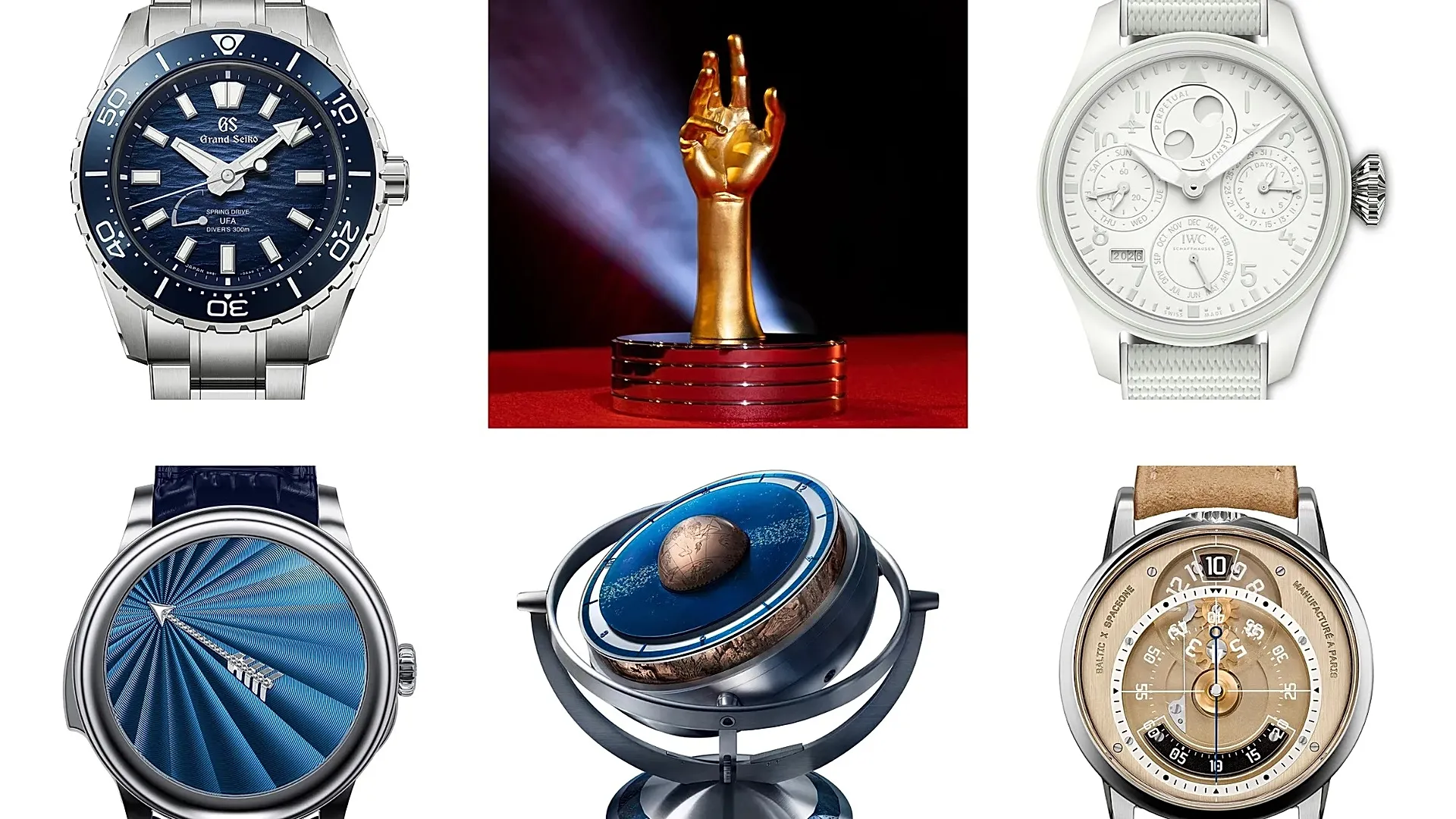
Independent workshops, experimental mechanics and accessible design are reshaping luxury horology’s most prestigious competition.
GENEVA, SWITZERLAND
The Grand Prix d’Horlogerie de Genève has selected 84 watches from 320 entries submitted by 194 brands for its annual awards. The nominees compete across 14 categories and for 19 prizes, including the Aiguille d’Or, widely regarded as contemporary watchmaking’s highest distinction.
Among the most technically radical contenders is Konstantin Chaykin’s ThinKing Mystery, produced in a Moscow workshop. Measuring only 1.65 millimetres thick, its case functions as the movement’s structural base while sapphire discs display the time. Only 12 pieces will be made, each priced at approximately €426,000.
Astronomy appears through Christiaan van der Klaauw’s Grand Planetarium Eccentric Silicium. Its hand-painted planets move around an oxidized-silicon dial at their actual relative speeds, meaning Neptune requires 165 years to complete one rotation. Ulysse Nardin and Urwerk offer a different interpretation of motion through the UR-FREAK, combining a rotating movement with satellite-hour cubes and eliminating conventional hands and a crown.
Other nominees explore sound, light and extreme precision. L.Leroy’s Vox Temporis uses a rotating dial and minute-repeater mechanism to announce the time acoustically. Grand Seiko’s Spring Drive U.F.A. Ushio 300 Diver is designed to deviate by no more than 20 seconds annually. IWC’s Big Pilot’s Watch Perpetual Calendar Ceralume incorporates luminous material into its ceramic case, dial, hands and strap, allowing the entire watch to glow for more than 24 hours.
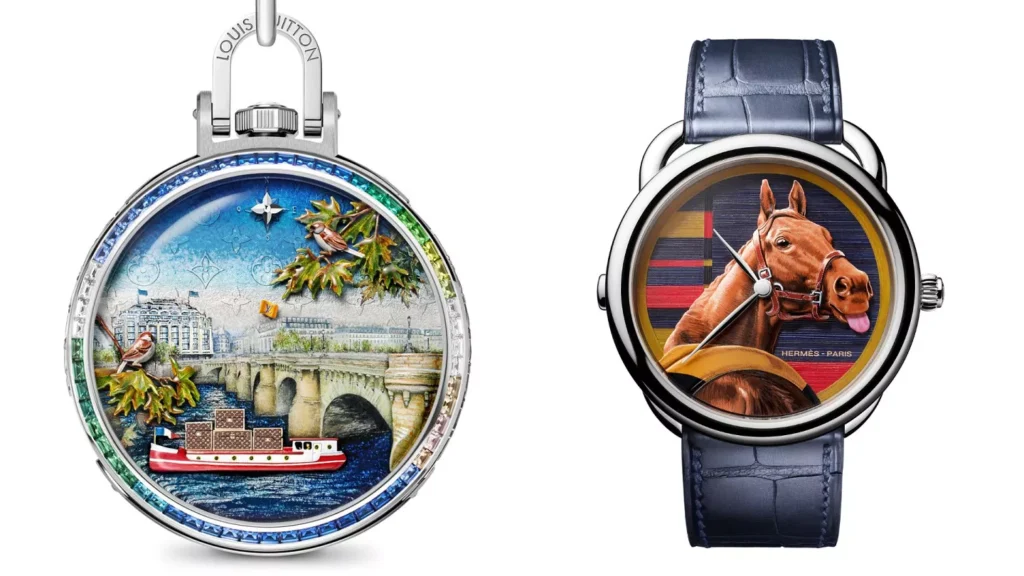
The mechanical-clock category contains the competition’s most extravagant object. The Louis Vuitton and De Bethune LVDB-03 Sympathique is a 10-kilogram clock that mechanically winds and resets its accompanying wristwatch overnight. Decorated with meteorite, rose gold and engraved illustrations, the two-piece edition costs approximately €4.7 million.
At the opposite end of the price spectrum, the €3,200 SpaceOne and Baltic Seconde Majeure demonstrates that mechanical originality is not restricted to six-figure collections. Its visible mechanism advances the hour through a coordinated jumping display. These eight models are editorial selections rather than confirmed favourites of the jury, which will examine the nominated pieces before announcing the winners.
The competition is notable for several absences. Rolex, Patek Philippe, Cartier, Vacheron Constantin, Richard Mille and other historic manufacturers are not participating. Their absence does not diminish the awards, but it gives independent makers greater visibility and reveals how innovation is moving beyond the industry’s most commercially dominant names.
Lo visible y lo oculto, en contexto. / The visible and the hidden, in context.