

 Phoenix 24
Gemini turns personalization into a portable identity.
Mountain View, March 2026.
Google’s Gemini is increasingly being presented not just as a chatbot, but as a system capable of reproducing a user’s preferences, tone and working style across multiple tasks. The practical basis for that idea lies in the use of custom “Gems,” personalized AI assistants that users can configure for specific functions, workflows or communication styles. That is why the idea of building a kind of digital clone is gaining visibility. It is not a literal copy of the person, but a persistent behavioral profile that can respond, write or assist in ways that resemble them.
What makes this development significant is that personalization is no longer limited to a few saved prompts. Gemini now operates within a broader ecosystem where instructions, stored preferences and prior interactions can shape future outputs in a more tailored way. This changes the meaning of assistance. A conventional digital assistant reacts to commands. A personalized AI begins to mirror patterns, preserve tone and reproduce a usable version of a person’s decision style across different contexts.
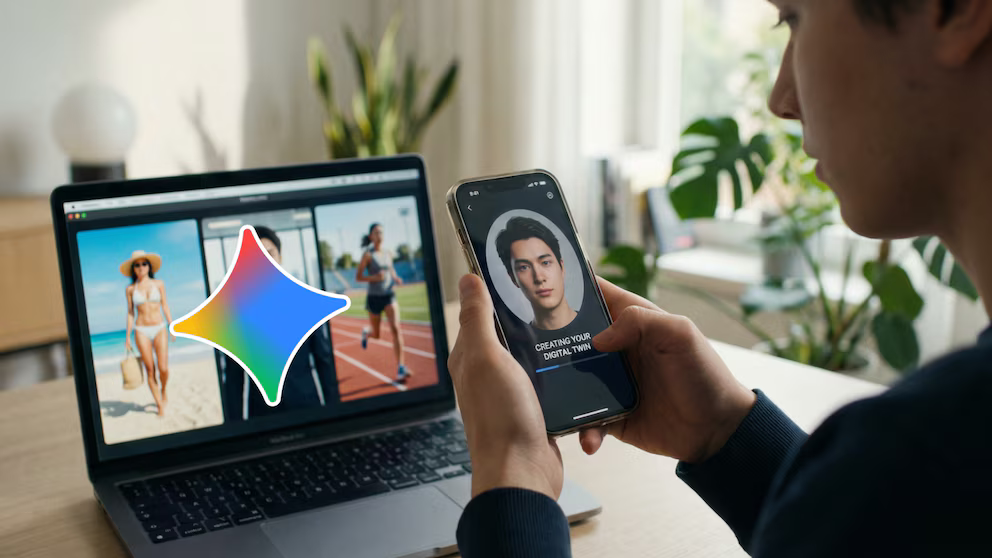
That shift has practical advantages. It can help users maintain consistency in writing, branding, planning, research and repetitive professional tasks. For many people, the appeal is obvious: instead of starting from scratch each time, they can rely on an AI layer that already understands how they think, how they want to sound and what kind of output they usually prefer. In that sense, the digital clone is really a productivity tool built around continuity.
But the deeper importance of this trend lies elsewhere. The more effectively an AI system can sound like its user, the more it stops feeling like a neutral instrument and starts functioning as an externalized extension of identity. That is where the conversation becomes more complex. Personalization is useful, but it also blurs the boundary between support system and proxy self. At that point, the question is no longer only what the assistant can do, but what it means to delegate parts of one’s voice and judgment to a machine.
There is also a governance issue beneath the convenience. A digital double only works because it is built on memory, instructions, interaction patterns and data persistence. That means customization is inseparable from the architecture that stores, manages and interprets personal information. Users may gain efficiency and coherence, but they do so within a system whose value depends precisely on how much of their behavioral profile it can retain and operationalize.
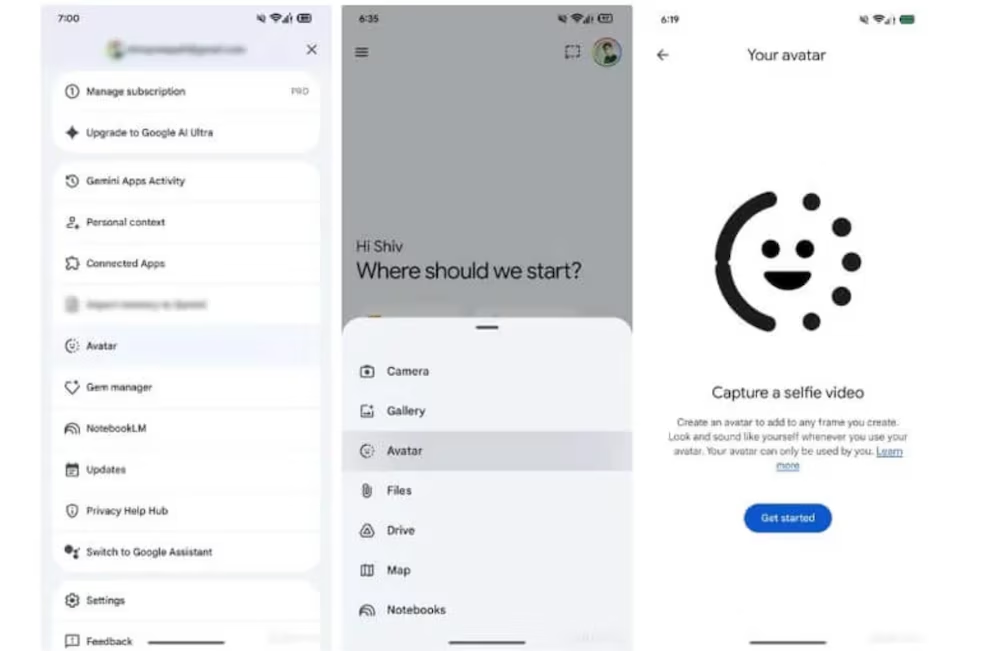
What this reveals is a broader direction in consumer artificial intelligence. The next stage of competition is not just about making models more powerful. It is about making them feel personally continuous, portable and reusable across everyday life. Gemini’s clone logic fits that trajectory. The user is no longer simply requesting answers. The user is constructing a reusable proxy that carries fragments of memory, style and preference from one task to another.
This is why the idea matters beyond a single tool or feature. It signals that AI is moving from generic utility toward identity shaped assistance. The promise is efficiency. The tradeoff is intimacy. And that tension is likely to define the next phase of mainstream artificial intelligence far more than novelty alone.
Phoenix24: inteligencia para audiencias libres. / Phoenix24: intelligence for free audiences.