

 Phoenix 24
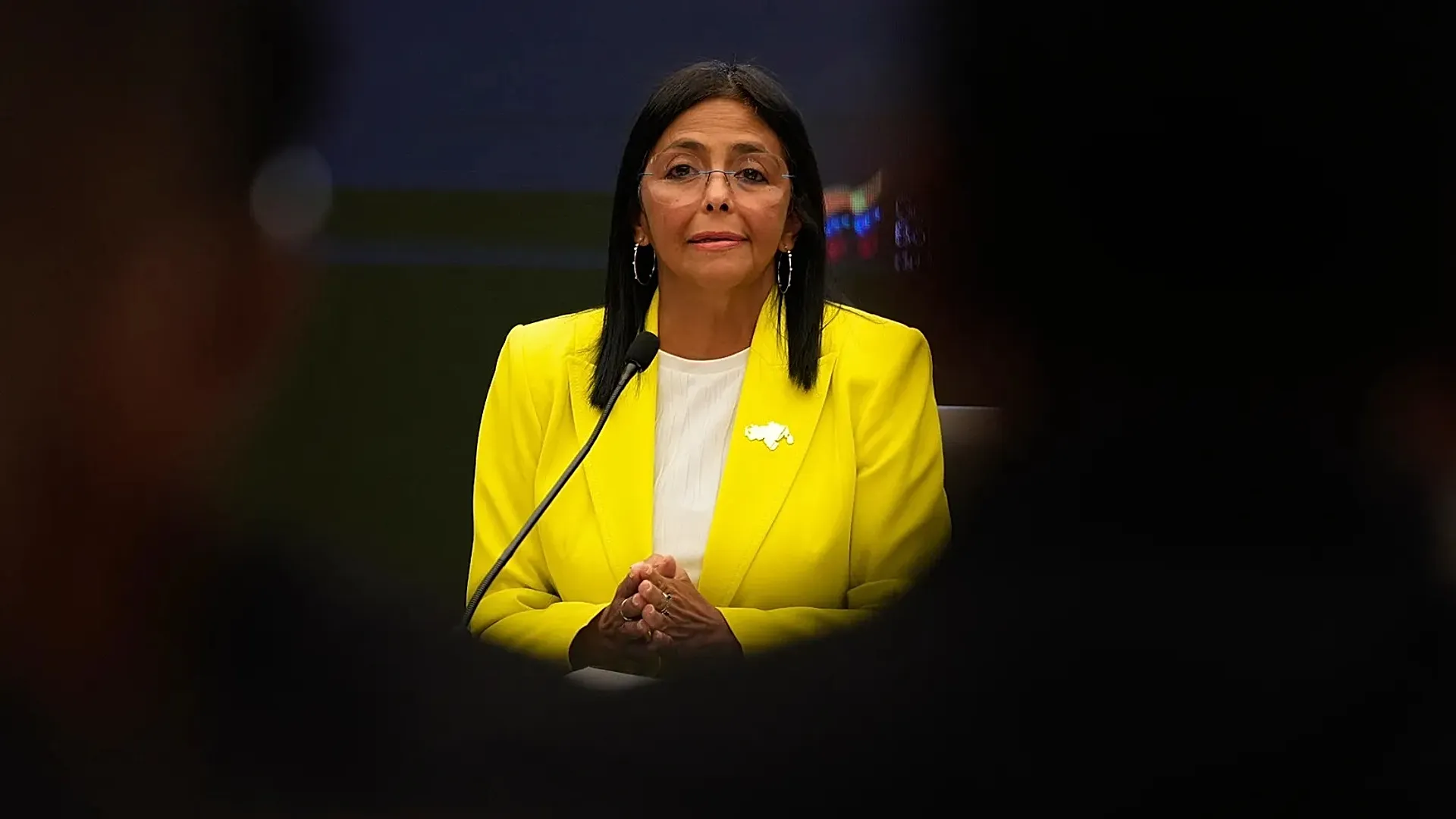
Her rise reflects decades of political influence, strategic alliances and continuity within the Chavista movement.
Caracas, Venezuela.
Delcy Rodríguez has emerged as a central figure in Venezuelan politics amid a period of profound national transition, assuming key leadership responsibilities at a time when the country’s governance structures are under intense domestic and international scrutiny. A seasoned politician and lawyer, Rodríguez has long been associated with the Chavista movement founded by Hugo Chávez, and her current role highlights both her personal trajectory within the ruling political faction and the broader dynamics of continuity and adaptation in Venezuela’s political landscape.
Rodríguez’s political career began in the context of Venezuela’s turbulent late twentieth and early twenty-first century, when the rise of Chávez reshaped the country’s institutional architecture and political culture. She held positions in student politics before transitioning into national roles, eventually serving in senior capacities that included ministerial posts and representation in international forums. Her legal training and political acumen positioned her as a trusted ally within the government, facilitating her ascent through the ranks of the state apparatus.
Her tenure in high office has encompassed several roles central to the functioning of the Venezuelan state, including leadership within institutions responsible for social development and economic policy. Rodríguez’s experience in these domains afforded her visibility and influence at critical junctures in policy formulation, particularly in areas where social programs and governmental priorities intersected. Her close alignment with Chavista principles — emphasizing state intervention, redistribution and sovereignty in the face of external pressures — has made her a consistent presence in political decision-making circles.
Rodríguez’s role expanded further when she served as vice president of Venezuela, a position that placed her at the center of executive coordination and strategic planning. In this capacity, she worked closely with the presidential office on domestic governance and diplomatic engagement, reinforcing her stature as a key interlocutor between the state and various sectors of society. Her portfolio often involved navigating complex economic, social and security issues, underscoring the multifaceted nature of governance in a country facing persistent challenges.
Her assumption of interim leadership at the national level marks a significant moment in her career and reflects both institutional mechanisms and political calculations within the Chavista movement. As someone who has long been associated with the inner workings of the government, Rodríguez represents continuity for supporters who view her as a custodian of the political project initiated under Chávez and sustained during subsequent administrations. At the same time, her elevation has drawn international attention to questions about legitimacy, the rule of law and the prospects for dialogue with diverse political actors.
Rodríguez’s political identity is deeply intertwined with the history of Chavismo, a movement characterized by its blend of populist rhetoric, social policy experimentation and assertive assertions of sovereignty. Her public statements and policy positions have often reflected these themes, articulating a narrative of resistance to external pressure and prioritization of social inclusion as defined within the movement’s ideological framework. These positions have resonated with segments of the population that remain loyal to Chavista ideals, even as Venezuela confronts economic hardship and institutional strain.
Critics of Rodríguez point to her long association with an administration that presided over contraction in oil production, fiscal instability and political polarization. These critics emphasize the need for institutional reform and broader participation in governance that transcends entrenched factional alignments. In their view, her rise underscores the challenges facing Venezuela as it seeks a path that balances continuity with the aspirations of citizens demanding renewal and accountability.
International observers have noted that Rodríguez’s ascent occurs within a broader regional context of shifting alliances and evolving diplomatic stances toward Venezuela. Her leadership role places her at the forefront of potential negotiations with foreign governments, multilateral organizations and regional partners, all of whom are invested in the country’s stability and future direction. The reception she receives abroad may influence Venezuela’s ability to reengage with economic and political frameworks that have been strained by years of sanctions, migration flows and geopolitical contention.
As Delcy Rodríguez assumes a position of heightened responsibility, her political footprint — shaped by decades of engagement in the Chavista movement — will be scrutinized for indications of how Venezuela’s governance might evolve. Her leadership reflects both the persistence of established political currents and the uncertainties that accompany periods of transition, offering insight into how institutional continuity and political adaptation intersect in a nation at a crossroads.
Detrás de cada dato, hay una intención. Detrás de cada silencio, una estructura.
Behind every data point, there is an intention. Behind every silence, a structure.