

 Phoenix 24

When the body stops recognizing itself the first symptom is often confusion rather than pain.
Buenos Aires, December 2025
Reaching 50 no longer means stepping automatically into old age, but biology keeps its own calendar. One of the most discreet shifts that occur around that decade of life happens inside the immune system. It is not visible in the mirror, yet it changes how the body responds to threats and, en algunos casos, how it reacts against its own tissues. Rheumatologists, geriatricians and immunologists from different regions of the world coinciden en una idea central. The risk of developing an autoimmune disease does not disappear after youth. In many conditions it increases notably after midlife.
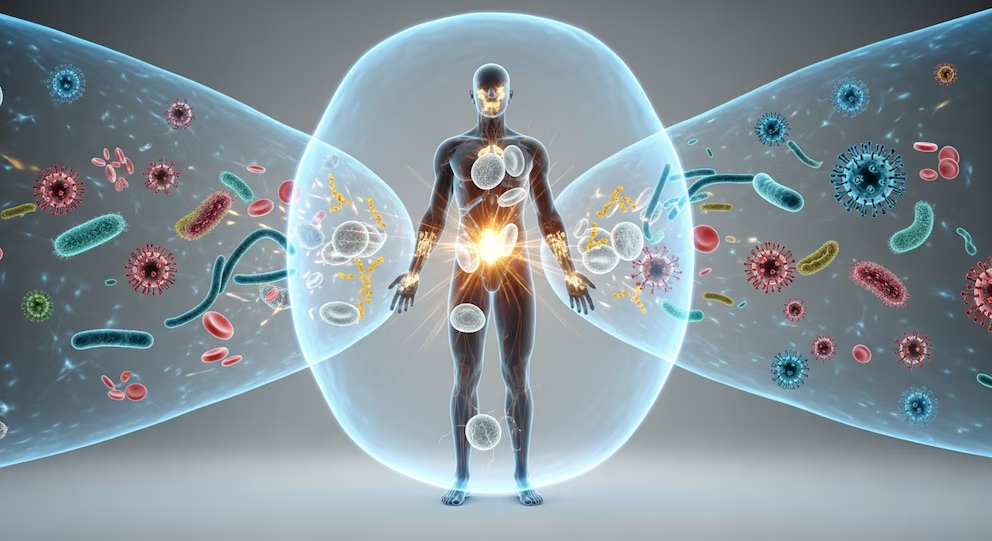
Specialists describe this process with a term that sounds technical but expresses a simple reality. Immunosenescence. As the years go by, the immune system loses part of its capacity to renew itself with fresh, well regulated cells. The production of new defenders in organs like the bone marrow and the thymus slows down. Old immune cells accumulate, some of them partially damaged, less precise and more inclined to produce low grade inflammation. Teams in Europe that study ageing underline that this does not mean the immune system stops working. Rather, it becomes less balanced, less able to distinguish clearly between what should be attacked and what should be tolerated.

At the same time, researchers in Asia have described another parallel phenomenon. A constant background of mild inflammation often present in older adults. It has been called inflammaging. Levels of certain inflammatory molecules stay slightly elevated even in the absence of infection. This constant noise can disturb the mechanisms that maintain tolerance to the body’s own components. Under these conditions, cells that should remain silent sometimes become activated against joints, glands, skin, intestines or the nervous system. It is not a sudden betrayal, but a slow erosion of the control mechanisms that keep the immune response in line.
In the Americas, clinical data from rheumatology centres show that diseases such as rheumatoid arthritis, some forms of thyroiditis, autoimmune liver disease and certain connective tissue disorders presentan un segundo pico de incidencia o de diagnóstico después de los 50 o 60 años. One reason is biological. Another is practical. Symptoms in older adults can be confundidos con signos de envejecimiento normal. Fatigue is attributed to age, joint pain to simple wear and tear, digestive changes to stress, skin alterations to climate or cosmetics. This leads to significant diagnostic delays. When the true cause is finally identified, the disease has often progressed silently for years.
Hormonal changes also play a relevant role. It has long been known that many autoimmune diseases affect women more frequently than men. Endocrinologists in Europe and North America have documented how the decrease in estrogen levels during and after menopause modulates immune responses. Estrogens act as regulators in several pathways of inflammation and antibody production. Their decline may tilt the balance in people who already carry genetic variants associated with autoimmunity. The consequence is not the automatic appearance of disease, but an increase in vulnerability in a context where the immune system is already changing due to age.
There is also the matter of accumulated exposure. Throughout life, the immune system interacts with infections, vaccines, pollutants, dietary patterns, stress, tobacco and a long list of environmental factors. Each of these elements leaves a mark. Research groups in Latin America have emphasized that this history of exposures can modify how genes related to immunity are expressed, without altering the DNA sequence itself. These epigenetic changes can either protect or predispose. After decades of such interactions, a person with genetic susceptibility may cross a threshold that they had managed to avoid during youth.
Another piece of the puzzle lies in the microbiome. Studies from centres in Japan and other Asian countries highlight that the populations of bacteria and other microorganisms that inhabit the intestine change with age. Diet, medications, infections and lifestyle alter this ecosystem. Because the microbiome maintains a constant dialogue with the immune system, its imbalance can contribute to abnormal responses. In some patients with autoimmune diseases, specific patterns of microbial disruption have been observed. It is not yet clear whether those changes cause the disease or appear alongside it, but many researchers consider them part of the broader context that becomes more frequent after midlife.
Despite all these risk factors, it is important to avoid fatalistic interpretations. Age is a context, not a sentence. Specialists in geriatric medicine insist that many older adults live long lives without developing autoimmune illness. Lifestyle factors such as maintaining a healthy weight, avoiding tobacco, moderating alcohol, staying physically active and preserving good sleep habits help reduce systemic inflammation and improve immune regulation. Early attention to persistent or unexplained symptoms also matters. Detecting a disease at an early stage often allows less aggressive treatments and better prognosis.
On the clinical side, experts advocate for a change of perspective. When a patient over 50 presents with a constellation of symptoms that do not fit cleanly into a single diagnosis, physicians are encouraged to consider autoimmune causes among their hypotheses. This includes unexplained fatigue, prolonged low grade fevers, recurrent joint pain with stiffness in the morning, unusual skin rashes, dry eyes or mouth that do not match simple ageing, and neurological or digestive manifestations without clear structural origin. None of these signs alone confirm disease. Together, they justify a deeper evaluation.

What emerges from the current body of research is a double message. The first is a warning. Ageing modifies the immune system in ways that can increase the risk of autoimmunity, especially after 50. The second is an opportunity. Understanding these mechanisms opens space for prevention, early detection and more precise treatments. The goal is not to eliminate the passage of time, something impossible, but to navigate it with better tools and less avoidable damage.
Information that anticipates futures. / Información que anticipa futuros.