

 Phoenix 24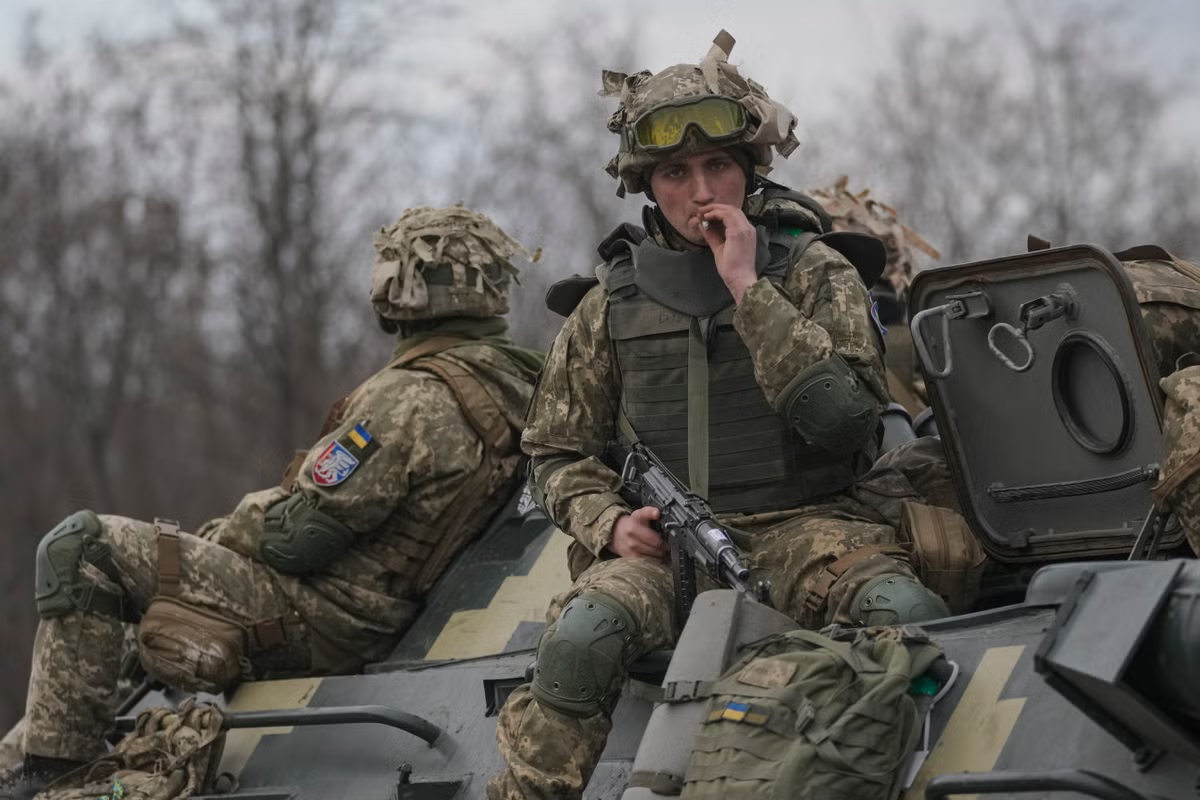
It was not a technical failure. It was a moment when logistics became destiny.
Kyiv, January 2026.
Ukraine reached a dangerous edge when several of its air defense systems were left without interceptor missiles at the very moment Russian attacks intensified. The problem was not symbolic and not rhetorical. It was material. Missiles that do not exist cannot be fired. Radars without interceptors become observers, not protectors. In the middle of winter, with Russian forces increasing strikes on energy infrastructure, cities, and transport nodes, parts of Ukraine’s defensive shield simply ran out of ammunition. The situation revealed a deeper truth about modern war: battles are not decided only by courage or technology, but by supply chains, factories, transport corridors, and political will translated into metal and fuel. For years Ukraine has survived through a combination of domestic resilience and Western military aid. But this episode exposed the thin line between resistance and vulnerability when resupply slows even briefly.
The shortage did not appear overnight. Air defense is one of the most expensive and consumptive aspects of modern warfare. Every interception costs a missile that cannot be reused. When attacks are sporadic, stockpiles last. When attacks are constant, stockpiles evaporate. Russia has increasingly relied on waves of drones, cruise missiles, and mixed aerial attacks designed not only to hit targets but to exhaust Ukraine’s defenses. Each incoming object forces a decision: intercept or absorb the strike. When interceptors are scarce, commanders must choose which cities matter more, which power stations deserve protection, which regions will be left exposed. This is not only a military calculation but a moral one. Defending a capital may mean abandoning a town. Saving an energy hub may mean leaving homes in the dark. Scarcity turns defense into triage.
Behind the battlefield, another war is being fought in factories, parliaments, and logistics hubs across Europe and North America. Ukraine’s air defense network depends heavily on Western-supplied systems and ammunition. But Western production was not built for long, high-intensity wars. Factories designed for peacetime cycles struggle to match the speed of consumption on a modern battlefield. Orders take months. Components are scarce. Skilled labor is limited. Political debates slow decisions. Budgets face domestic pressure. Every delay in production echoes as risk in Ukrainian skies. When Ukraine announced that some systems had no missiles left until new shipments arrived, it was not only a military warning. It was a message to allies that the current rhythm of support is barely keeping pace with destruction, not surpassing it.
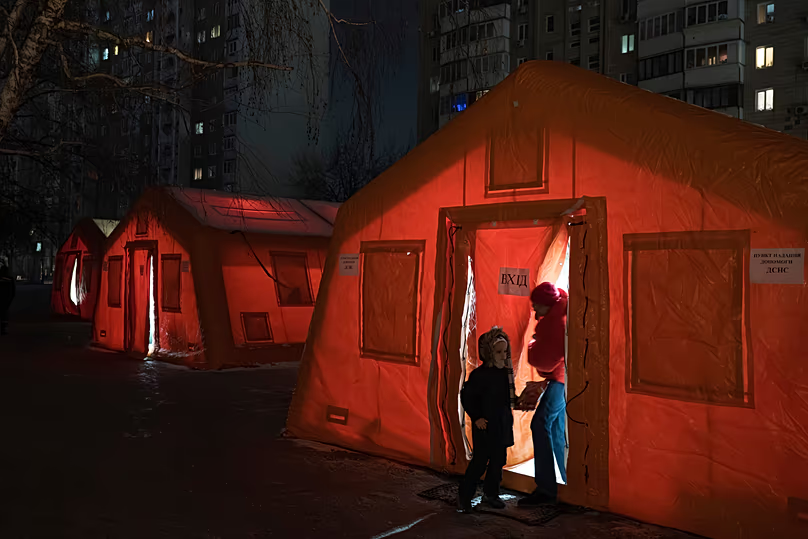
Russia understands this logic. Modern strategy is not only about breaking defenses, but about exhausting them. By launching frequent and layered attacks, Moscow forces Ukraine to spend interceptors faster than they can be replaced. This is attrition not of soldiers, but of stockpiles. The goal is cumulative. Even if most attacks fail, the cost is paid by the defender in shrinking reserves. Over time, gaps appear. Once gaps appear, strikes become more effective. Once strikes become more effective, civilian life becomes more fragile. Electricity, heating, water, transport, and industry all depend on what happens in the sky. Air defense is not only military. It is social infrastructure.
For Ukraine, the shortage of air defense missiles is not just a tactical problem, it is a strategic vulnerability. It affects morale, civilian endurance, and economic survival. People can endure bombs when they believe they are protected. They endure less when protection becomes uncertain. Every blackout, every damaged power plant, every destroyed transformer is not only physical damage but psychological pressure. Russia’s winter campaign is built around that pressure. It aims to turn cold, darkness, and insecurity into weapons. Without sufficient air defense, Ukraine is forced to fight not only on the front lines, but inside its own cities, hospitals, and homes.
This crisis also exposes a larger question about the future of warfare and alliances. Supporting Ukraine is not a single decision. It is a permanent process. Modern wars are not won by one shipment, one package, or one summit. They are sustained by industrial capacity and political continuity. If factories cannot expand fast enough, battlefields will feel it. If political coalitions hesitate, civilians will feel it. The shortage of Ukrainian interceptors is therefore not only a Ukrainian problem. It is a test of whether Western systems can adapt from peacetime logic to wartime reality. It asks whether democratic states can maintain long-term material commitment under domestic pressure, economic fatigue, and political cycles.
Ukraine’s leadership has been transparent about this danger. By admitting publicly that some systems had no missiles left until new deliveries arrived, Kyiv was not signaling weakness but urgency. It was telling its partners that the margin of safety is thin and shrinking. Missiles eventually arrived, but the fact that they were needed so desperately shows how narrow the gap has become between defense and exposure. This is no longer about winning spectacular victories. It is about avoiding catastrophic failures.
As the war continues, air defense will remain one of its most decisive factors. Tanks move on land, soldiers fight in trenches, but the sky decides how societies breathe. If Ukraine’s skies cannot be protected consistently, its cities will carry the cost. And if its allies cannot produce and deliver fast enough, their strategic promises will weaken in practice, even if they remain strong in words.
This is what the shortage truly means. Not a headline. Not a statistic. But a reminder that in modern war, bullets, missiles, fuel, and spare parts are as decisive as generals and speeches. When shields go silent, even briefly, the war speaks louder.
Detrás de cada dato, hay una intención.
Detrás de cada silencio, una estructura.