

 Phoenix 24
It began with music, flags and a crowd that refused to go home, as if the streets themselves needed to say thank you to the woman whose footsteps had changed the way a country sees its own strength.
Granada, December 2025. The celebration for María Pérez did not look like a modest ceremony for a niche discipline. It felt like a homecoming usually reserved for global football icons or Olympic sprinters. Families filled the square, children waved handmade signs with her name, and veteran coaches watched in silence, aware that they were witnessing something rare. The athlete who had turned race walking into a national conversation returned to her land, and Spain decided to receive her not only as a champion but as proof that endurance and discipline can still move a society that often feels tired.
The images of the event were simple but powerful. María Pérez, surrounded by teammates and officials, lifted her trophies and awards while the crowd responded with a mixture of applause and chanting that rarely accompanies technical disciplines of athletics. Her season had been extraordinary: world titles on the road, recognition from global athletics authorities and a level of consistency that placed her among the greats of the sport. Yet the tone of the celebration went beyond medals. It carried the sense that a long undervalued tradition in Spanish athletics had finally found a face capable of uniting public emotion and high performance.
For years, race walking in Spain had lived in a complex space. It produced medals, records and heroic stories, but seldom enjoyed the spotlight reserved for more glamorous events. The ceremony in Granada flipped that narrative. Local authorities highlighted how María Pérez came from a small community that had no guarantee of producing an international star. Coaches reminded the audience that many of her most important training sessions had happened far from major stadiums, on ordinary roads where dawn and fatigue were the only spectators. That contrast between global recognition and humble origins resonated across the country and inspired similar events in other cities.
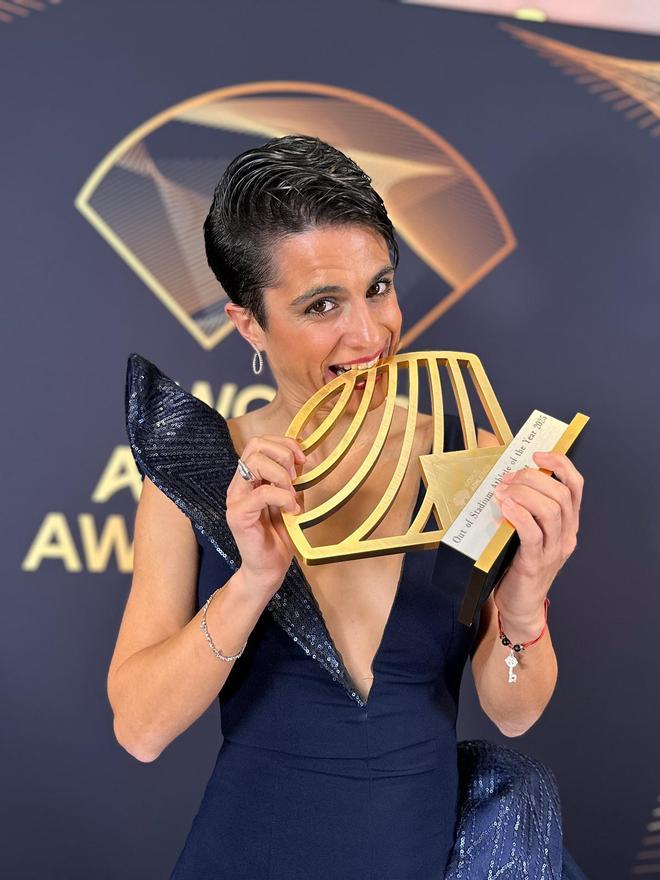
The celebration also revealed how sport can function as a mirror for national mood. In recent years, Spain, like much of Europe, has navigated economic uncertainty and social tension. Against that background, the story of an athlete who builds success through patience, repetition and resilience offers a form of narrative comfort. Latin American commentators pointed out that her journey resembles stories of long distance runners who come from regions marked by economic difficulty yet manage to conquer the world stage. Analysts in Asia, where endurance disciplines enjoy strong cultural respect, underlined how her example can feed a new generation of race walkers and distance athletes who see in her not just a champion but a model of work ethic.
During the event, speeches were brief, and the emphasis fell on images. Children walked a short symbolic circuit behind María Pérez, mimicking her technique. Former athletes posed with her, aware that their own earlier achievements had laid part of the path she now extends. Television crews captured the interaction between the champion and elderly neighbors who had seen her grow up, people who spoke less about medals and more about her years of quiet training when almost nobody paid attention. That intimacy gave the celebration a tone different from the polished spectacle of big stadium finals. It felt like a community reclaiming a part of itself.
The impact of this night will be measured not only in emotional terms but in practical consequences. Regional sports authorities have begun to discuss new investments in walking tracks, coaching programs and youth competitions. Clubs report increased interest from teenagers who see in race walking a serious path rather than a secondary option. Sponsors, attentive to images of full plazas and media coverage, study the possibility of supporting local events that might have seemed insignificant a few seasons ago. In that sense, the celebration worked as a catalyst, translating individual success into structural opportunities.
At the same time, the figure of María Pérez carries a responsibility that she seems to accept with calm. In interviews around the event, she insisted that her success belongs also to her training group, her coach and the less visible professionals who helped her manage injuries, planning and pressure. That insistence on collective credit aligns with a broader trend in modern sport, where athletes who reach the top are expected to embody values beyond performance. European commentators observed that this attitude strengthens her legitimacy as a role model at a time when public trust in sporting heroes can be fragile.
Beyond Spain, the celebration was followed with interest by athletics communities in other regions. Coaches in Northern Europe, traditionally strong in endurance disciplines, see in her achievements a benchmark for training methodology. Experts in the Gulf and East Asia regard her as a symbol of how smaller markets can still produce global stars if supported with long term vision. For international athletics bodies, her trajectory helps defend road and walking events in schedules under constant negotiation, reminding decision makers that these disciplines still generate stories capable of moving entire countries.
As the night in Granada slowly dissolved into smaller gatherings and quiet streets, one detail remained clear. The celebration for María Pérez was not only about the past season or the medals already won. It was about claiming a space for a discipline and a way of competing that had often been underestimated. The crowd that accompanied her in that square did more than applaud an athlete. It validated a form of effort that unfolds step by step, kilometer by kilometer, away from quick victories and instant fame.
In the end, the footsteps that once echoed alone on training roads now resound through plazas, screens and conversations. Spain, at least for one night, marched together with the athlete who turned persistence into collective pride.
Phoenix24: periodismo sin fronteras. / Phoenix24: journalism without borders.