

 Phoenix 24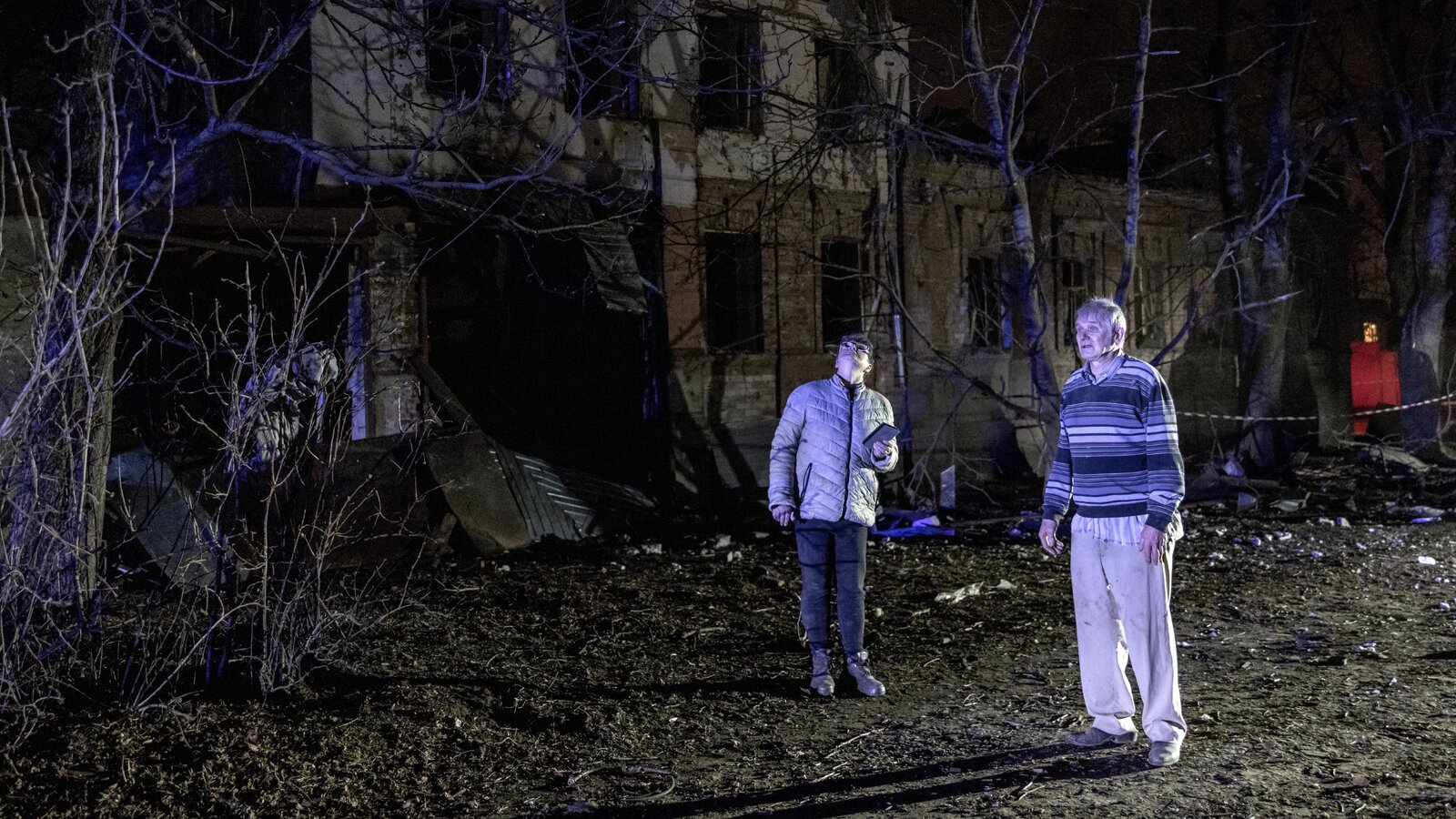
When the sky itself becomes a weapon, electricity stops being mere energy—it turns into an invisible battlefield.
Kharkiv, October 2025.
Darkness once again engulfed Ukraine after a wave of Russian drone strikes targeted key energy infrastructures, leaving thousands without power and reviving fears that winter will once more be used as a weapon of war.
The assault, described by Ukrainian authorities as one of the most intense in recent weeks, hit multiple regions across the country—chiefly Kharkiv, Chernihiv, Poltava, and Zaporizhzhia. Local officials confirmed that air defenses intercepted more than a hundred drones, though several still managed to strike civilian and energy facilities. One man was killed in the village of Zelenyi Hai, while dozens of communities were temporarily plunged into darkness.
The national power grid suffered cascading outages, especially in the north and east. The state energy operator reported that roughly 17,000 people lost power in the Korukivka district after a direct strike on a substation. In Kharkiv, the scale of the damage forced a partial suspension of electric transport and emergency reinforcement in hospitals.
According to Ukraine’s Air Force Command, the Russian offensive was carried out in successive waves through the night using Iranian-made Shahed drones, modified with inertial navigation systems to evade radar detection. The Ministry of Defense reported the interception of 136 drones—an illustration of both the attack’s intensity and the growing sophistication of Ukrainian air defenses.
Yet every intercepted drone comes at a steep cost. A report from the International Institute for Strategic Studies in London estimated that the average price of Ukrainian air defense munitions is ten times higher than that of each incoming drone. This financial asymmetry has become a defining feature of the hybrid war, where Russia exploits technological saturation and operational exhaustion to apply constant pressure.
Meanwhile in Washington, President Volodymyr Zelensky met with his U.S. counterpart to discuss the potential delivery of long-range missiles. The timing of the attack coincided with the diplomatic visit—a signal not lost on analysts. Experts at the Atlantic Council suggested that Moscow sought to send a political message to both Kyiv and its Western allies, demonstrating its ability to destabilize Ukraine’s energy infrastructure even amid high-level negotiations.
From Brussels, NATO reiterated its condemnation of attacks on civilian infrastructure, emphasizing that targeting energy facilities constitutes a violation of international humanitarian law. The International Monetary Fund warned of the economic fallout, noting that prolonged blackouts could reduce Ukraine’s annual growth by up to two percent if the pattern continues. In Berlin, the European Center for Sustainable Energy reported that the replacement of transformers and high-voltage cables could take months, given the shortage of imported components.
The implications extend beyond Ukraine’s borders. Analysts at the Warsaw Institute of Defense Studies link the escalation of drone attacks to Russia’s troop repositioning near Belgorod and the arrival of Iranian technicians at southern Russian bases—an indication of deeper technological cooperation. In Asia, the Strategic Security Center in Tokyo interpreted the operation as a live experiment in precision warfare, likely to inform future urban combat models.
Each blackout, therefore, becomes a geopolitical message. Destroying a power plant or transformer depot not only halts essential services but also disrupts daily life, commerce, education, and digital access. It is an assault on the invisible pulse that sustains modern civilization.
Ukraine’s resilience—hardened after nearly four years of war—is being tested once again. Electrical engineers work under constant risk, repairing bombed-out lines and restoring power amid hostile skies. Civilians, long accustomed to candles and generators, cling to the notion that endurance itself has become a form of resistance.
The silence that follows the hum of a drone carries its own weight. What began as a tactical maneuver has evolved into a psychological weapon: night belongs to no one, and control over energy determines who survives the winter.
Against propaganda, memory. / Contra la propaganda, memoria.