

 Phoenix 24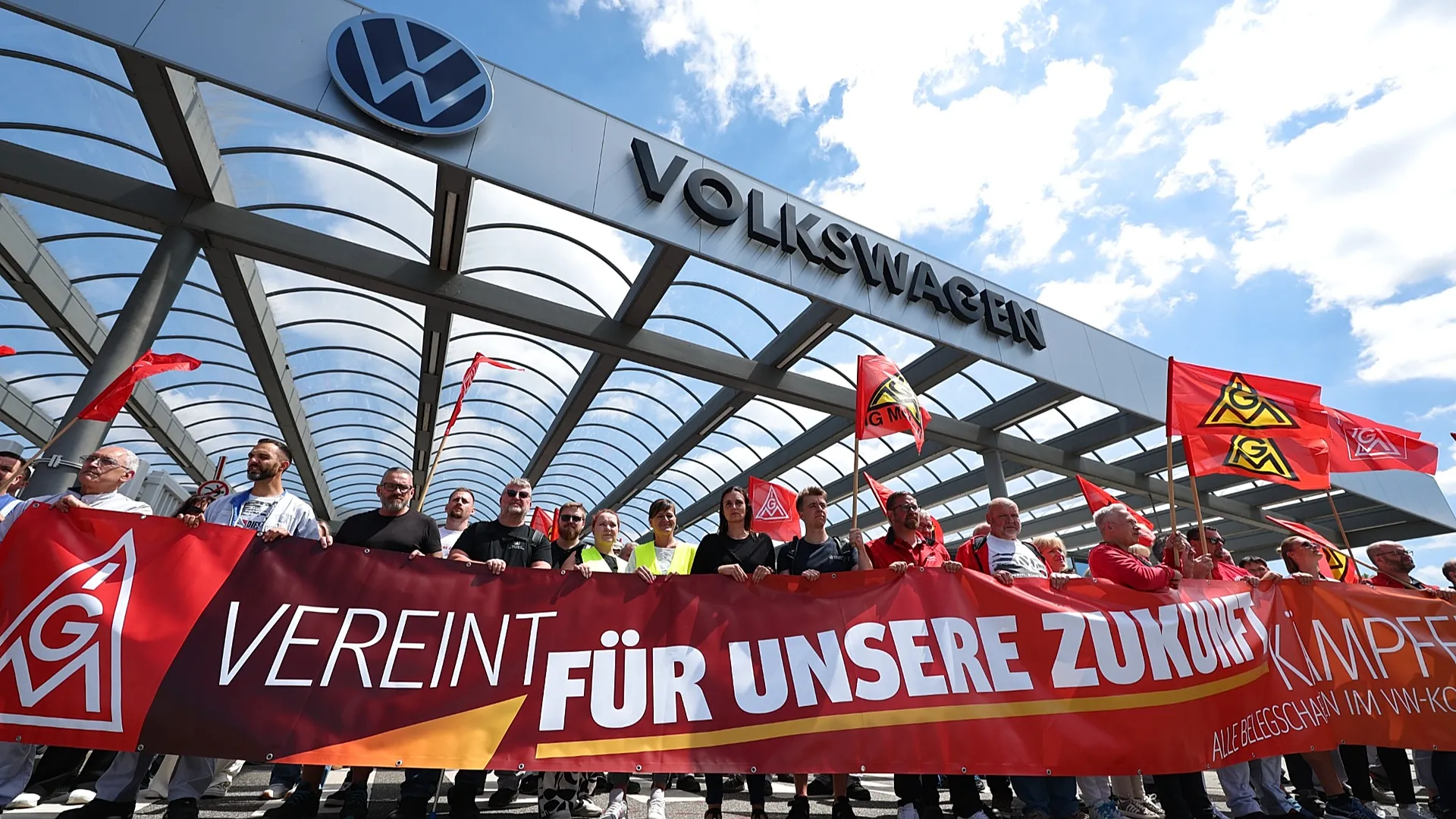
Union leaders reject plans threatening workers and German factories.
WOLFSBURG, GERMANY — July 2026. Volkswagen risks a major confrontation with its workforce as management considers one of the largest restructurings in automotive history. Reports indicate that Chief Executive Oliver Blume is evaluating up to 100,000 job cuts worldwide, equivalent to roughly 16 percent of the group’s workforce. The plan could also involve closing Volkswagen plants in Hanover, Emden and Zwickau, along with Audi’s factory in Neckarsulm.
IG Metall organized demonstrations at Volkswagen sites across Germany as the company’s supervisory board discussed the proposals. Union leaders warned that they would strongly resist additional layoffs and factory closures. Workers say fear and uncertainty are spreading through production plants and administrative offices.
Volkswagen already plans to eliminate around 50,000 positions in Germany by 2030, including 35,000 within its main brand. Those reductions were agreed with labor representatives in late 2024 alongside a commitment to avoid closing German factories before the end of the decade. The new proposals could double the number of planned job losses and reopen that agreement.
Management argues that Volkswagen must reduce excess capacity, simplify its corporate structure and improve competitiveness. The company is under pressure from high European production costs, weaker electric-vehicle margins, United States tariffs and aggressive competition from Chinese manufacturers. Alternative options could include producing China-focused models in underused German factories or converting facilities for other industrial purposes.
Any restructuring will require difficult negotiations because workers hold significant influence within Volkswagen’s supervisory structure. The state of Lower Saxony can also block key decisions through its ownership position. Immediate closures remain unlikely, but the board discussions could begin months of intense industrial and political confrontation.
Volkswagen’s struggle for competitiveness is becoming a battle over the future of German industry.