

 Phoenix 24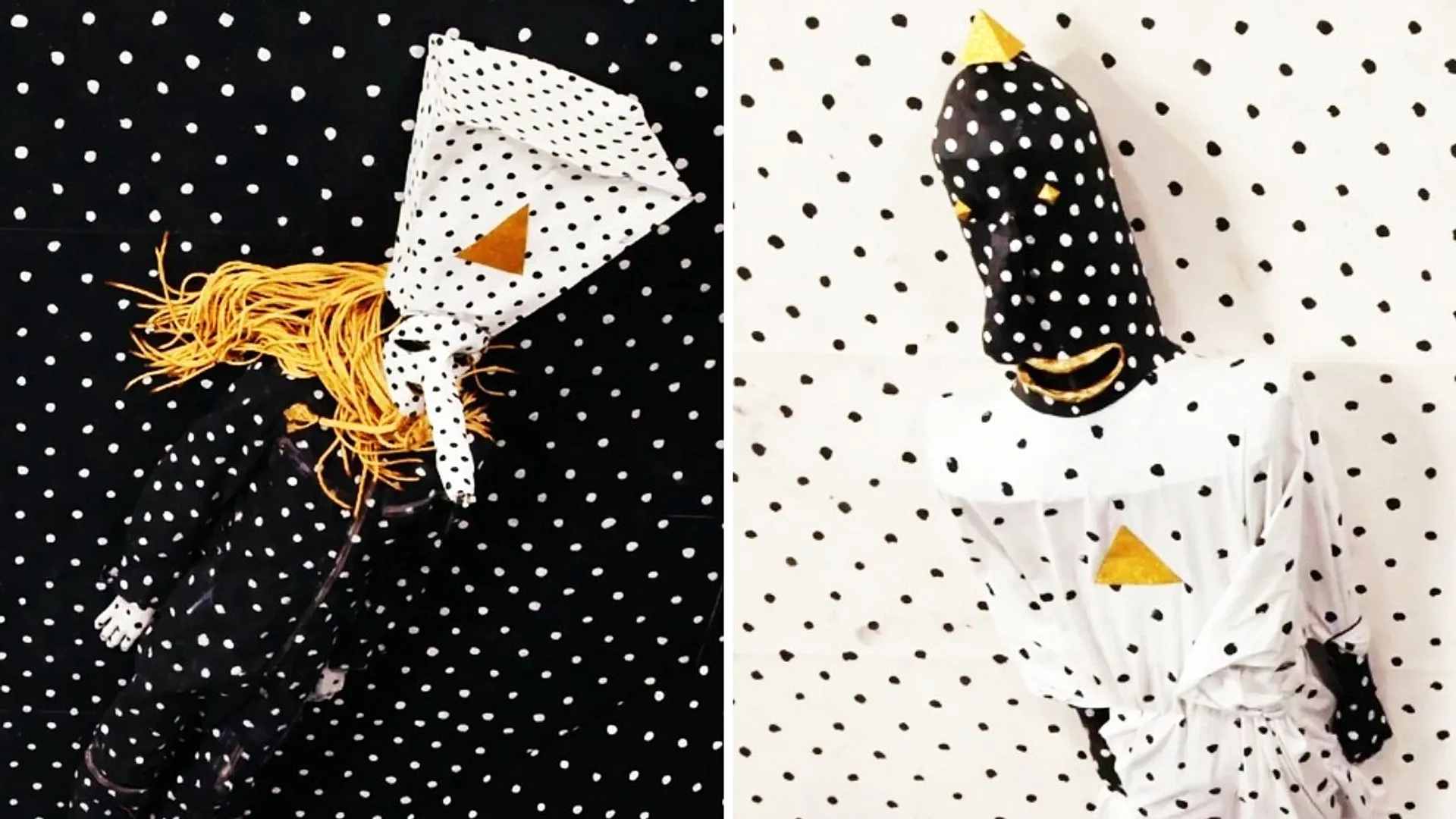
Angine de Poitrine tests the internet’s taste.
Montreal, April 2026
Angine de Poitrine has erupted across digital culture with the kind of velocity that usually produces two immediate reactions at once: fascination and suspicion. On one side, the Canadian duo has been embraced as a startling new force in experimental rock, propelled by a performance clip that turned an already unusual act into a full-blown online event. On the other, the speed of the attention has triggered the now familiar question that surrounds almost every viral cultural breakout: is this a genuine artistic arrival or simply another internet distortion inflated by spectacle, novelty and algorithmic appetite. The answer, in this case, is more interesting than either extreme.
Part of the fascination lies in the group’s visual grammar. Angine de Poitrine does not present itself like a conventional indie or math-rock act. Its members perform in oversized papier-mâché masks and eccentric, polka-dotted costumes that make them look less like musicians in the traditional sense and more like creatures from an absurdist theater piece. That imagery matters because digital culture rewards immediate recognizability, and few things travel faster online than a strong silhouette attached to a strange sound. In a media environment saturated with interchangeable aesthetics, Angine de Poitrine arrived already carrying a visual code that was impossible to confuse with anyone else’s.
Yet the duo’s rise cannot be explained by costume alone. Viral culture often forgives weak substance for a few days, but it rarely sustains musical fascination without some deeper formal hook. The real engine here is the collision between technical musicianship and sensory overload. The group’s sound sits somewhere inside math rock, experimental noise and dadaist performance logic, but those labels still do not fully capture the effect. What audiences respond to is the sense that the music is unstable, playful, difficult and strangely controlled at the same time. It feels chaotic, but not careless. That distinction is essential. Online audiences may click for novelty, but they stay when novelty is backed by command.
The duo reportedly comes from Quebec and emerged in 2019 almost as a joke, which only adds another layer to the mythology. Many of the most memorable contemporary acts begin in semi-ironic form and then evolve into something unexpectedly coherent. That pattern reflects a broader truth about current culture. Irony is often the entry point, but conviction is what gives a project longevity. Angine de Poitrine appears to be moving through that exact transition. What may have started as a strange private experiment has now been exposed to global audiences and forced to prove whether its internal logic can survive external scale.
Its recent viral leap was tied to a filmed live session captured at the Trans Musicales festival in Rennes, France, and that context matters. Festivals of that kind often function as cultural filters, especially for artists operating outside mainstream commercial lanes. A performance there carries different symbolic weight than a purely accidental social-media clip. It places the duo within an ecosystem of live experimentation, curation and scene validation. In other words, this is not only a case of the algorithm randomly selecting a bizarre image. There is also a performance infrastructure behind the breakout, and that gives the phenomenon more credibility than a purely meme-driven ascent would have.
The release timeline also helps explain why the buzz has not instantly evaporated. The group’s first album appeared in 2024, and a second self-released volume arrived in early April, meaning the viral moment is not entirely detached from an existing body of work. That is important because many internet sensations collapse once audiences discover there is nothing behind the clip that made them famous. Angine de Poitrine seems to have enough material, enough identity and enough artistic intent to suggest that the current excitement is not built on emptiness. The sold-out dates on its planned United Kingdom and European tour reinforce that point. Interest has moved from screens to tickets, which is often the first real test of whether online fascination can convert into cultural durability.
Still, the skepticism is understandable. The internet has trained audiences to distrust acceleration. When something becomes omnipresent in a matter of days, people assume manipulation, hype engineering or aesthetic fraud. That reaction is not irrational. Digital culture routinely amplifies fragments before context, image before depth and virality before judgment. But dismissing Angine de Poitrine on that basis alone would miss what makes the duo significant. Its work seems designed precisely for this unstable threshold between performance art, technical rock and digital absurdity. In a sense, the medium and the message fit each other. A band this visually strange and sonically unruly was always likely to spread in short, explosive bursts before more traditional criticism could catch up.
What is really being tested, then, is not just the duo’s staying power but the cultural maturity of the audience encountering it. Math rock has long existed in a semi-protected niche of devoted listeners, technical admiration and limited mainstream permeability. Angine de Poitrine breaks that pattern by making the genre visually contagious. It turns complexity into spectacle without fully diluting the difficulty of the music itself. That is a rare move. Most crossover attempts simplify. This one seems to intensify.
So is the uproar justified. At this stage, yes, with one caveat. The excitement is justified not because Angine de Poitrine has already proven itself a major long-term force, but because it has achieved something culturally difficult: it has made experimental form feel urgent, funny, unsettling and shareable all at once. That does not guarantee permanence. It does, however, indicate real artistic charge. The internet may have accelerated the duo’s rise, but it did not invent the strangeness that made that rise possible.
In the end, Angine de Poitrine matters because it reveals a deeper shift in contemporary music culture. The most compelling new acts are no longer simply those who write good songs or master a genre. They are the ones who can build an entire perceptual event around sound, image and unpredictability. This duo has done exactly that. Whether it becomes a lasting project or a brilliant eruption remains to be seen. But the noise around it is not empty. It is the sound of a niche language suddenly becoming impossible to ignore.
Detrás de cada dato, hay una intención. Detrás de cada silencio, una estructura.
Behind every data point, there is an intention. Behind every silence, a structure.