

 Phoenix 24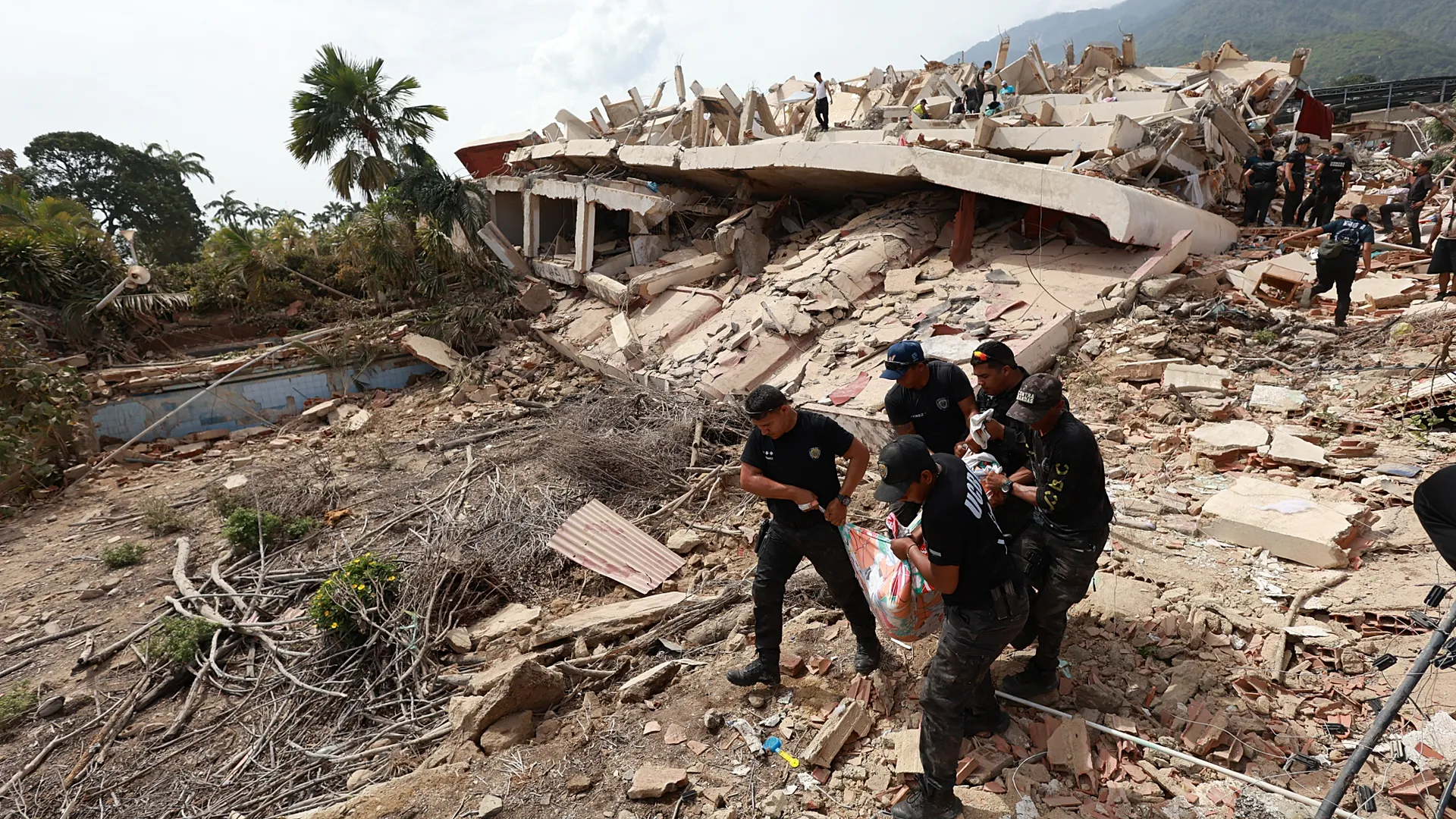
Two major earthquakes struck seconds apart, overwhelming structures and emergency systems.
Caracas, June 2026
Venezuela’s devastating earthquake sequence became far more destructive because it was not a conventional main shock followed by smaller aftershocks. Two powerful earthquakes of similar magnitude struck the country’s northern region only 39 seconds apart, creating what seismologists describe as a seismic doublet. The first reached magnitude 7.2, while the second registered 7.5. Their rapid succession subjected already weakened buildings, roads and public infrastructure to a second severe rupture before people had time to escape or emergency services could respond.
The earthquakes struck on June 24 near Venezuela’s Caribbean coast, with epicenters located west of Caracas and close to the complex fault systems surrounding the boundary between the Caribbean and South American tectonic plates. The shaking affected several northern states and was felt across a wide area of the Caribbean. La Guaira emerged as one of the most severely damaged zones, while Caracas, Carabobo, Aragua, Miranda and Falcón also reported structural collapse, interrupted services and widespread fear.
The human toll rose rapidly as rescue teams reached districts where communications and transportation had been disrupted. Hundreds of deaths were confirmed within the first two days, while thousands of people were injured or remained unaccounted for. Entire families searched through collapsed buildings as local responders struggled to reach every affected community. The scale of the missing-person reports suggested that the final consequences could be significantly worse than the first official assessments indicated.
A seismic doublet occurs when two substantial earthquakes happen close together in both time and location. Unlike a typical sequence, where one dominant main shock is followed by smaller aftershocks, the second event in a doublet carries comparable or even greater destructive energy. Scientists believe the first rupture can redistribute stress along nearby fault segments, bringing another area already close to failure past its breaking point.
In Venezuela’s case, the first earthquake may have ruptured one section of the fault system and transferred stress almost immediately to another. The second event then released its own accumulated energy before the ground had stabilized. This mechanism remains under investigation, but it explains why the two earthquakes are considered separate major shocks rather than a main earthquake and an ordinary aftershock.
The interval between them was especially dangerous. Thirty-nine seconds was long enough for some residents to begin moving toward exits, stairways or streets, yet too short for them to reach secure areas. Buildings damaged by the first shock were still standing in a weakened condition when the second and stronger earthquake arrived. Structures that might have survived one rupture collapsed under the repeated movement.
The sequence also complicated public perception. People accustomed to smaller aftershocks may have interpreted the first reduction in shaking as the end of the immediate danger. The second earthquake shattered that expectation almost instantly. In hospitals, apartment buildings and public spaces, the renewed movement caused panic among residents already trying to understand what had happened.
Both earthquakes were relatively shallow, increasing their destructive capacity at the surface. Shallow seismic events lose less energy before reaching populated areas than earthquakes originating deeper underground. The fault motion was primarily strike-slip, meaning sections of the Earth’s crust moved horizontally past one another. That lateral displacement can be particularly damaging to buildings, bridges, pipelines and roads not designed to absorb intense side-to-side movement.
Northern Venezuela lies within a complicated tectonic environment. The Caribbean Plate moves relative to the South American Plate along a broad zone of interconnected faults rather than a single simple boundary. The Boconó, San Sebastián, El Pilar and Oca-Ancón systems form part of this regional network. Stress can accumulate across several segments, creating the possibility that movement in one area may influence another.
The phenomenon has historical precedents. The 2023 earthquakes in Turkey and Syria involved two major events that struck different faults within hours of one another, producing catastrophic destruction across a vast area. Venezuela itself experienced two significant earthquakes in 2025, although they were weaker and separated by several hours. The 2026 sequence was more extreme because of the magnitude of both shocks and the exceptionally short interval between them.
Venezuela’s vulnerability was intensified by the condition of its infrastructure. Many buildings include unreinforced masonry, aging concrete or informal modifications that reduce seismic resistance. Years of economic crisis have limited maintenance, emergency planning and investment in public services. Even structures that appeared stable before the earthquakes may have contained weaknesses invisible from the outside.
The disaster also struck a country already facing serious humanitarian pressures. Millions of Venezuelans required assistance before the earthquakes because of poverty, shortages, displacement and weakened health services. Damage to hospitals, electricity networks, water systems and transportation routes therefore created consequences extending beyond the immediate collapses. Communities that had little reserve capacity were forced to confront a large-scale emergency with limited local resources.
Foreign rescue teams, medical supplies and humanitarian assistance began arriving as the magnitude of the destruction became clearer. International crews brought search dogs, specialized equipment and experience locating survivors inside unstable structures. Aircraft, helicopters and naval assets were also mobilized to reach areas where roads had become inaccessible. The rescue effort remained urgent because survival rates decline rapidly as time passes beneath the rubble.
Aftershocks created an additional threat. The release of energy during two major earthquakes disturbed surrounding faults and generated continued seismic activity. Authorities warned residents not to re-enter damaged buildings, even when those structures remained partially standing. A moderate aftershock can cause the collapse of walls, roofs or foundations already weakened by the initial sequence.
Scientists cannot predict the exact timing or magnitude of another earthquake. They can estimate probabilities based on the behavior of the fault system and the number of aftershocks recorded. The possibility of a further strong event remained significant during the days following the doublet. This uncertainty complicated rescue operations because teams had to enter unstable environments while the ground continued moving.
The tragedy also renewed attention to earthquake early-warning systems. Such systems cannot predict earthquakes in advance, but they can detect the first seismic waves and send alerts before the more destructive waves arrive. Depending on distance from the epicenter, the warning may provide only a few seconds. That brief interval can still allow trains to stop, gas systems to close, surgeons to pause and people to move away from windows or dangerous equipment.
Venezuela does not possess an extensive national warning network comparable to those operating in Mexico, Japan or parts of the United States. Even an advanced system, however, would have offered limited protection near the epicenters because the two shocks occurred so close together. The second earthquake followed too quickly for a conventional warning cycle to provide meaningful preparation once the first event had begun.
The doublet exposed the limits of treating earthquakes as isolated moments. The first rupture altered the physical conditions for the second, while the second transformed extensive damage into systemic collapse. The catastrophe was produced not only by magnitude, but by sequence, shallow depth, infrastructure weakness and the absence of recovery time between shocks.
Venezuela will require years to rebuild homes, public services and transportation networks. The deeper challenge will be ensuring that reconstruction incorporates modern seismic standards rather than restoring the same vulnerabilities. Stronger buildings cannot prevent earthquakes, but they can determine whether intense shaking becomes a frightening emergency or a mass-casualty disaster.
The country’s experience demonstrates why seconds matter in seismic risk. The ground moved twice before institutions, structures or people could recover from the first impact. In those 39 seconds, a powerful earthquake became a national catastrophe.
La prevención comienza antes de que la tierra se mueva. / Prevention begins before the ground moves.