

 Phoenix 24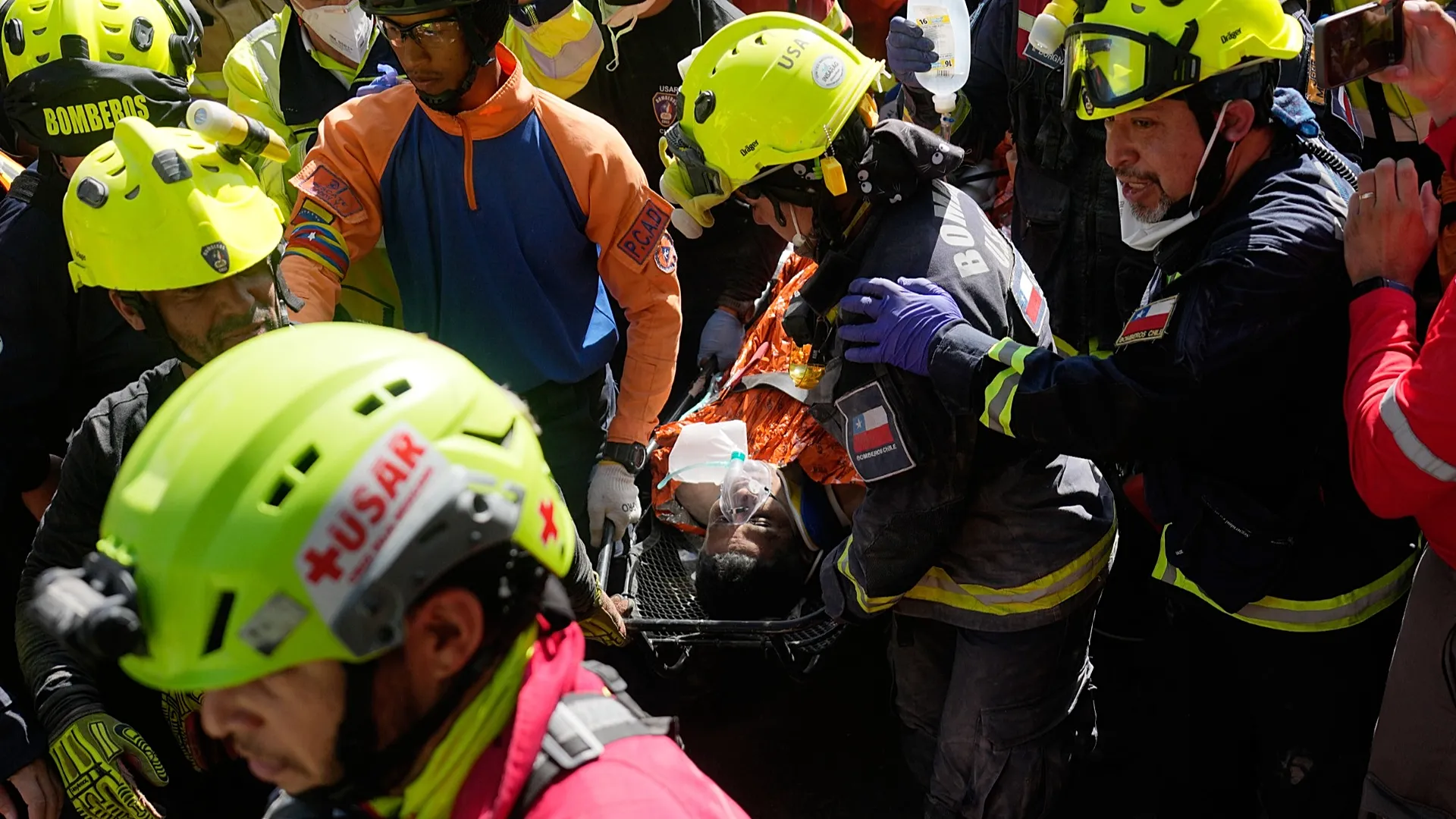
International teams complete an extraordinary survival operation.
CATIA LA MAR, VENEZUELA — July 2026.
Rescue teams pulled Venezuelan security guard Hernán Alberto Gil Flores alive from beneath the collapsed Galerías Playa Grande shopping center eight days after two powerful earthquakes devastated the country’s northern coast. Gil Flores had remained trapped since June 24 inside the basement of the nine-story commercial complex, surrounded by an estimated 140 tonnes of concrete and unstable debris. He emerged covered in dust on a stretcher, wearing an oxygen mask and wrapped in an orange protective covering as international rescuers carried him toward an ambulance. Applause, cheers and emotional embraces accompanied the extraction, transforming the operation into a rare moment of hope amid one of Venezuela’s deadliest modern disasters.
Gil Flores was working a night shift inside a small security cabin when the first earthquake struck and the surrounding structure collapsed. The cabin remained sufficiently intact to protect him from the heaviest debris and created an air pocket that allowed him to breathe beneath the ruins. Although he survived the initial destruction without catastrophic injuries, he faced darkness, isolation, limited movement and the constant danger of additional structural failures. His location deep beneath the building made reaching him exceptionally difficult, even after specialists confirmed that he was still alive.
A Costa Rican Red Cross team detected signs of life and established contact with Gil Flores several days after the earthquakes. Rescuers used a telescopic camera and a narrow opening to communicate with him while assessing his physical condition and the stability of the surrounding concrete. Water and liquid nutrients were delivered through a small shaft during the final days of the operation, extending his ability to survive well beyond the period normally considered critical after a major collapse. Emergency workers also spoke with him continuously to reduce panic, explain the rescue process and help him remain calm during the most dangerous stages of the excavation.
More than 100 hours of specialized work were required to open a secure route through the debris without causing another collapse. Teams had to tunnel carefully through reinforced concrete while confronting heavy rain, persistent aftershocks and a structure capable of shifting without warning. Initial access routes proved difficult or unsafe, forcing rescuers to modify their strategy and approach Gil Flores from a more stable direction. Every movement had to balance the urgency of reaching him against the possibility that machinery, vibration or falling material could destroy the protective space that had kept him alive.
The operation brought together emergency personnel from Venezuela, Chile, Costa Rica, Mexico, Portugal, El Salvador and the United States. Chilean urban search-and-rescue specialists coordinated crucial elements of the extraction, while teams from other countries contributed cameras, technical equipment, medical support and experience from previous disasters. Veteran Chilean firefighter María Paz Campos maintained close communication with Gil Flores and guided him through the final hours, including instructions to protect his eyes from falling particles. The successful collaboration demonstrated how international expertise can become decisive when local emergency systems face destruction extending across multiple cities and thousands of damaged buildings.
The two earthquakes struck less than a minute apart on June 24 and registered magnitudes of approximately 7.2 and 7.5. Their shallow depth intensified the shaking across northern Venezuela, damaging or destroying tens of thousands of buildings and leaving La Guaira among the most severely affected regions. Official figures indicated that more than 2,200 people had died and over 11,000 had been injured as search teams continued examining collapsed homes, apartment buildings and commercial structures. The scale of the destruction overwhelmed emergency resources and left thousands of families searching for missing relatives while survivors sought food, medical attention and temporary shelter.
Gil Flores’s rescue occurred after the period in which disaster specialists generally expect the probability of finding survivors to fall dramatically. The combination of his protected cabin, access to air and the delivery of fluids allowed him to endure conditions that would otherwise have become fatal. His survival does not alter the enormous human cost of the earthquakes, but it provides rescuers and affected families with evidence that continued searches can still produce extraordinary results. The operation also reinforces the importance of acoustic detection, cameras, controlled tunneling and sustained communication when victims remain alive beneath unstable structures.
Venezuela’s acting president, Delcy Rodríguez, publicly celebrated the rescue and thanked national and international personnel for their cooperation. Her government has faced criticism from residents and volunteers who argue that the official response has been uneven, particularly in communities where civilians initially searched through rubble with limited equipment. The visibility of foreign rescue teams has highlighted both the value of international assistance and the shortage of specialized resources available during the first days of the emergency. Gil Flores’s extraction consequently became not only a human-interest story, but also part of a wider discussion about disaster readiness, institutional capacity and the coordination of humanitarian aid.
The security guard was transferred for medical evaluation immediately after reaching the surface, beginning a recovery process that will include treatment for dehydration, prolonged immobility and the psychological effects of extreme confinement. His wife and two young children had spent days waiting for information while rescuers worked beneath the collapsed shopping center. The moment he was carried through the crowd offered a powerful contrast to the grief surrounding communities where searches have ended without finding survivors. Eight days after the earthquakes, his rescue stands as a testament to human endurance and to emergency workers who refused to abandon a man still waiting beneath the ruins.
Phoenix24 — Global news with clarity and perspective.