

 Phoenix 24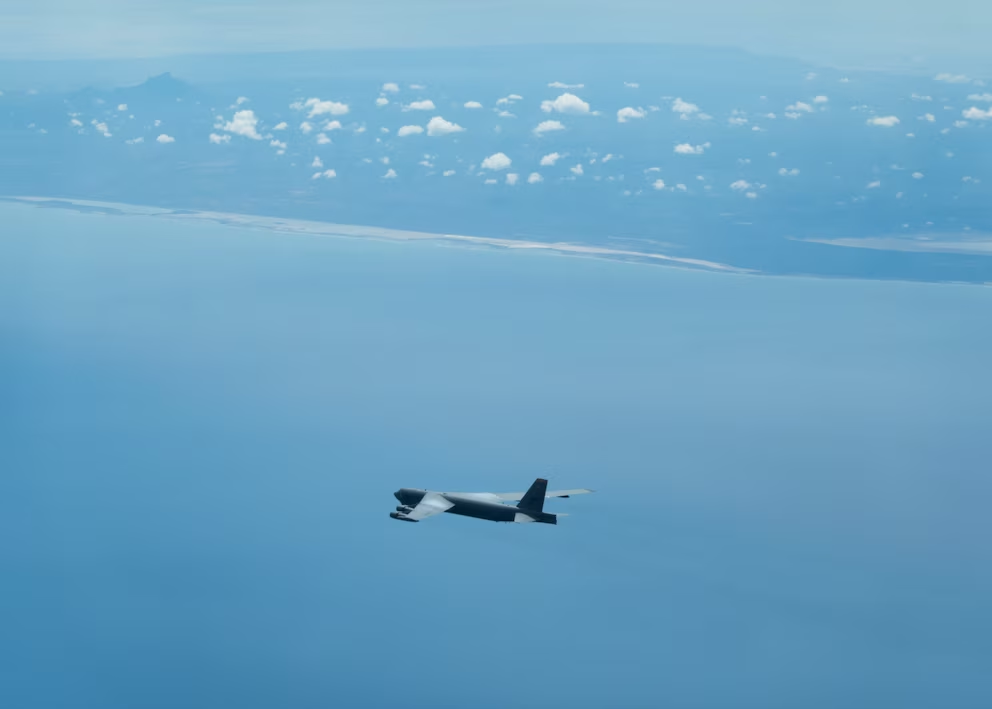
Power is not declared. It is demonstrated.
Caracas, November 2025.
United States B-52 Stratofortress bombers resumed flight operations near Venezuelan airspace, tracing a path parallel to the country’s northern coast in what military sources describe as the most assertive aerial presence in the region in years. The aircraft, capable of carrying both conventional and nuclear armament, maintained altitude and separation to avoid territorial intrusion, yet remained close enough to be detected by Venezuelan radar installations and to send an unmistakable message. The flights occurred in the middle of a broader US military deployment targeting narcotics routes that originate or transit through Venezuelan waters — a multi-branch operation that includes destroyers, maritime patrol aircraft, and intelligence assets positioned around strategic points of the Caribbean corridor.
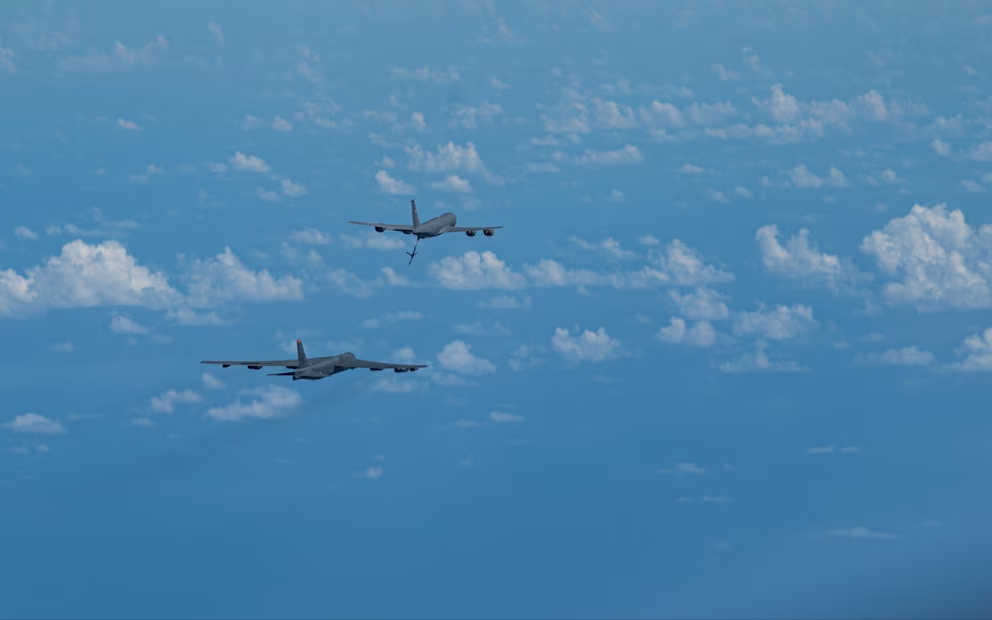
Washington defines the mission as part of an expanded anti-drug campaign, arguing that Venezuelan criminal networks, supported by elements of the Maduro regime, facilitate cocaine routes to Central America, West Africa and Europe. According to senior officials, the B-52 presence is intended to increase surveillance reach and deterrence against armed cartels operating with state tolerance. Caracas rejects this narrative, claiming that the overflights are acts of intimidation disguised as law enforcement, and accuses the United States of violating sovereignty through psychological operations intended to destabilize the government. The reaction from Miraflores was immediate: the Venezuelan armed forces raised the alert level, activated coastal missile defense drills and published footage showing Sukhoi fighter jets patrolling the area in what they called a shield against “foreign aggression.”
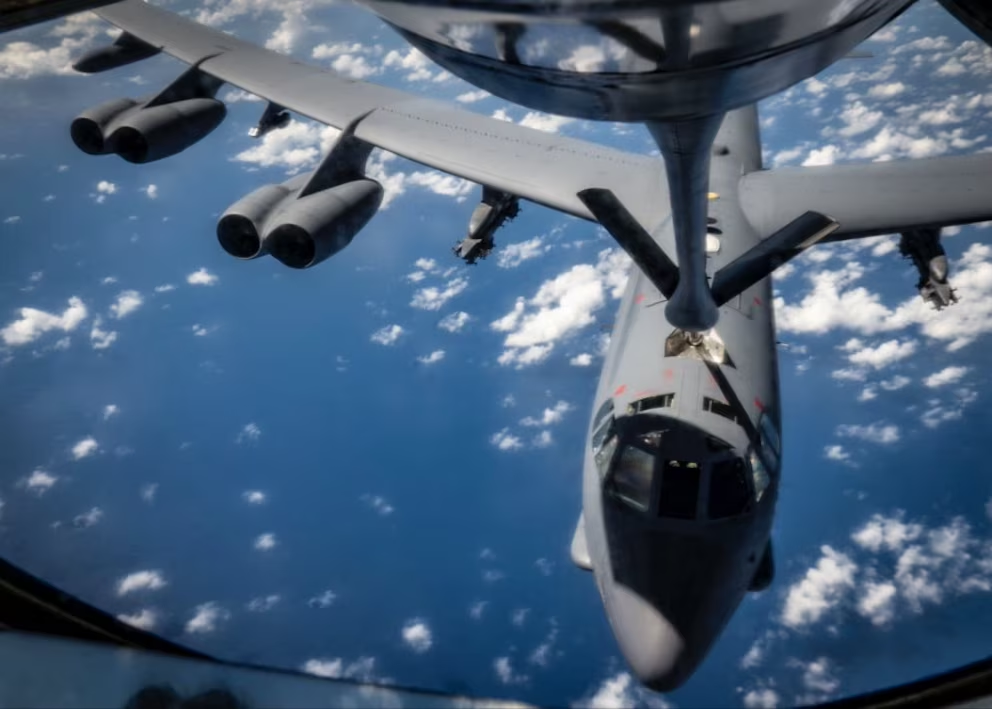
The United States Southern Command, responsible for operations in the region, sees the deployment from a different angle. The Caribbean has shifted from being a trafficking corridor to becoming a stage where strategic influence is contested. The B-52 is not a platform that is deployed to observe; it is deployed to remind. For Washington, these flights are a projection of capability — proof that the military can respond rapidly to instability, criminal networks and foreign presence in the hemisphere. For Venezuela, the message feels like encirclement. The flights passed near sensitive zones, including the Paraguaná peninsula and La Orchila, where Nicolás Maduro reportedly stays during periods of heightened political tension. The symbolism is clear: the United States wants Caracas to know that nothing in that airspace is unseen.
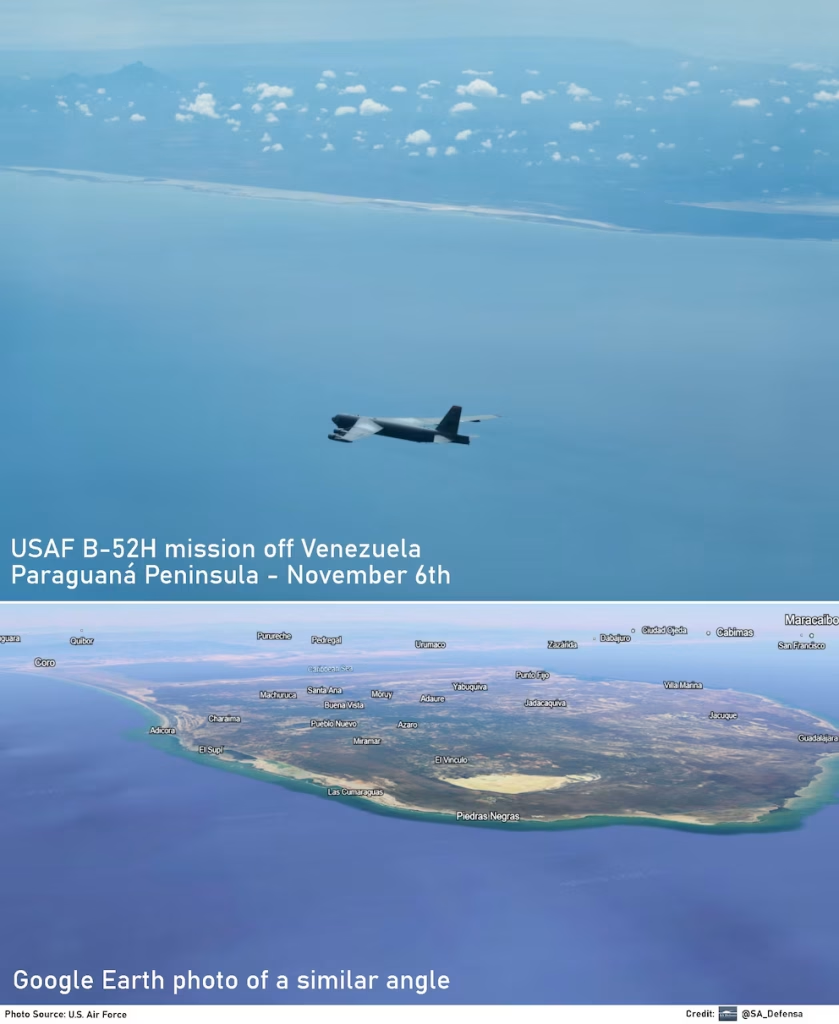
Beyond rhetoric, the overflights reveal the collision of two strategies. Venezuela responds with visibility: videos, statements, patriotic messaging. The United States responds with silence: radar tracks, satellite overlays and bomber wings that speak louder than any diplomatic communiqué. The confrontation does not need direct engagement. It only needs proximity. The sea becomes chessboard, the sky becomes warning, and distance becomes pressure.
In the Caribbean, the rules remain unchanged: whoever controls the air, controls the narrative.
Detrás de cada dato, hay una intención. Detrás de cada silencio, una estructura.
Behind every fact, there is an intention. Behind every silence, a structure.