

 Phoenix 24
A strategic pivot at the edge of the world’s ice.
Washington, October 2025
The United States and Finland have signed a landmark agreement to build eleven new icebreaking vessels as part of an ambitious effort to reshape their Arctic maritime capabilities and counter rising strategic competition in polar waters. Under the memorandum of understanding announced at the White House, four of the ships will be constructed in Finnish shipyards with delivery aimed for the 2028 schedule, while the remaining seven will be built on U.S. soil, leveraging Finnish expertise in design and production.
The initiative is driven by a combination of military, economic and environmental vectors. U.S. officials point to the fact that the American icebreaker fleet currently lags behind its rivals—Russia operates about forty such vessels, many nuclear-powered, while the U.S. Coast Guard has only recently commissioned a modern cutter and counts only two operational Arctic-capable ships in service. The agreement signals recognition that the thawing Arctic—opening shipping lanes, mining zones and territorial access—has become a frontline of global power projection.
Finland brings to the partnership decades of ship-building mastery and a proven track record of ice-cape design. Its shipyards are among the world’s most advanced in this field, and the country’s accession to NATO in recent years adds geopolitical cohesion to the sea-based collaboration. For the U.S., the deal is framed as both a capability short-term fix (via Finnish construction) and a long-term industrial strategy to revitalize American polar ship-building. A White House fact sheet highlighted that the arrangement will channel billions of dollars into U.S. maritime infrastructure and create thousands of skilled-trade jobs by linking domestic yards with imported know-how.
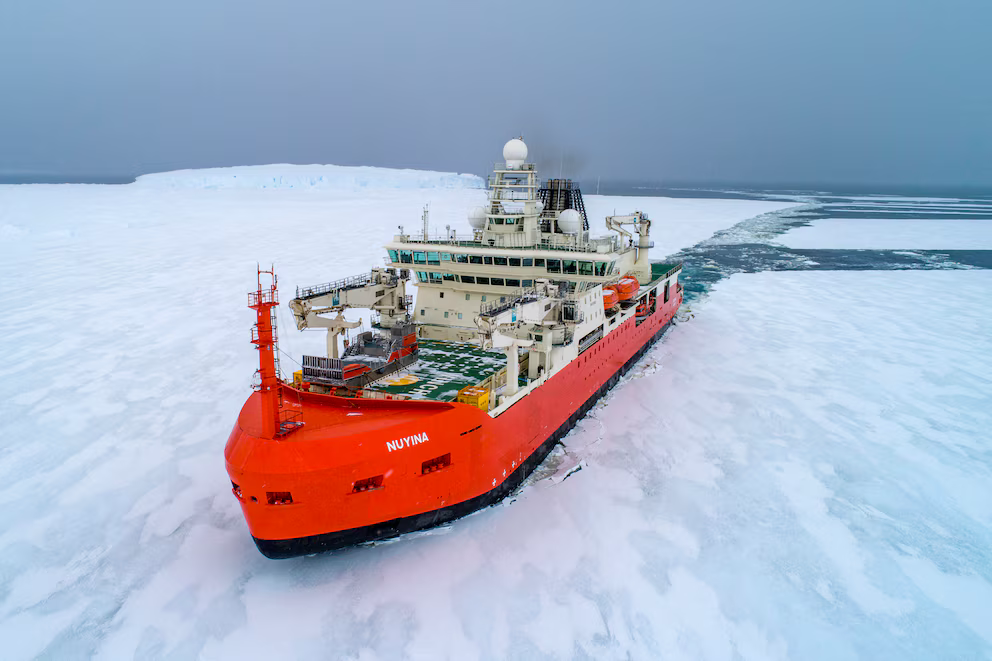
Regional analysts note that the timing reflects a convergence of climate and strategic imperatives. As Arctic ice retreats during summer months, new maritime routes become navigable, prompting Russia and China to deepen their presence via the Northern Sea Route and the so-called Polar Silk Road. The U.S. sees the new fleet as essential not only for escort tasks and emergency response but also for safeguarding its northern sovereignty, including Alaska’s maritime approaches and under-sea sensor networks. One senior U.S. official described the existing capability gap as “a national-security risk we cannot ignore.”
Political responses have been largely supportive but also cautious. U.S. congressional leaders lauded the agreement as “excellent news” for the industrial base and national security, yet some raised concerns about Finland building vessels that will ultimately serve U.S. interests. The Jones Act, which ordinarily requires ships operating between U.S. ports to be built domestically, was noted as having been temporarily circumvented for the Finnish build-phase—an anomaly that may prompt future legislative scrutiny. Meanwhile, Finland sees the deal as a strategic lift for its ship-building industry and a diplomatic signal of its Arctic relevance.

From a diplomatic view, the pact strengthens bilateral ties at a moment when NATO’s northern flank is under increasing pressure and the Arctic region remains contested. In the Oval Office announcement, the two presidents reaffirmed their commitment to uphold international maritime norms and deter unilateral claims over polar waters. Some observers interpret the pact as part of a wider coalition building effort—where maritime capability, resource access and partnership networks converge.
Industry insiders highlight that while the headline figure is eleven ships, the ripple effects will be broader. U.S. yards in Texas and Louisiana have already been earmarked for the production of the later vessels, discovery of niche technologies is underway, and the procurement process is expected to set new benchmarks for ice-class vessel construction. Analysts caution, however, that delivery timelines will be challenging and that Arctic operational readiness may still lag other powers for several years.
Beyond sheer numbers and hulls, the agreement conveys a message about industrial resilience, alliance adaptation and the changing geography of power. For the U.S., it means the Arctic is no longer a peripheral theatre—it is central. For Finland, it means exporting both expertise and influence. Together, they signal that the ice-covered seas of the high north are no longer immutable—they are strategic.
Resilience in the cold frontier. / Resiliencia en la frontera fría.