

 Phoenix 24
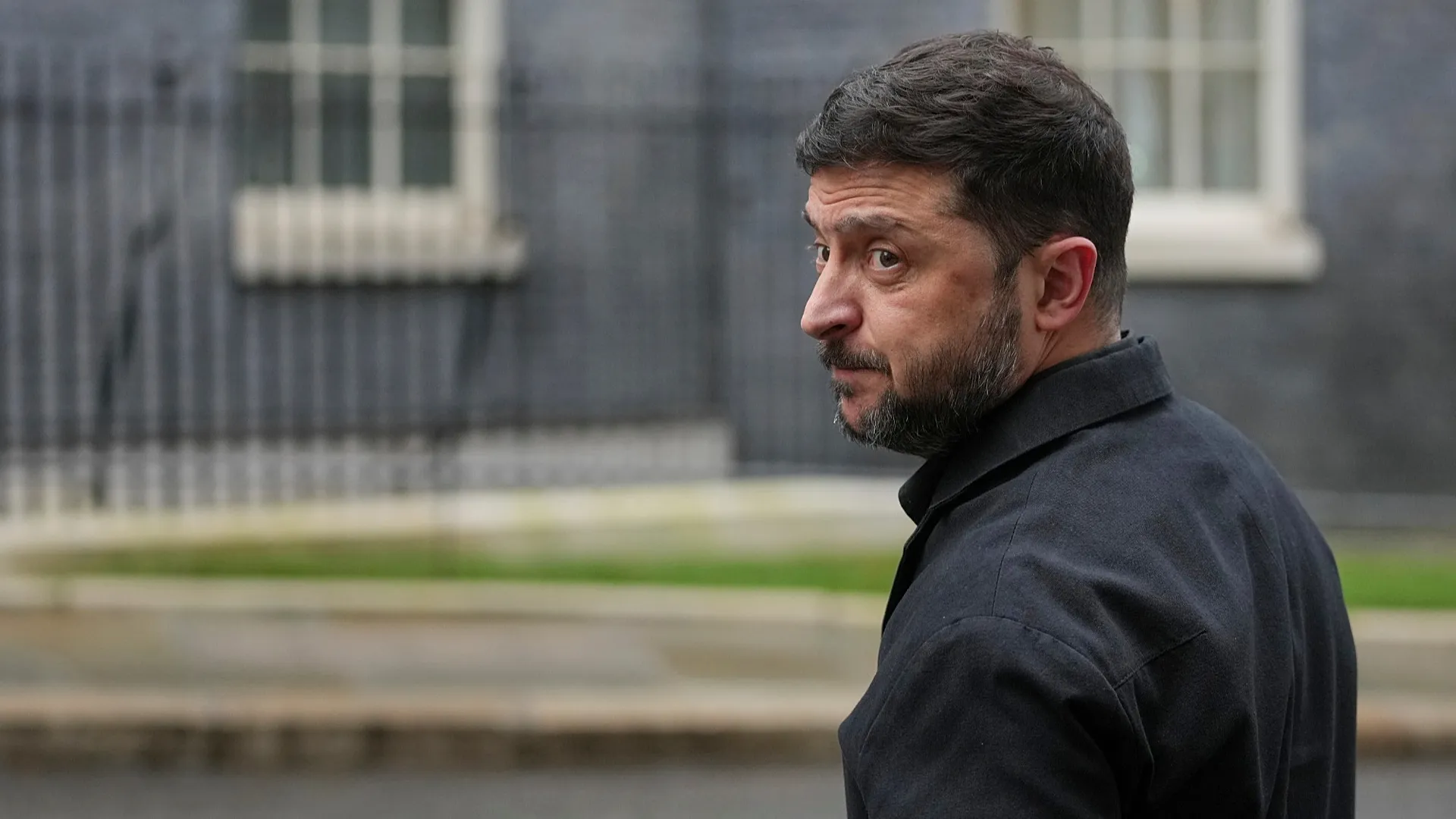
A single question now shadows Ukraine’s political horizon as intensely as the ongoing conflict itself.
Kyiv, December 2025.
Speculation about a national election held under active wartime conditions has reignited debate across diplomatic circles, research institutes and security services. Although constitutional timelines establish clear expectations, the practical landscape is fractured by displacement, infrastructure damage and the psychological burden of a prolonged conflict. Polling data circulating in European and American analytical briefings suggests an electorate torn between loyalty to a wartime leadership and growing fatigue shaped by stalled offensives, tightened economic conditions and shifting alliances within the political elite. The picture is less a forecast than a portrait of accumulated tension in a democracy forced to operate under extraordinary duress.
Major Western think tanks, including assessments indirectly cited by CSIS, indicate that executive continuity retains symbolic weight because of the external threat. Yet this cohesion is no longer uniform. Analysts referenced by the Jacques Delors Institute note that wartime electorates tend to support incumbent leadership while danger feels immediate, but protracted conflict introduces what they describe as strategic fatigue. Surveys illustrate this duality. Expressions of patriotic unity coexist with rising interest in political renewal, a pairing that reflects emotional and structural strain rather than simple electoral preference.
Reuters has reported from several European capitals that opposition blocs have gained visibility, particularly among urban groups seeking alternative economic strategies. However, they still lack the nationwide organizational machinery required to transform fragmented approval into electoral advantage. This imbalance explains why predictive models continue to favor continuity, although with narrower margins and sharper regional variation. In areas most damaged by bombardment, voter behavior becomes even more unpredictable because mobility, communication and local administration operate at irregular levels and are targeted by recurring disinformation campaigns.
Internationally, the possibility of an election is monitored closely in Washington and Brussels. According to analyses attributed to the Congressional Research Service, a sudden political shift could complicate long term military assistance and ongoing financial frameworks, particularly those tied to oversight mechanisms. European observers quoted by Le Monde argue that Ukraine’s accession trajectory to the European Union depends on political stability and institutional resilience, two pillars that would come under scrutiny if an election produced contested outcomes. For Brussels, the image of a steadily modernizing candidate state cannot afford the optics of electoral fragmentation during a war that carries continental implications.
Russia’s role remains the structural variable overshadowing all projections. SIPRI estimates suggest that the cumulative military strain has altered public expectations regarding achievable objectives. This adjustment influences how citizens interpret leadership decisions on the battlefield, on the economy and in diplomatic negotiations. Although analysts disagree on whether exhaustion favors continuity or change, they concur that any wartime election naturally elevates hardline rhetoric while penalizing ambiguous stances toward Moscow. Such conditions compress the political spectrum and magnify perceptions of determination rather than policy nuance.
Observers from the Lowy Institute highlight additional pressures emerging from debates over postwar reconstruction, regional security architecture and Ukraine’s long term economic reintegration with Europe and Asia. These issues, while overshadowed by immediate combat developments, shape the electorate’s underlying expectations. Inflation levels, infrastructure recovery and social programs created during the conflict retain strong influence in public evaluations of leadership. The war is central, but it does not erase other dimensions of governance that voters continue to track.
Logistical constraints form another barrier. Reports attributed indirectly to the Organization for Security and Cooperation in Europe underline that conducting nationwide elections would require secure transportation routes, functional administrative centers and reliable communications systems, all difficult to guarantee under ongoing strikes. A vote held with entire regions partially unable to participate would face immediate questions of legitimacy. Security experts from Citizen Lab warn that digital interference campaigns would likely intensify during any electoral process, exploiting uncertainty to undermine confidence in Ukrainian democratic institutions and amplify narratives favorable to Moscow.
These intertwined pressures reshape the meaning of the initial question. The issue is not merely who would win a hypothetical election, but what winning would signify under wartime fragmentation, how legitimacy would be measured amid mass displacement, and how allies would interpret an unexpected political shift. Despite constant circulation of polling numbers, no foreign government or reputable research institution offers definitive predictions. The uncertainty mirrors the broader reality of a country managing simultaneous military, political and social challenges.
Ultimately, the debate over a hypothetical election captures the complexity of Ukraine’s resilience. It exposes a democracy attempting to preserve institutional continuity under extreme strain, aware that any internal transition echoes far beyond its borders. In this context, electoral speculation is less about results than about the structural pressures shaping Ukraine’s future as it navigates one of the most consequential conflicts in Europe’s modern era.
Phoenix24: journalism without borders. / Phoenix24: periodismo sin fronteras.