

 Phoenix 24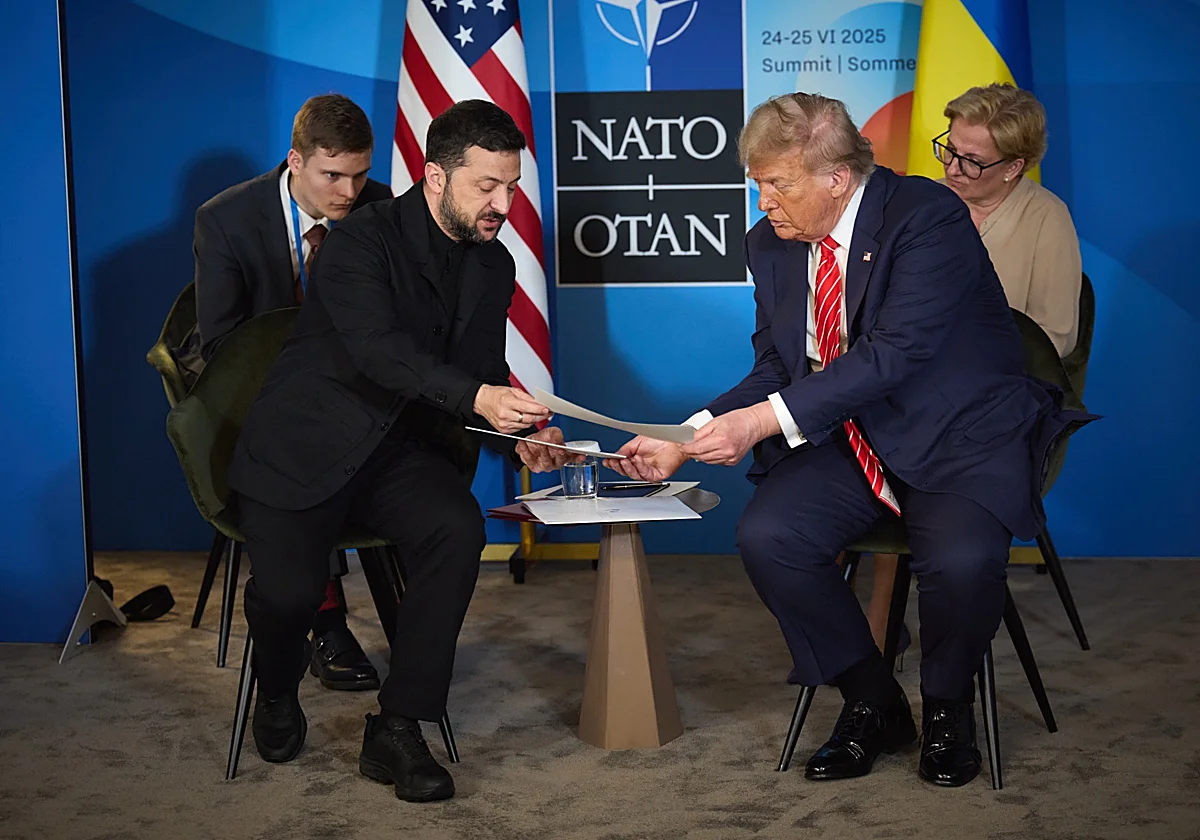
Peace also draws its own borders.
Geneva, November 2025. The confirmation that Ukraine will begin formal consultations with the United States on Swiss soil exposes one of the most delicate moments in Europe’s security landscape since the start of the war. The battlefield has lost monopoly over strategic outcomes, and diplomacy now carries the weight of decisions capable of reshaping alliances, borders and the political balance of an already fractured continent. Ukrainian officials close to the National Security and Defense Council revealed that the purpose of this round of talks is to directly evaluate the American proposal circulated as a twenty eight point peace framework, a document that outlines territorial redefinitions, long term restrictions on military capabilities and a series of guarantees intended to stabilize the region. Kyiv arrives in Geneva with a dual objective: preserve sovereignty while avoiding the erosion of foreign support that has sustained its war effort for years.
The contents of the American draft unsettled major European capitals from the moment they became public. The idea of formalizing Russian control over occupied areas and imposing permanent limitations on Ukraine’s armed forces raised alarms across the European Union, where many view such clauses as the normalization of coercion in international relations. For several governments this would establish a dangerous precedent in which the forceful alteration of borders is rewarded with diplomatic recognition. Others, fatigued by the economic and political weight of a prolonged war, quietly explore the possibility of a compromise that secures immediate stability. These competing visions explain the cautious silence with which Europe follows every move taking place this week in Switzerland.
Across the Atlantic, the United States enters these negotiations driven by a strategic urgency to conclude a conflict that has consumed resources, attention and diplomatic bandwidth. Washington wants Kyiv to consider scenarios that might guarantee a verifiable ceasefire, even if the terms do not resemble the victory once envisioned at the start of the invasion. Yet the American position must also remain consistent with its commitments to the transatlantic alliance at a time when credibility is part of the power calculus. The decision to dispatch high level envoys signals Washington’s intention to craft a definitive narrative for the conflict’s endgame, even if doing so forces difficult compromises.
For Ukraine, the Geneva meeting represents both an opening and a trap. The opening stems from having a direct channel to the country that provides its most significant military and financial assistance. The trap becomes evident if the cost of securing peace includes concessions that weaken the nation in the long term. Ukrainian officials insist that any territorial concession risks emboldening not only Moscow but other actors around the world that are watching how the global system reacts when an invaded state is asked to trade land for stability. Governments in East Asia follow the development with exceptional interest, reading the diplomatic choreography as a preview of how major powers approach conflicts involving asymmetric stakes.
Russia’s shadow remains present despite its absence in Geneva. Many provisions of the American draft reflect gains Moscow has sought since the early phases of the war, which renders the negotiation asymmetric from the outset. If the final agreement solidifies the status quo imposed by force, Ukraine fears it could legitimize a model of coercion that may reappear in other regions. Even without a Russian delegation at the table, its influence permeates each clause and every limitation under discussion. Ukrainian negotiators understand that the consequences of an imbalanced agreement could extend far beyond the present conflict.
Central and Eastern Europe approach the Swiss consultations with growing anxiety. Countries such as Poland and the Baltic states interpret the talks as a critical test of Western resolve against revisionist pressures. From their perspective, accepting conditions that alter borders under military threat signals vulnerability to both Moscow and Beijing. Economic pressures complicate the debate. Several European governments face budget constraints and public fatigue, making an imperfect peace politically tempting if it reduces defense spending and stabilizes energy markets, even at the risk of undermining Kyiv.
Still, Ukraine’s diplomatic narrative seeks to avoid the perception of capitulation. Authorities emphasize that the country will approach the talks with discipline and strategic clarity, insisting that no framework can dismantle its right to self defense or compromise its territorial integrity. Ukrainian diplomats are aware that a weakened military posture could open the door to indirect interventions, disinformation campaigns and renewed coercion. This concern mirrors Washington’s interest in maintaining a balance that does not fracture the foundation of the transatlantic system.
Geneva thus becomes a hinge moment where expectations, doubts and calculations converge. The meeting will not resolve the war on its own, yet it may inaugurate a new phase in which alliances are reshaped, regional stability is recalibrated and the credibility of Western guarantees is tested under pressure. What is accepted or rejected in Switzerland will resonate across Europe, the Americas and Asia, setting a precedent on how power, territory and legitimacy are negotiated in an era defined by strategic ambiguity and shifting influence.
Narrative is power too. / Narrative is power too.