

 Phoenix 24
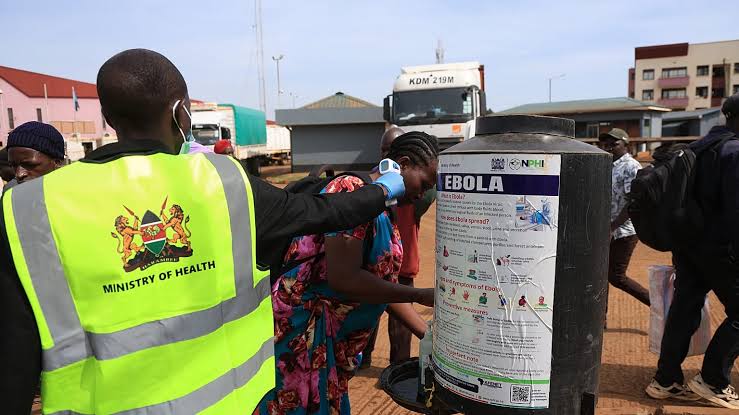
A rapidly expanding outbreak tests Africa’s cross-border health defenses.
GENEVA
Uganda has introduced stricter travel restrictions along its border with the Democratic Republic of the Congo as a Swiss woman diagnosed with Ebola in Nigeria was evacuated to Europe for specialized treatment. The developments highlight the difficulty of containing an outbreak that has spread across national boundaries and placed growing pressure on regional health systems.
The 42-year-old patient was transferred from Abuja to Geneva on October 26 after Nigerian authorities reported a significant improvement in her condition. Her husband, a Swiss diplomat who has shown no symptoms, was also evacuated and placed under medical observation in Zurich.
The woman tested positive for the Bundibugyo strain of Ebola on October 20 after traveling from Uganda to Nigeria. Health officials are investigating where she contracted the virus, and her travel history has not established a definitive source of infection.
Nigeria has identified 53 contacts associated with the case. Medical surveillance remains essential because infected individuals can develop symptoms after an incubation period lasting up to 21 days.
Uganda, which was declared free of its earlier Ebola outbreak in August, announced new border measures on October 25. Citizens returning from the Democratic Republic of the Congo must undergo 21 days of quarantine, while additional restrictions apply to travelers who have recently visited the affected country.
The measures reflect concern about continued transmission in neighboring Congo, where the outbreak has become particularly severe.
According to the European Centre for Disease Prevention and Control, the Democratic Republic of the Congo had reported 9,964 confirmed cases and more than 4,800 deaths by October 25. Eight provinces have been affected, with the outbreak concentrated in the country’s eastern and northern regions.
Kenya has also recorded nine confirmed infections, including two deaths, increasing concerns about cross-border exposure and the importance of timely detection.
The medical evacuation to Switzerland does not mean that Ebola is spreading within Europe. Specialized isolation facilities are designed to manage such patients while minimizing risks to healthcare workers and the public.
European health authorities currently assess the risk of infection among people living in the European Union and European Economic Area as very low.
Ebola is transmitted through direct contact with infected bodily fluids or contaminated materials. People who have been exposed require monitoring, but contact alone does not establish infection.
The outbreak demonstrates how international travel, limited healthcare infrastructure and difficulties tracing transmission chains can complicate epidemic control.
For affected countries, maintaining essential trade and cross-border movement while protecting public health presents a significant challenge.
The immediate priority is identifying infections, protecting healthcare workers and interrupting transmission without allowing uncertainty to produce unnecessary alarm.
The longer-term concern is whether regional surveillance and international assistance can keep pace with an outbreak whose consequences extend beyond any single country’s borders.
Beyond the Headlines, Accountability Matters.