

 Phoenix 24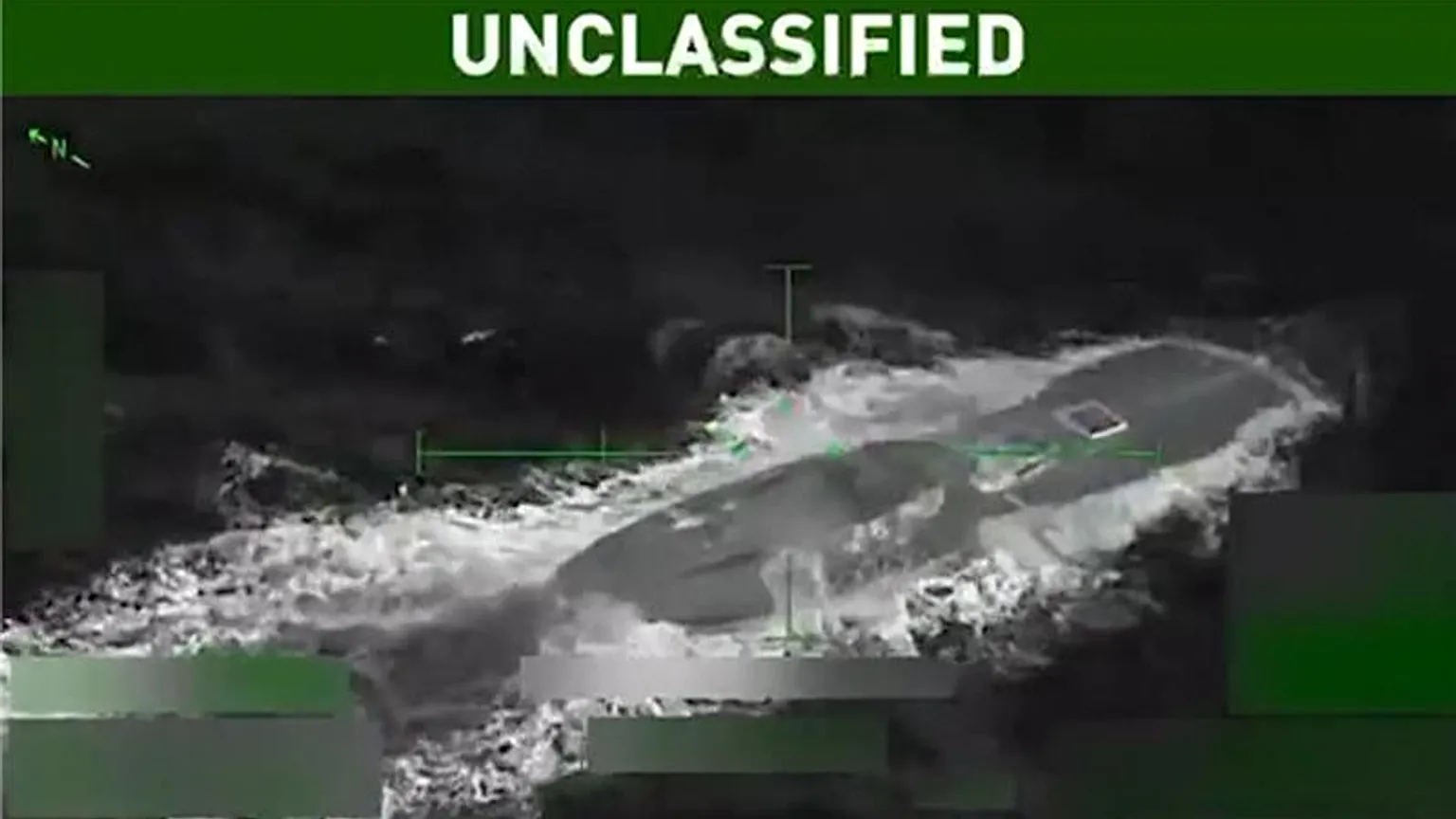
In the Caribbean, even silence can sound like a warning.
Caribbean Sea, October 2025.
A U.S. Navy aircraft launched precision munitions against what Washington described as a “drug-trafficking submersible” navigating international waters north of Venezuela. The short engagement—captured on video and released hours later by the White House—ended with two fatalities and two survivors who, according to U.S. officials, are now under American custody awaiting repatriation.
The incident represents the most forceful application yet of the Trump administration’s policy of militarizing counter-narcotics operations. The Pentagon stated that the semi-submersible was transporting several tons of synthetic opioids and cocaine bound for U.S. ports, classifying the target as a “narco-terrorist vessel.” Defense sources confirmed that the strike was executed under expanded operational directives approved earlier this year, which allow pre-emptive action in maritime zones considered high-risk corridors for organized crime.
In Bogotá, the government of Gustavo Petro requested detailed clarification, noting that at least one Colombian national may have been among the casualties. Officials from the Colombian Foreign Ministry emphasized that any operation of this nature “must respect international maritime law and the right to due process.” Meanwhile, in Caracas, the Venezuelan government accused the United States of “violating regional sovereignty” and warned that the Caribbean “is not a free-fire zone for foreign militaries.”
From Washington, the Department of Defense defended the action as a necessary step to “protect American lives” and deter transnational cartels operating with near-military capabilities. Analysts at the Center for Strategic and International Studies (CSIS) and the Inter-American Dialogue observed that the strike fits within a broader doctrine that blurs the boundary between law enforcement and warfare—treating cartels as hybrid threats rather than criminal entities.
Experts from the Royal United Services Institute (RUSI) in London pointed out that the legal implications are complex: “International law does not currently authorize the use of lethal force against civilian vessels unless there is an imminent threat,” remarked a maritime-law researcher consulted by the institute. In Mexico City, the UN Office on Drugs and Crime (UNODC) urged restraint and transparency, warning that such unilateral actions could escalate regional insecurity.
For local Caribbean governments, the strike revives an old dilemma: how to balance cooperation with U.S. anti-narcotics efforts without compromising sovereignty. Several Caribbean Community (CARICOM) members have privately expressed unease over the lack of prior consultation. A former regional security advisor summarized the sentiment succinctly: “When Washington acts alone, the rest of the Caribbean is forced to live with the consequences.”
Military analysts view the event as part of an evolving pattern. Since August, at least five similar interdictions have been reported in the area between Curaçao and Barranquilla, suggesting a reactivation of smuggling routes displaced years ago by joint operations with Colombia and Costa Rica. Satellite imagery analyzed by independent observers indicates that most of these submersibles are built along the Pacific coast of Ecuador before being towed into the Caribbean.
Human-rights organizations, including Human Rights Watch, questioned the proportionality of the strike and the absence of judicial oversight. “Combatting narcotrafficking does not justify extrajudicial killings at sea,” stated one of its regional directors. The two surviving crew members—reportedly from Colombia and Ecuador—remain detained aboard a U.S. vessel, pending transfer to civilian jurisdiction.
Diplomats from the European Union and Brazil’s Itamaraty called for an investigation under the UN Convention on the Law of the Sea, citing the risk of setting a precedent for unilateral military actions beyond national waters. Meanwhile, regional intelligence networks continue assessing whether the destroyed vessel had links to known criminal consortiums operating out of Central America.
Beyond the immediate military narrative, the episode exposes a deeper transformation: the line between defense and policing in the Americas is dissolving. In the pursuit of traffickers, Washington may be redrawing the boundaries of sovereignty—and, in doing so, rewriting the rules of engagement for the hemisphere.
Phoenix24: analysis that transcends power. / Phoenix24: análisis que trasciende al poder.