

 Phoenix 24
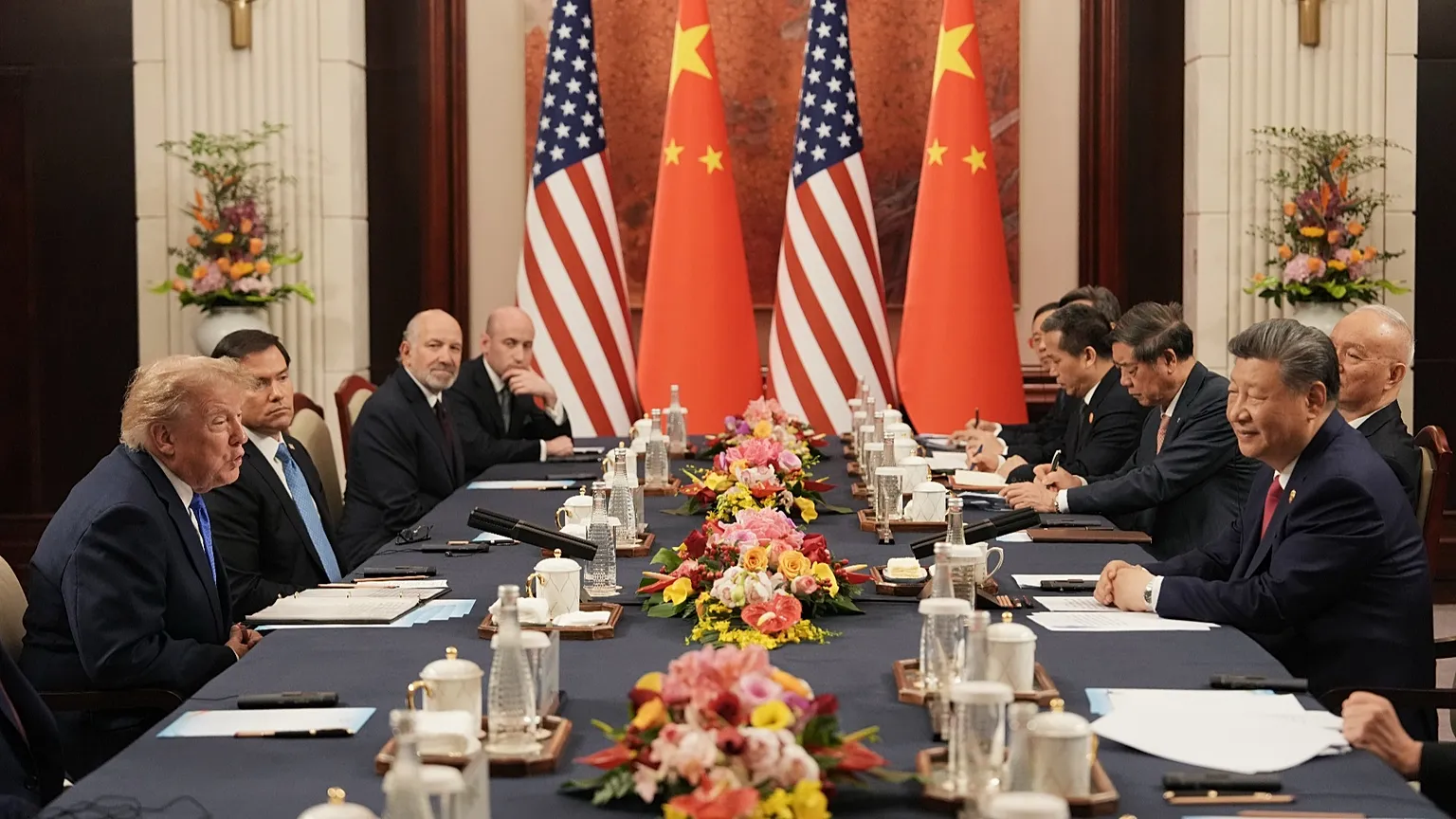
Historic diplomacy produces declarations but no breakthrough.
Shenzhen, China
US President Donald Trump has declared that Washington and Beijing share an interest in helping end Russia’s war in Ukraine, placing the conflict at the center of renewed diplomatic engagement with Chinese President Xi Jinping. The statement preceded an unprecedented trilateral meeting involving Russian President Vladimir Putin in Shenzhen, where the three leaders discussed international security and nuclear risks but failed to announce a concrete initiative to end the fighting.
The gathering took place on the sidelines of the Asia-Pacific Economic Cooperation summit, bringing together the leaders of three nuclear powers at a moment of heightened geopolitical uncertainty. Trump described their engagement as an opportunity to make history, emphasizing the responsibility of major powers to address international crises. Xi similarly stressed the importance of cooperation, while Putin presented the discussions as an opportunity to reinforce international stability.
During his bilateral meeting with Xi, Trump indicated that the United States and China intended to contribute to efforts to resolve the Ukrainian conflict. His comments suggested a willingness to involve Beijing more directly in diplomatic discussions, although no specific mediation framework, negotiating timetable or joint peace proposal was announced.
The subsequent meeting with Putin and Xi lasted approximately 80 minutes and produced a joint declaration addressing several international priorities. The leaders reaffirmed their opposition to nuclear war and expressed support for dialogue on reducing nuclear risks and preventing proliferation. They also addressed United Nations reform, energy supplies and the legal immunity of government officials before international judicial institutions.
The declaration notably omitted any explicit reference to Ukraine, despite the conflict featuring prominently in the diplomatic discussions preceding the summit. It also contained no binding commitments to reduce nuclear arsenals, establish a ceasefire or organize negotiations involving Kyiv and Moscow.
The distinction between diplomatic engagement and substantive agreement is central to evaluating the meeting. While communication among rival powers can reduce uncertainty and create opportunities for future negotiations, statements of shared responsibility do not necessarily indicate agreement over territorial disputes, security guarantees or the conditions required to end an armed conflict.
European governments responded with concern to the prospect of major decisions affecting Ukraine being discussed without direct Ukrainian participation. Leaders meeting separately in Berlin reaffirmed their support for Kyiv and emphasized the importance of European involvement in any future peace arrangements. Their concerns reflect broader disagreements with Washington over how negotiations with Russia should proceed.
China’s participation introduces another diplomatic dimension. Beijing maintains significant economic and political relations with Moscow while simultaneously seeking stable relations with Washington. This position gives China potential influence in international discussions, although its ability or willingness to pressure Russia toward concessions remains uncertain.
For Putin, participation in the trilateral summit offered an opportunity to engage publicly with two major international powers despite continuing Western sanctions and criticism of Russia’s invasion. For Trump, the encounter reinforced his preference for direct leader-level diplomacy, even as questions persist about whether personal engagement can overcome fundamental disagreements.
The summit also highlighted concerns surrounding nuclear arms control following the expiration of the New START treaty earlier this year. Although the three governments endorsed further dialogue, they established no measurable disarmament obligations or timetable for negotiations.
The outcome leaves the central questions surrounding Ukraine unresolved. Any credible peace process would still need to address the positions of the parties directly involved, including territorial sovereignty, security arrangements and the implementation of potential agreements.
The Shenzhen meeting demonstrated that Washington, Beijing and Moscow remain willing to communicate despite substantial differences. Whether that willingness develops into meaningful diplomatic progress will depend on negotiations that extend beyond symbolic declarations and translate political intentions into verifiable commitments.
Power Shapes Narratives. Facts Challenge Them.