

 Phoenix 24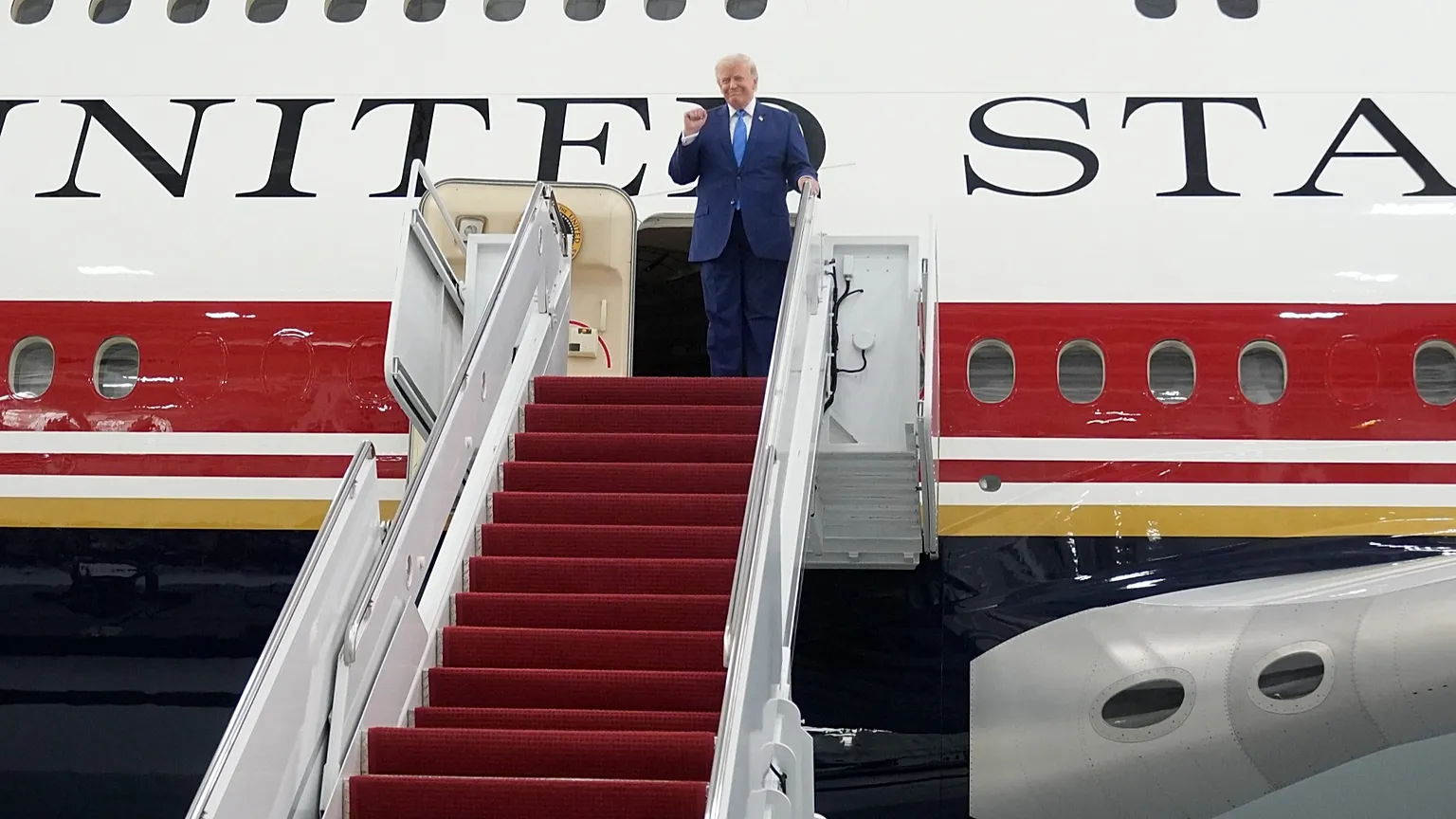
Luxury, security and constitutional questions now share one aircraft.
WASHINGTON, United States | June 2026
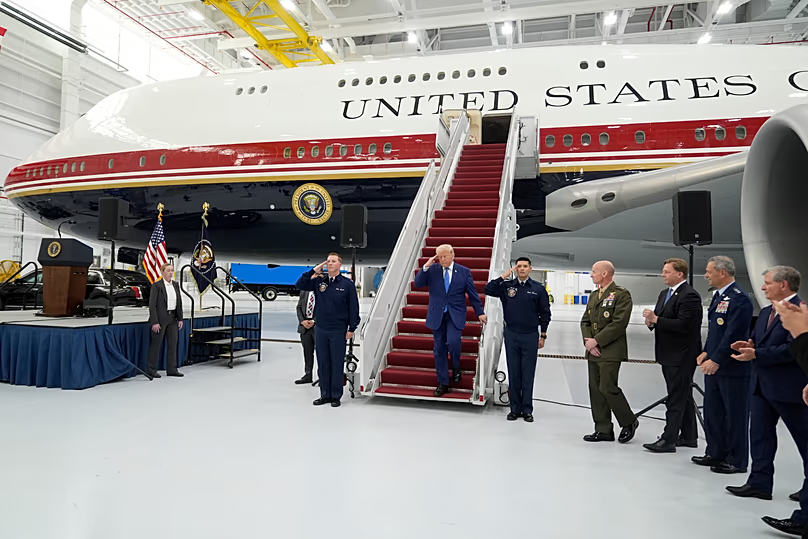
President Donald Trump has presented the luxury Boeing 747 donated by Qatar that is being prepared to serve temporarily as Air Force One. During a visit to Joint Base Andrews, Trump described the aircraft as a flying White House with an unprecedented level of luxury. Its white fuselage, broad red stripe and dark blue underside reflect the color scheme he has promoted for years. The presentation placed the aircraft’s visual transformation alongside continuing questions about security, ethics and foreign influence.
The Qatari jet is intended to transport the president until Boeing delivers the two replacement aircraft already ordered by the United States government. Those planes are currently expected in 2028 after years of delays affecting the presidential-aircraft program. The donated aircraft therefore provides an interim solution to a procurement problem that has frustrated successive administrations. Trump has argued that rejecting such a valuable asset would make little practical sense.
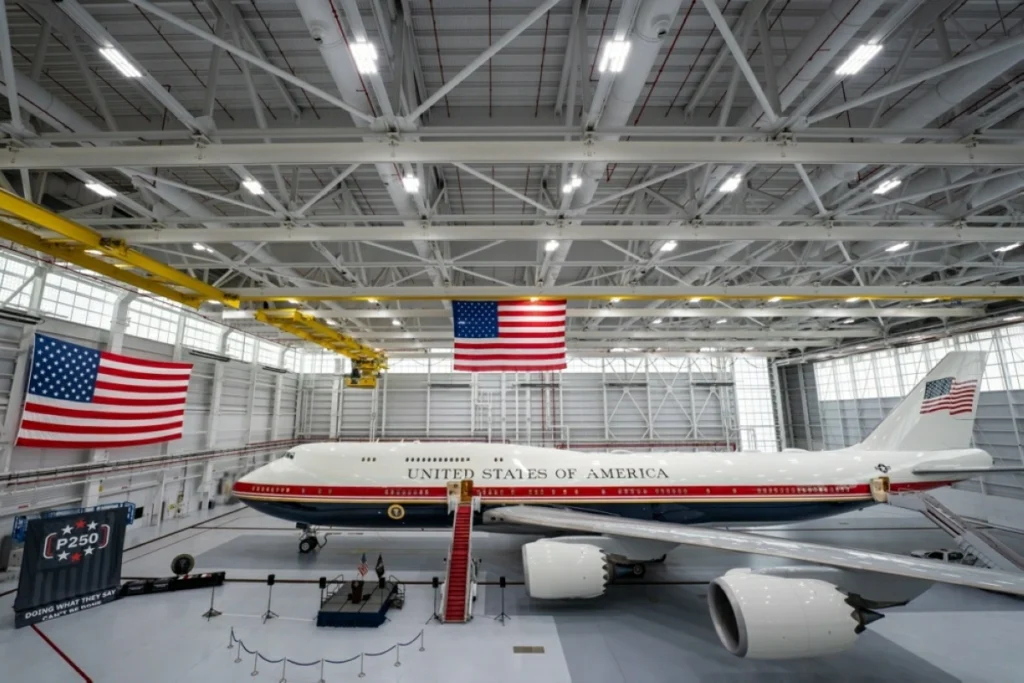
One of the two aircraft that historically served as Air Force One was formally retired after approximately 30 years of presidential service. It completed 223 international journeys to 96 countries and accumulated more than six million miles in flight. Trump said the familiar light-blue design had served the country well but that the moment had arrived for a change. The new paint scheme resembles a model he has displayed in the Oval Office since his first presidential term.
The term Air Force One is technically the call sign assigned to any United States Air Force aircraft carrying the president. In practice, it is closely associated with the specially modified Boeing 747s used for presidential travel. Those aircraft function as airborne command centers rather than conventional passenger planes. They must maintain secure communications, defensive protection and operational continuity during domestic emergencies or international crises.
The donated Boeing is already larger and more luxurious than an ordinary commercial aircraft, but luxury alone cannot qualify it for presidential service. The United States Air Force must examine its structures, electronics, communications systems and operational history before allowing the president to travel aboard it. Testing flights are expected to begin in the coming weeks, followed by a gradual introduction into the presidential fleet during the summer. The timetable will depend on whether the aircraft satisfies extensive security requirements.
Presidential aircraft are equipped to operate in hostile environments and protect their passengers from several categories of attack. Defensive technology can interfere with hostile radar and infrared tracking systems. Chaff dispensers release small metallic strips designed to confuse radar-guided missiles, while thermal flares can divert weapons following heat signatures. The exact capabilities installed aboard the Qatari aircraft will remain classified for national-security reasons.
The conversion process must also address the risks associated with the plane’s foreign ownership history. Security specialists will need to inspect the aircraft for concealed devices, undocumented modifications and vulnerabilities in its electronic systems. Components may have to be removed, replaced or rebuilt to meet American standards. A plane that once served a foreign government cannot simply be repainted and placed into presidential operation.
The financial value of the donation has been estimated at several hundred million dollars. That scale has generated constitutional and ethical questions because the aircraft originated as a gift from a foreign government. Critics argue that the transaction could conflict with restrictions designed to prevent foreign states from providing benefits to American officials. Supporters respond that the aircraft was accepted by the United States government rather than transferred directly into Trump’s personal ownership.
The distinction remains politically contested because Trump has said the aircraft could eventually be transferred to a future presidential library after he leaves office. He has also insisted that he would not use it privately after his presidency. Opponents nevertheless question whether a library connected to a former president should ultimately receive an asset originally provided by Qatar. The future ownership arrangement could determine how legal experts evaluate the gift.
The controversy extends beyond formal constitutional language. Qatar maintains important diplomatic, military and commercial ties with the United States while also pursuing influence through investment and high-level relationships. Accepting an exceptionally valuable aircraft may create the appearance that access or goodwill can be purchased through luxury gifts. Even without evidence of a direct exchange, perceptions of obligation can affect public trust.
Trump has rejected those concerns and framed the aircraft as a practical benefit for the country. His position is that the United States requires a modern presidential plane while the Boeing replacements remain delayed. From that perspective, refusing a usable aircraft would impose additional costs and extend dependence on an aging fleet. The administration presents the donation as state property serving a public function.
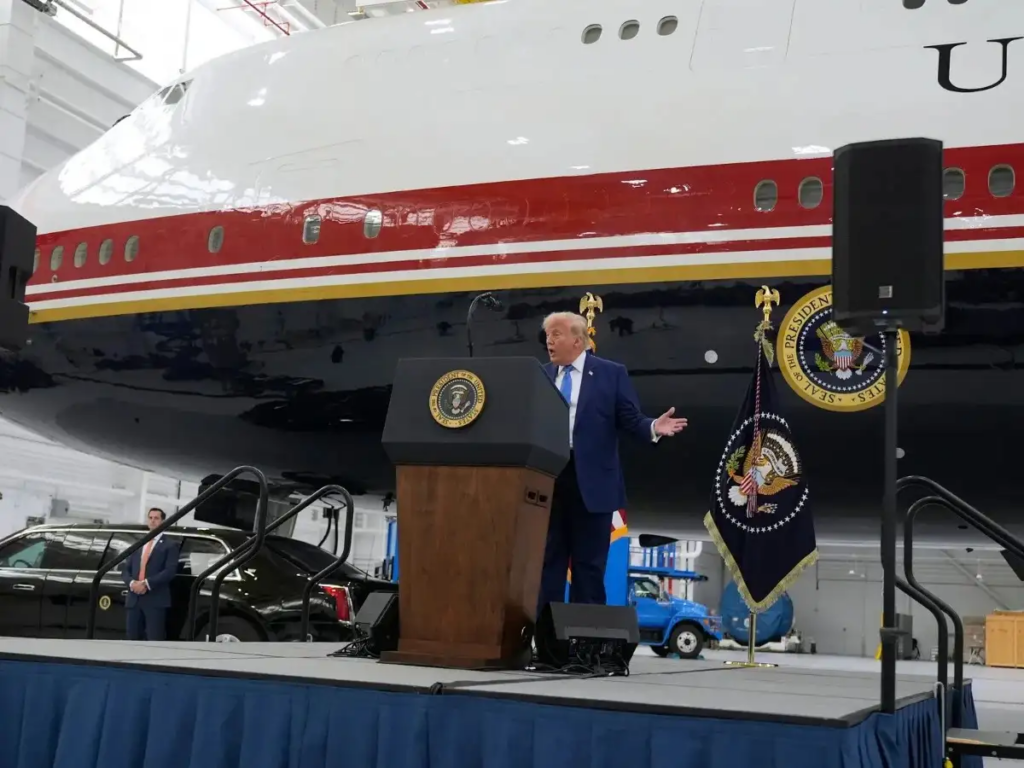
The aircraft also reflects Trump’s longstanding interest in visual symbolism and executive presentation. Air Force One is not only transportation but one of the most recognizable representations of American presidential power. Its arrival at international airports communicates authority before the president appears. Changing its colors and interior therefore becomes part of a wider effort to redefine the image of the presidency.
The luxury description may prove politically complicated as the conversion costs become clearer. Transforming a civilian or government VIP aircraft into a secure presidential platform can require extensive reconstruction. Communications, medical spaces, defensive systems, electrical networks and classified compartments must all meet demanding specifications. The final public expense could reduce the apparent value of receiving the original aircraft without a purchase price.
Boeing’s delayed replacement program remains the underlying reason the temporary aircraft is needed. The company has faced technical, financial and scheduling challenges while modifying two 747-8 aircraft for presidential use. Each must operate with capabilities far beyond those of commercial aviation. The delays have created a gap between the aging current fleet and the arrival of its permanent successors.
The Qatar-donated jet now occupies that gap, combining immediate operational utility with unresolved legal and political risks. Its entry into service will depend on security testing rather than presidential enthusiasm alone. Congress, ethics specialists and national-security officials are likely to continue examining the conditions under which it was accepted. The aircraft may soon become Air Force One, but debate over what it represents will travel with it.
Power is also measured by what it accepts. / El poder también se mide por lo que acepta.