

 Phoenix 24
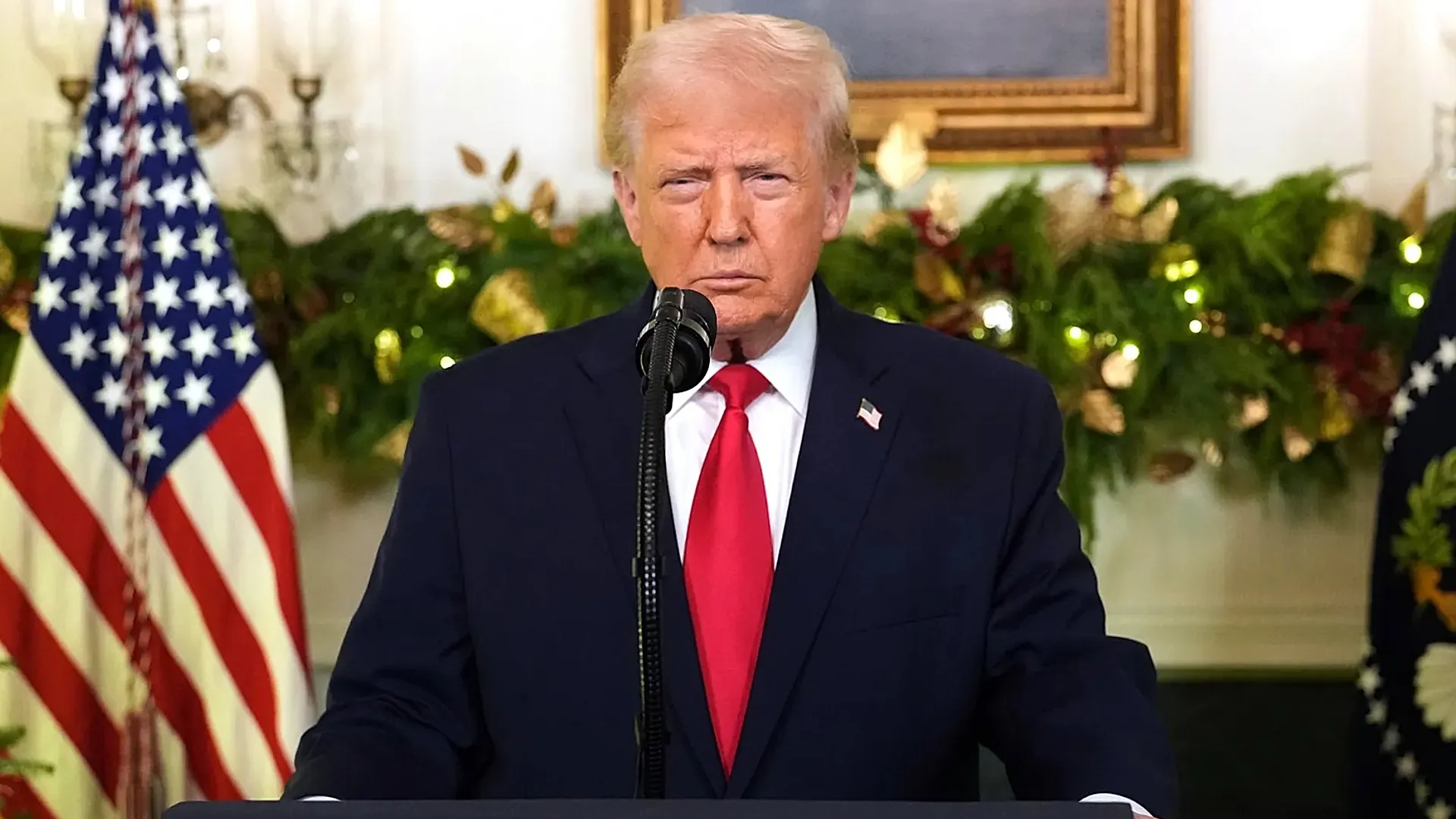
The former president is betting that the midterm cycle will function not only as an electoral contest, but as a structural referendum on leadership, loyalty and the future direction of the Republican Party.
Washington, United States.
As the United States enters 2026, former president Donald Trump has positioned the year as a pivotal test of his enduring political influence and of the Republican Party’s capacity to reorganize itself around a coherent center of gravity. Rather than treating the midterm cycle as a secondary contest, Trump has framed it as a strategic inflection point that will determine whether his movement consolidates institutional power or fragments under internal contradiction.
Since leaving office, Trump has remained an unusually active and polarizing figure in American politics. His interventions in primary races, public messaging and candidate endorsements have functioned as instruments to enforce loyalty and discipline within the Republican ecosystem. In 2026, this strategy intensifies, as Trump seeks to convert personal political capital into structural leverage across Congress, state governments and party leadership bodies.
At the core of Trump’s approach is the belief that control of candidate selection is more consequential than formal leadership titles. By shaping primaries and influencing donor behavior, he aims to ensure that Republican officeholders remain ideologically aligned with his agenda or at least politically dependent on his base. This logic transforms the midterms into a test of internal dominance rather than a conventional competition with Democrats alone.
Trump’s messaging in this cycle emphasizes familiar themes such as economic grievance, immigration enforcement, skepticism toward federal institutions and cultural confrontation. These narratives continue to resonate strongly with a segment of the electorate that perceives political and economic systems as structurally hostile to their interests. At the same time, this approach reinforces fault lines within the Republican Party, particularly among officials and strategists who argue that electoral success requires a broader appeal to suburban and independent voters.
The internal Republican tension is not merely ideological but operational. Lawmakers and candidates face strategic dilemmas about whether alignment with Trump enhances or constrains their viability. In primary contexts, Trump’s endorsement remains a powerful asset. In general elections, however, association with his persona can complicate outreach to moderate constituencies. The 2026 cycle forces these tradeoffs into the open, making ambiguity increasingly untenable.
Trump’s legal challenges further complicate the political landscape. Ongoing investigations and court proceedings do not remove him from political relevance, but they inject uncertainty into long term calculations. For allies, these challenges reinforce a narrative of persecution that mobilizes core supporters. For skeptics, they represent a liability that could destabilize the party’s national standing. Trump’s strategy appears to assume that polarization itself is not a weakness, but a mechanism to maintain dominance over a loyal base.
From an institutional perspective, 2026 also represents a test of whether Trump’s influence can extend beyond personality driven mobilization into durable governance capacity. Endorsed candidates who win office must translate alignment into legislative effectiveness, coalition management and policy delivery. The distinction between loyalty and competence becomes increasingly relevant as Republican officials attempt to govern in contested environments while remaining aligned with Trump’s expectations.
Democrats view Trump’s centrality to the 2026 cycle through a dual lens. On one hand, his presence energizes Democratic turnout and fundraising by providing a clear antagonist. On the other, Republican fragmentation creates opportunities in swing districts where internal divisions weaken campaign coherence. Democratic strategists increasingly frame 2026 as a choice between institutional stability and perpetual political confrontation, a narrative designed to appeal to voters fatigued by sustained polarization.
International observers also track Trump’s positioning with interest. His influence over U.S. policy debates affects perceptions of American reliability, alliance commitments and strategic continuity. The possibility that Trump aligned figures dominate Congress has implications for foreign policy, trade, defense spending and diplomatic posture, even without Trump holding executive office.
The broader significance of Trump’s 2026 bet lies in how it redefines political power in the post presidency era. Rather than transitioning into elder statesmanship, Trump has constructed a parallel authority structure based on media presence, voter loyalty and electoral intervention. This model challenges traditional assumptions about how political influence decays after leaving office.
Whether this strategy succeeds depends on multiple variables beyond Trump’s direct control. Voter turnout dynamics, economic conditions, candidate quality and unforeseen crises all shape electoral outcomes. Yet Trump’s wager is clear. He is treating 2026 not as a moment of consolidation, but as a proving ground that will determine whether his movement evolves into a lasting political force or remains tethered to a single figure.
In this sense, 2026 functions as a referendum not only on Trump himself, but on a broader question confronting American politics. Can a movement built on personalization and confrontation transition into institutional durability, or does its strength inherently depend on perpetual conflict. The answer will shape the trajectory of U.S. governance well beyond the immediate electoral cycle.
Detrás de cada dato, hay una intención. Detrás de cada silencio, una estructura.
Behind every data point, there is an intention. Behind every silence, a structure.