

 Phoenix 24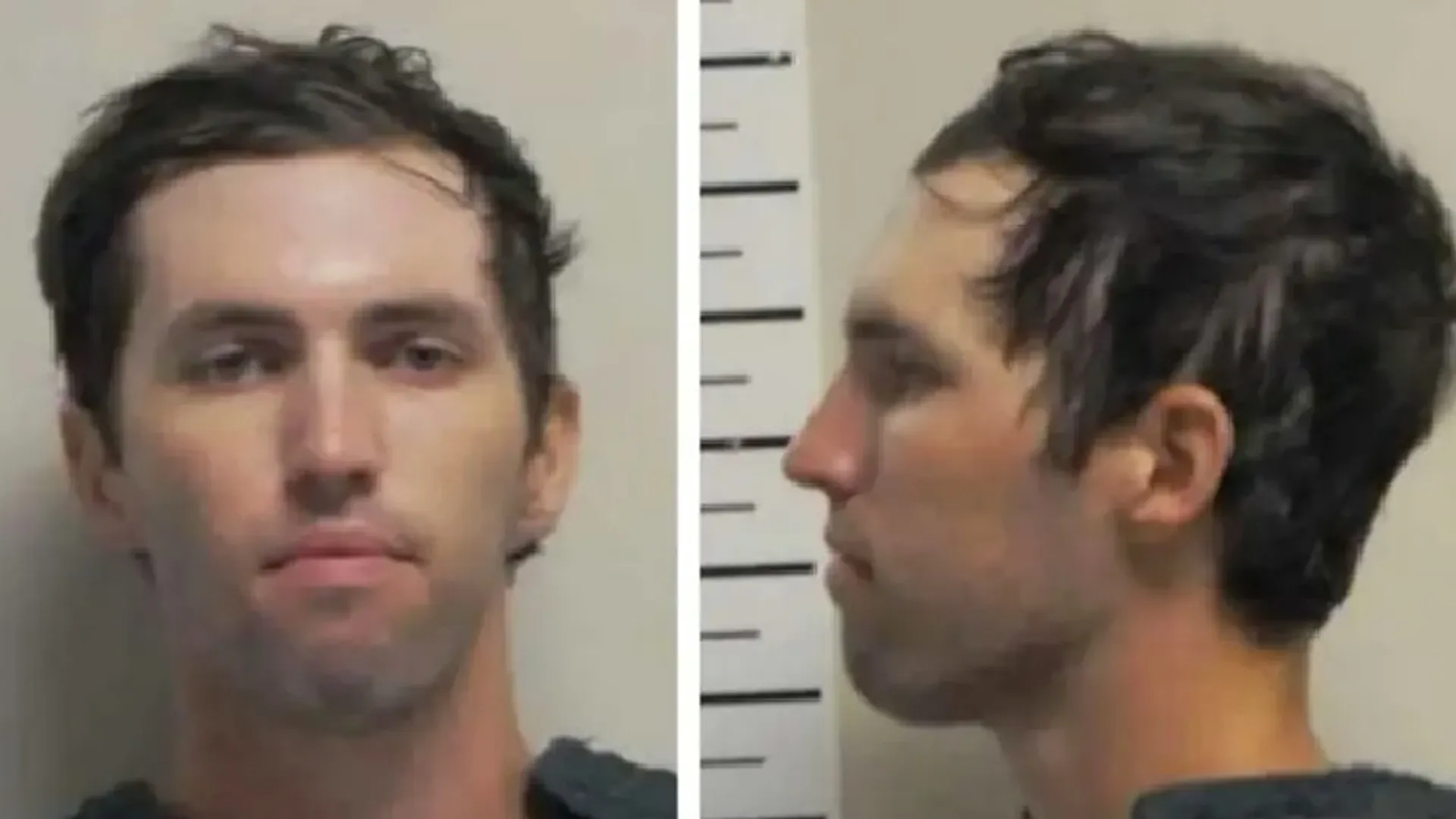
The announcement came with the gravity of a nation already fractured by polarization and uncertainty. Former President Donald Trump declared that federal agents had arrested a suspect tied to the assassination of conservative activist Charlie Kirk, sending shockwaves through Washington and across the United States.
Salt Lake City, September 2025. The FBI identified the suspect as 22-year-old Tyler Robinson, a young man now at the center of one of the most politically explosive cases in recent American history. Trump, in an interview on Fox News, claimed there was a “high degree of certainty” regarding Robinson’s involvement in the crime. Yet officials provided few operational details: how the arrest took place, what evidence led to Robinson, or whether investigators believe he acted alone. Federal authorities confirmed that multiple lines of inquiry remain active, leaving the case surrounded by speculation and an atmosphere of unease.
Charlie Kirk was not merely a political commentator. As the founder and executive director of Turning Point USA, he shaped a generation of conservative activism, particularly on college campuses. At just 31, Kirk had built a movement that fused ideological messaging with sophisticated digital mobilization, turning student rallies into viral campaigns and training programs into electoral pipelines. To many conservatives, he embodied the bridge between grassroots energy and institutional politics. To his critics, he symbolized a strategy of polarizing tactics and relentless cultural confrontation.
The circumstances of his assassination in Utah remain partly unclear. Witnesses reported a sudden and targeted attack, executed with precision. Early reports suggested premeditation rather than a spontaneous act of violence, raising alarms about whether Kirk’s killing was an isolated incident or part of a broader trend of politically motivated aggression. The involvement of a 22-year-old suspect only deepens the mystery, pointing to a generational undercurrent where ideological extremism increasingly recruits the very demographic Kirk once mobilized.
This is not the first time political violence has punctuated America’s fragile democratic ecosystem in recent years. The storming of the Capitol on January 6, 2021, the attempted kidnapping of Michigan Governor Gretchen Whitmer, and multiple attacks on members of Congress have already tested the boundaries of political security. Yet the murder of a figure like Kirk — a rising strategist with strong ties to Trump’s movement — escalates the crisis. It brings into focus not only questions of personal safety for public figures but also the resilience of American institutions under pressure from radicalization and disinformation.
Trump’s rapid intervention in the case is itself significant. By personally confirming the arrest before the FBI released a full statement, he positioned himself once again as both messenger and arbiter in moments of national trauma. For his base, this reinforces the image of Trump as a leader who speaks directly, bypassing institutional filters. For critics, it raises concerns about the politicization of law enforcement processes and the potential to weaponize tragedy in the middle of an electoral season.
The timing could not be more delicate. With the presidential campaign entering its decisive stretch, Kirk’s death creates both an emotional rallying point for conservatives and a potential flashpoint for further unrest. His network within Turning Point USA had become a vital platform for Republican voter outreach, especially among young Americans. The sudden vacuum left by his assassination could reshape strategies, redirect funding flows, and ignite competition over leadership in the movement he built.
Beyond U.S. borders, the assassination is being closely monitored. International observers view it as another signal of democratic volatility in the United States. For allies in Europe and Asia, the question is whether America’s internal fractures weaken its capacity to project stability abroad. For rivals like Russia and China, the optics of political violence feed narratives of American decline. In this way, the killing of Kirk transcends the domestic arena, feeding into the global discourse of a superpower grappling with its own cohesion.
Meanwhile, the FBI’s handling of the case will face intense scrutiny. Questions remain about Robinson’s background, his possible affiliations, and whether authorities missed warning signs that could have prevented the tragedy. Civil liberties groups are already warning against rushed judgments and the risk of painting an entire generation with the brush of extremism. At the same time, conservative commentators insist the assassination confirms their long-standing claims of being systematically targeted by political enemies.
What is clear is that Kirk’s death is more than an isolated act of violence. It is a symptom of a deeper malaise in the American body politic: the normalization of confrontation, the erosion of trust in institutions, and the weaponization of identity in the digital age. As the investigation continues, the shadow it casts will not easily recede. Political campaigns, media narratives, and civic discourse will all absorb its impact, shaping a tense atmosphere that extends well beyond Utah.
Charlie Kirk often described his mission as “arming students with the truth.” His assassination leaves unanswered the question of what truths will emerge from this case — and how they will reshape the trajectory of American democracy.
“Behind every fact, there is an intention. Behind every silence, a structure.”