

 Phoenix 24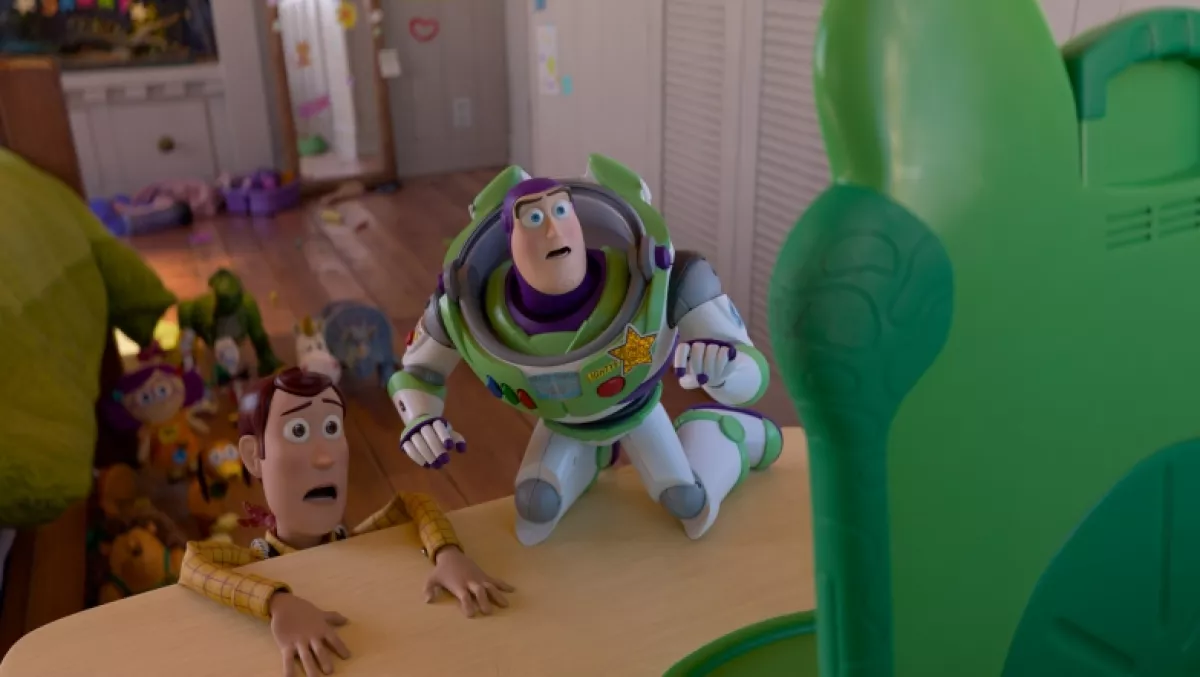
More than 10 million viewers powered its historic opening weekend.
BUENOS AIRES, Argentina | June 2026
Toy Story 5 has become the most-watched film of 2026 in Latin America after attracting more than 10 million moviegoers during its opening weekend. The Disney and Pixar production generated approximately $53.8 million across the region, placing it ahead of every other theatrical release this year. The result confirms the commercial strength of a franchise that began more than three decades ago. It also demonstrates that Woody, Buzz Lightyear and Jessie continue connecting with both longtime followers and new generations.
The film opened in theaters on June 19 and immediately became a major family entertainment event. Its audience combined adults who watched the original Toy Story in 1995 with children experiencing the characters for the first time. That multigenerational appeal gives the series an advantage that few animated properties can match. Parents are not merely accompanying younger viewers, because many have their own emotional history with the toys.
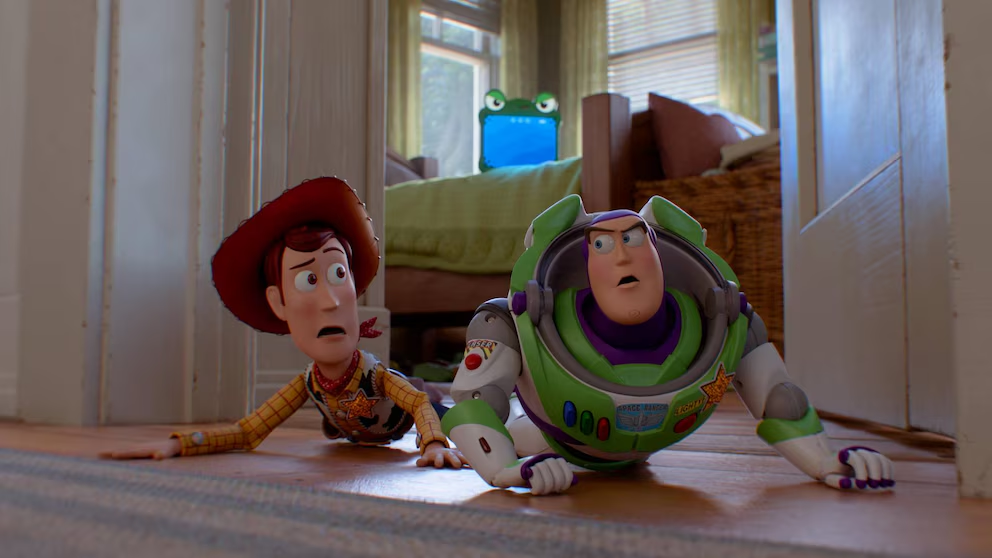
The fifth installment introduces a conflict directly connected to contemporary childhood. Woody, Buzz, Jessie and the rest of Bonnie’s toys confront Lilypad, a tablet device that arrives with strong ideas about what is best for their child. The central challenge is no longer another toy competing for affection, but digital technology transforming how children play. The story places traditional imagination against the attraction of screens without presenting technology as a simple villain.
Greta Lee provides the voice of Lilypad, while Tom Hanks, Tim Allen and Joan Cusack return as Woody, Buzz and Jessie. The film also features a large ensemble of familiar and new performers. Their participation preserves the continuity of characters audiences have followed through multiple life stages. The recognizable voices remain an important part of the franchise’s emotional identity.
Andrew Stanton directs the film and developed its story, with Kenna Harris serving as co-director and co-writer. Stanton has been part of Pixar since its earliest years and contributed to the screenplay of the first Toy Story. His career also includes directing Finding Nemo, WALL-E and Finding Dory. Returning to the franchise gives the new installment a direct connection with the creative team that helped establish Pixar’s storytelling model.
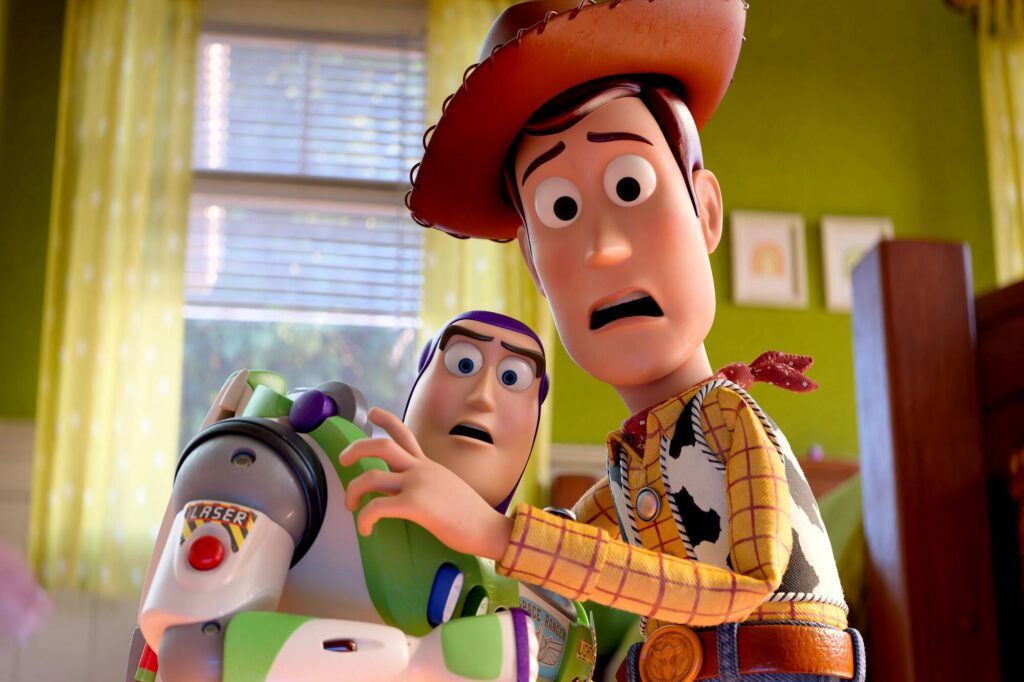
The film’s technological theme reflects a major change in childhood since the original movie was released. In 1995, the central fantasy involved physical toys becoming alive when children left the room. Today, tablets, smartphones and connected devices compete directly with traditional objects for attention. Toy Story 5 uses that transformation to ask whether imaginative play can survive inside an increasingly digital environment.
Pixar’s filmmakers have explained that the story evolved beyond a basic conflict between good toys and harmful technology. Screens are now embedded in education, communication and entertainment, making their complete disappearance unrealistic. The narrative instead explores adaptation and the fear of becoming unnecessary. That emotional concern has defined the franchise from the beginning, even as the source of the threat has changed.
Woody once feared that Buzz would replace him as Andy’s favorite toy. Later films examined abandonment, growing up, separation and the search for purpose after children move on. Lilypad represents another version of that same anxiety, but on a broader cultural scale. The toys are no longer competing only with one another; they are questioning whether children still need them at all.
The opening-weekend numbers suggest audiences were interested in that updated premise. More than 10 million admissions across Latin America indicate significant demand in markets with different languages, ticket prices and theatrical conditions. The $53.8 million regional gross also strengthens the film’s position as one of the year’s largest international releases. Its performance will now depend on whether families continue attending beyond the initial surge.
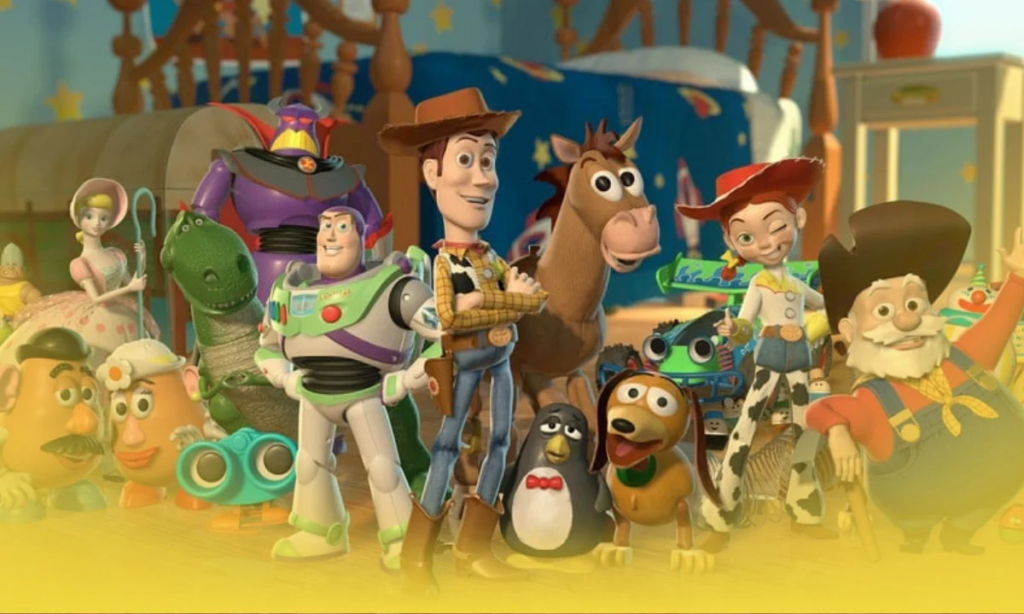
The broader Toy Story franchise has already earned more than $3 billion at the worldwide box office. Its reach also extends through Disney+, where the films collectively account for billions of viewing hours. Consumer products, games, books and themed attractions generate additional commercial value. Four themed areas, numerous rides and dedicated hotel experiences keep the characters visible even between theatrical releases.
This extensive presence helps explain why a fifth film can produce immediate recognition without introducing its world again. Woody’s cowboy hat, Buzz’s space suit and Jessie’s red hair are understood across cultures before the story begins. That familiarity reduces the marketing challenge faced by original animated films. It also creates pressure on Pixar to justify another chapter rather than relying only on nostalgia.
Music remains another important part of the franchise’s identity. Composer Randy Newman returned to score his fifth Toy Story feature, preserving a musical continuity stretching back to the original movie. His work has helped define the emotional balance between humor, adventure and melancholy. Familiar musical elements allow audiences to recognize the world even as the characters confront a new technological reality.
The release is also being accompanied by accessibility initiatives in selected Latin American theaters. Relaxed screenings planned for June 28 will reduce intense visual and sound stimuli for neurodivergent viewers and people with sensory sensitivities. Greater freedom of movement will also be permitted during the presentations. These adaptations seek to make the communal cinema experience accessible to families who may find conventional screenings difficult.
The strong regional opening arrives during an important period for Pixar. The studio continues balancing sequels connected to established properties with the development of original films. Familiar franchises can provide financial stability, especially when theatrical attendance remains unpredictable. However, their success also increases expectations that each new installment must offer a meaningful reason to return.
Toy Story 5 appears to have found that reason by confronting a transformation families already recognize at home. Parents frequently negotiate how much screen time children receive, while toys compete with applications, videos and digital games. The film converts that daily tension into an emotional adventure. Its appeal comes from combining a modern concern with characters that already represent childhood memory.
The opening record does not guarantee that the film will become the year’s final box office leader, because major releases remain scheduled throughout 2026. It nevertheless gives Disney and Pixar a powerful early advantage in Latin America. The film has already achieved the region’s largest audience of the year within only a few days. Its next challenge is turning the opening weekend into sustained theatrical momentum.
More than 30 years after the first film changed computer animation, Toy Story continues adapting to the lives of its audience. The children who once watched Andy play are now raising children surrounded by tablets and streaming platforms. By placing that generational change at the center of the story, the franchise has again connected nostalgia with the present. The record-breaking response shows that audiences are still willing to follow these toys into another stage of childhood.
Stories endure when familiar characters confront a changing world. / Las historias perduran cuando los personajes conocidos enfrentan un mundo cambiante.