

 Phoenix 24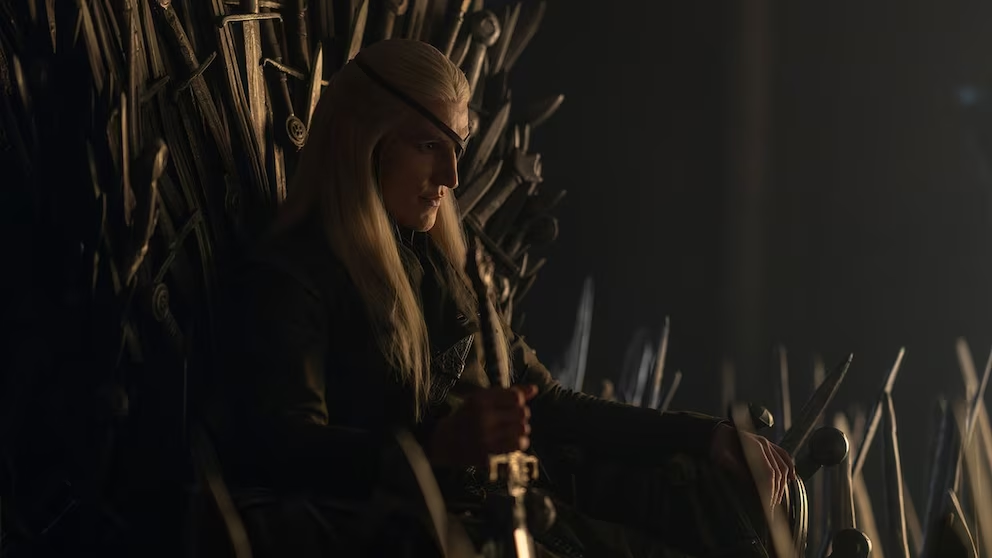
Aemond’s warped affection leaves Alicent trapped in fear.
LONDON, United Kingdom | June 2026
The third season of House of the Dragon opened with one of the most disturbing moments yet in the Targaryen family drama. During a tense private exchange, Aemond Targaryen kisses his mother, Alicent Hightower, on the lips. The gesture shocks Alicent and immediately reframes the emotional imbalance between them. Actors Ewan Mitchell and Olivia Cooke have now explained why the scene was designed to feel so deeply uncomfortable.
Mitchell, who plays Aemond, admitted that the moment made him want to vomit slightly when he first considered its implications. He nevertheless described it as an important acting challenge and an opportunity to reveal a new dimension of the character. The kiss is not presented as ordinary affection or mutual intimacy. It exposes Aemond’s damaged understanding of love, loyalty and power.
The scene appears in the premiere episode, titled Salt and Seas, Fire and Blood. Aemond has assumed control of King’s Landing after the disappearance of his brother Aegon, leaving him with greater authority but also greater isolation. Alicent approaches him while attempting to influence what he does next. Their conversation becomes increasingly dangerous as Aemond senses that her concern may contain a hidden political purpose.
Alicent wants him to leave the capital and move toward Harrenhal, a decision that would create space for Rhaenyra’s forces to enter King’s Landing. Her language must therefore sound maternal while also advancing a strategy that could end the conflict. Aemond appears to recognize that tension beneath her words. Instead of responding with open anger, he crosses an emotional and physical boundary that leaves her almost unable to react.
Mitchell explained that Aemond grew up believing he had not received enough unconditional love from his mother or the rest of his family. That deprivation shaped a distorted self-image and an equally distorted way of expressing affection. He remains emotionally attached to Alicent because she defended him after he lost an eye as a child. For Aemond, that memory became one of the few moments in which he felt completely protected.
The actor described the kiss as an expression of that damaged attachment. Aemond does not understand affection through a stable or healthy emotional framework. Love, dominance, fear and possession have become entangled within his behavior. The scene shows how childhood injury continues influencing the adult prince even when he presents himself as cold and powerful.

Mitchell also reversed an earlier position in which he had resisted describing Aemond as having unresolved maternal issues. After filming the new scene, he acknowledged that the character clearly carries what he jokingly called “mommy issues.” He questioned why anyone would kiss his mother in that manner if the relationship were emotionally balanced. His comments confirm that the moment contains deliberate Oedipal implications.
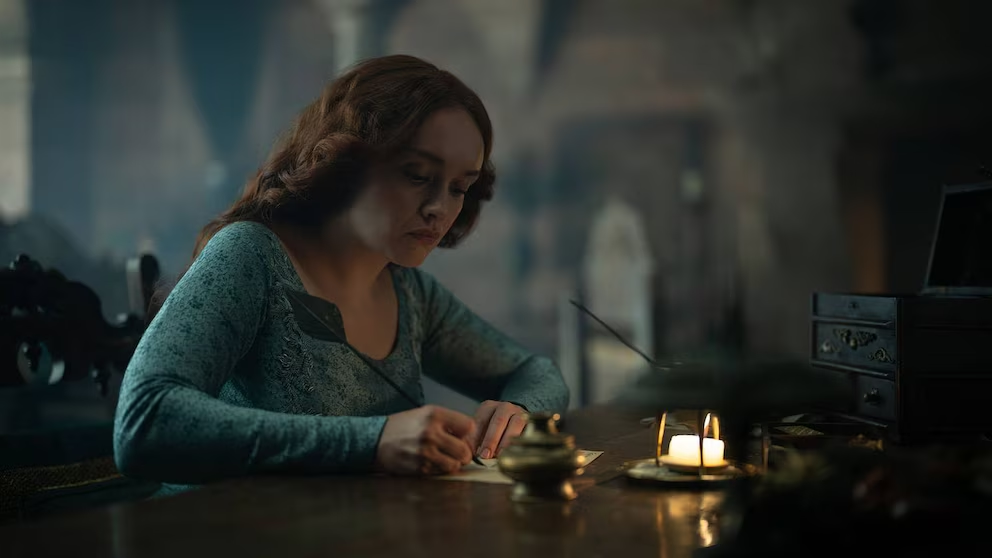
Cooke interpreted the scene entirely from Alicent’s perspective. She described her character’s reaction as pure shock and horror, emphasizing that the gesture is not reciprocated in any way. Alicent had not fully understood how Aemond viewed their relationship until that moment. The kiss forces her to confront a dynamic that had become far more dangerous than she realized.
Her lack of immediate rejection is rooted in survival rather than acceptance. Alicent understands that any visible expression of disgust or resistance could provoke a violent response from her son. Aemond now controls military power and occupies an unstable emotional state. Cooke said Alicent must manage every facial expression carefully because a perceived rejection could cost her life.
That fear transforms the scene from an incestuous shock into a political confrontation. Alicent is not only a mother reacting to an inappropriate act by her son. She is also a vulnerable political figure standing before a ruler who may interpret emotional rejection as betrayal. The intimacy of the moment makes the threat more severe because there is no safe distance between family and authority.
Mitchell said Aemond is frightened despite his outward confidence. He knows that brute force may not be enough to defeat Rhaenyra and her expanding group of dragon riders. His control of King’s Landing does not eliminate his strategic weakness or emotional desperation. Beneath the armor, he remains the injured child introduced during the first season.
The kiss therefore functions as an attempt to assert dominance while seeking reassurance. Aemond wants to become the central authority within the Green faction, but he also wants the maternal devotion he believes was denied to him. Those desires collapse into one disturbing gesture. His need for love appears through behavior that makes genuine love impossible.
For Alicent, the moment also reflects the consequences of decisions made throughout the previous seasons. She helped sustain a political system that placed her children inside a violent dynastic struggle. She defended Aemond, feared him and repeatedly failed to understand how deeply resentment shaped him. The premiere forces her to recognize that the son she once protected has become one of the greatest threats to her survival.
The actors’ reactions demonstrate that the scene was intended to generate disgust rather than romantic intrigue. Its purpose is psychological and political, revealing how the Targaryen civil war has corrupted even the most intimate family relationships. Blood ties no longer provide safety or emotional clarity. They have become another instrument through which characters manipulate, threaten and misunderstand one another.
The moment also establishes the tone for the third season. The Dance of the Dragons is moving beyond disputes over succession and entering a phase defined by desperation, revenge and collapsing loyalties. Characters who once appeared united by family identity are now trapped by it. The war is consuming not only armies and kingdoms, but also the emotional boundaries that once separated parent from child.
Aemond’s kiss leaves Alicent with a terrifying new understanding of the man her son has become. It reveals his longing, instability and hunger for control in a single act. For viewers, the scene is designed to remain difficult to watch because the characters themselves cannot escape its implications. The horror lies not only in the kiss, but in everything it exposes about power inside the family.
Power becomes monstrous when affection is distorted by fear. / El poder se vuelve monstruoso cuando el afecto es deformado por el miedo.