

 Phoenix 24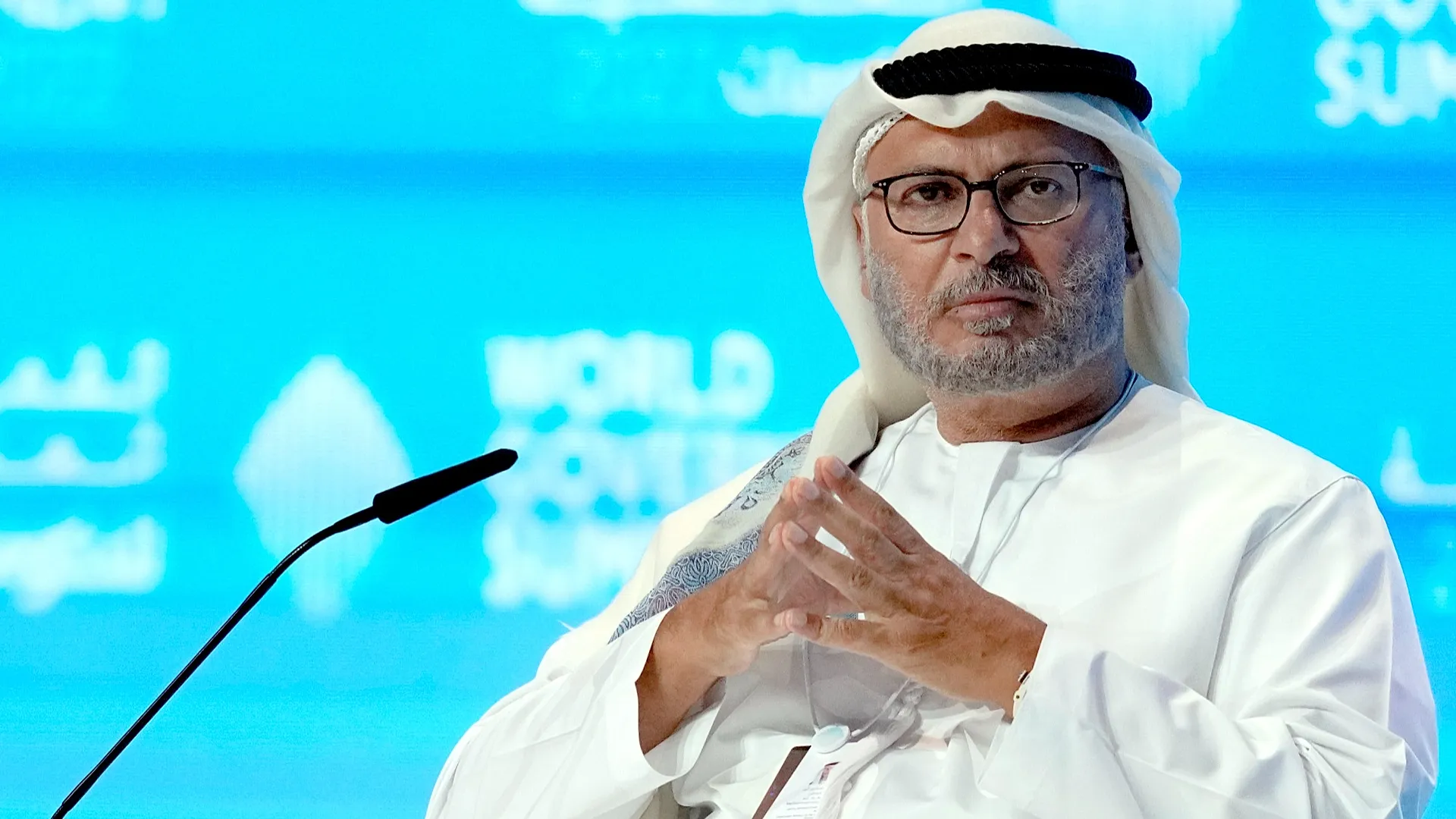
Stopping fire is not the same as building peace.
Abu Dhabi, April 2026. The United Arab Emirates has made clear that a ceasefire in the war with Iran would not, by itself, resolve the crisis now destabilizing the Gulf and the wider Middle East. In remarks published on April 7, senior Emirati official Anwar Gargash argued that the real answer lies in a broader regional security architecture, one capable of addressing not only immediate violence but also maritime navigation, missile systems, and the wider conduct of states in a region where deterrence has become dangerously fragile.
That distinction is more than diplomatic nuance. It reflects a strategic reading of the war in which temporary silence on the battlefield is seen as insufficient if the structural machinery of escalation remains intact. For Abu Dhabi, the problem is not merely that hostilities must stop. The problem is that the current regional order has become too brittle to prevent the next rupture, especially when the Strait of Hormuz can be pressured, global shipping can be disrupted, and missile and drone capabilities continue to redefine coercion across borders.
What the Emirati position reveals is a deeper frustration with the logic of emergency diplomacy. A ceasefire can freeze violence for days or weeks, but it does not automatically rebuild trust, restore navigational security, or neutralize the strategic incentives that produced the war in the first place. Gargash’s formulation suggests that the Gulf states are increasingly unwilling to accept crisis management as a substitute for actual regional design. In other words, the UAE is not asking only how to stop this war. It is asking how to prevent the architecture of the next one.
The Hormuz dimension is central to that view. For Gulf states, the strait is not just a waterway or an energy corridor. It is a geopolitical pressure valve whose instability can instantly globalize a regional conflict. Any settlement that leaves maritime access vulnerable to recurring coercion is, from Abu Dhabi’s perspective, not a peace formula but an intermission. That is why the Emirati message places safe navigation and durable security guarantees near the center of the conversation rather than treating them as technical afterthoughts.
There is also a revealing political signal in the UAE’s language toward Tehran. The argument that there is no real trust in Iran is not simply rhetorical hostility. It is the expression of a security doctrine shaped by repeated cycles of de escalation rhetoric followed by renewed pressure through proxies, missiles, drones, or strategic chokepoints. In that framework, the issue is not whether Iran can sign a ceasefire. It is whether the region believes Iran is prepared to operate under a binding order that limits revisionist leverage. Abu Dhabi’s answer, at least for now, appears deeply skeptical.
This matters because the UAE is not speaking from ideological distance. It is one of the Gulf actors most exposed to the economic and infrastructural consequences of prolonged instability. Its ports, air corridors, logistics systems, investment climate, and urban confidence are all tied to the perception that the Gulf remains governable even under pressure. When Emirati officials argue that a ceasefire is inadequate, they are also defending a model of regional order in which commercial resilience cannot depend on the mood swings of war diplomacy.
The statement also places pressure on Washington and other external actors. Much of the international conversation has revolved around whether Iran will accept a ceasefire, whether the United States will widen attacks, and whether oil markets can withstand another shock. The Emirati intervention subtly reframes that agenda. It says the issue is not only conflict termination, but what kind of security compact will exist the day after guns fall silent. That forces outside powers to confront a harder question: are they trying to end a war, or merely pause one until the next trigger appears.
For the broader Middle East, the warning is sobering. A ceasefire without enforceable rules on missiles, drones, maritime transit, and regional conduct risks becoming a cosmetic solution for a systemic crisis. The Gulf has learned that unresolved strategic ambiguity can be more dangerous than open confrontation, because it creates a false sense of stability while preserving the mechanisms of future coercion. Abu Dhabi is therefore speaking not just as a state seeking calm, but as a regional actor demanding a redesign of the environment itself.
The significance of this position extends beyond the current war. It suggests that some Gulf capitals are moving toward a doctrine of conditional peace, one in which silence on the battlefield has little value unless backed by durable constraints, verifiable commitments, and a security framework that reduces the utility of brinkmanship. That is a higher bar than many mediators prefer, but it is also closer to the strategic reality of a region exhausted by temporary fixes dressed up as breakthroughs.
What the UAE has done, then, is puncture the illusion that ceasefires are inherently synonymous with resolution. In a region shaped by chokepoints, proxy logic, and militarized mistrust, stopping fire may be necessary, but it is nowhere near sufficient. Abu Dhabi’s message is blunt: peace without architecture is just deferred instability, and deferred instability is often the most dangerous kind.
Detrás de cada dato, hay una intención. Detrás de cada silencio, una estructura.
Behind every data point, there is an intention. Behind every silence, a structure.