

 Mario López Ayala, PhD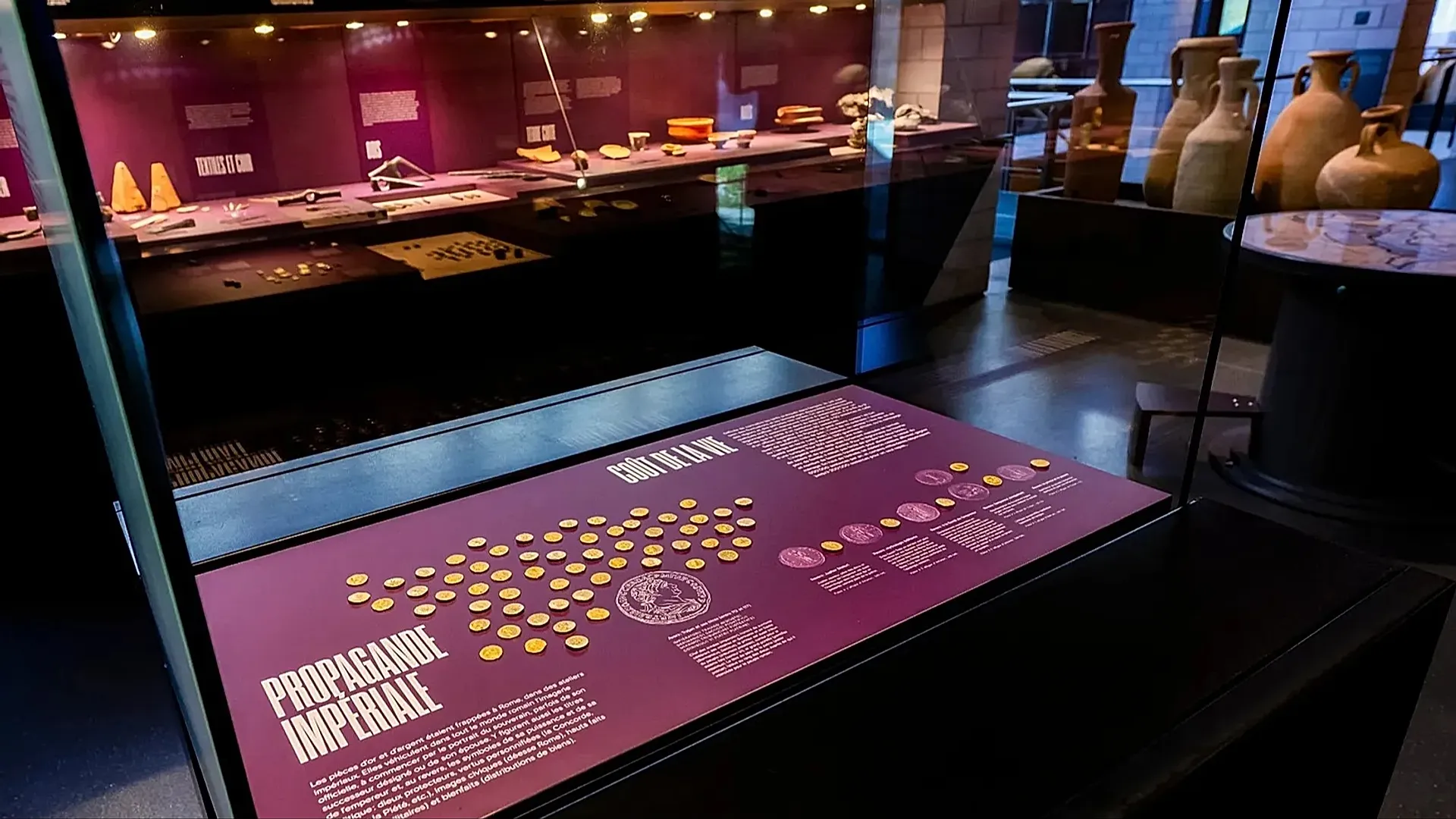
Every stolen object rewrites the memory of a civilization.
Lausanne, Switzerland
The burglary that unfolded inside the Roman Museum of Lausanne was not the kind of criminal episode that leaves behind obvious traces or cinematic flourish. It was quiet, calculated and unsettling in its precision, and within minutes transformed a routine night shift into a case that now circulates among European cultural heritage agencies. Two intruders managed to enter the museum, neutralize the lone security guard and escape with a collection of ancient gold coins whose archaeological value outweighs their monetary weight. The incident reveals not only a lapse in physical protection but a deeper vulnerability shared by European institutions that guard fragile fragments of the continent’s past.
Investigators familiar with the early findings describe the operation as a hybrid between opportunism and expert targeting. The stolen pieces were not random artifacts taken from the nearest display. They were part of a curated ensemble of Roman era gold, items that specialists consider windows into the economic and symbolic systems of the empire. Removing them is not simply the loss of metal but the erasure of primary sources that illuminate how wealth, power and identity circulated in a frontier region of the ancient world.
Within the museum community, the shock is intense. Staff members recount how these coins had become educational centerpieces for guided tours, school visits and academic workshops. They were objects through which children learned the tactile reality of history and through which researchers continued refining chronologies and trade patterns. Their disappearance fractures a pedagogical chain that connected the city of Lausanne to its Roman past and to the broader Mediterranean world.
The method of the break in suggests that the perpetrators had prior knowledge of the museum’s layout and personnel routines. Police sources indicate that the attackers waited for a moment when the guard transitioned between rounds, intercepting him in a corridor with limited camera coverage. He was restrained long enough for the intruders to force entry into a secure display cabinet using small, high torque tools typically employed in professional theft rather than improvised crime. The speed with which they executed the act implies rehearsed coordination rather than impulsive action.
What complicates the investigation is the specialized nature of the stolen goods. Ancient gold coins are extremely difficult to monetize through ordinary criminal markets. Their uniqueness makes them traceable and their sale requires networks that understand the risks involved. This narrows the field of suspects but also suggests that the thieves may have acted on commission for a private collector or a black market intermediary operating across borders. Such actors often operate in cycles, pre identifying objects of interest and contracting skilled teams to extract them from museums with limited security budgets.
For Switzerland, the incident is particularly embarrassing. The country prides itself on its reputation as a guardian of cultural heritage, with institutions known for meticulous preservation and controlled environments. Yet the break in exposes a structural flaw affecting many mid size museums across Europe. Rising operational costs, stagnant public funding and increasing technological requirements have outpaced available resources. Some institutions rely on minimal overnight staffing and outdated surveillance systems, making them vulnerable to precisely the kind of intrusion that occurred in Lausanne.
International observers warn that the event must be understood not as an isolated crime but as part of a growing pattern. Across Europe, trafficking networks have intensified interest in small, high value archaeological items that can be moved discreetly and stored indefinitely. In the digital age, private sales can be arranged through encrypted channels, making detection harder and recovery slower. Museums therefore face a paradox: they are expected to democratize access to cultural heritage while simultaneously hardening their defenses against actors who exploit that openness.
The museum’s administration faces a difficult recalibration. Restoring public trust will require transparent communication, updated security measures and cooperation with national and international agencies specializing in cultural property crimes. However, authorities caution that recovery of the coins may take months or even years. The black market for antiquities moves through opaque networks that disperse stolen pieces quickly, often dismantling entire collections so that individual items vanish across different regions and intermediaries.
The human dimension of the incident should not be overlooked. The security guard, who endured the sudden confrontation, remains under observation. Colleagues emphasize that he acted with professionalism under duress and should not be blamed for systemic vulnerabilities beyond his control. His experience is a reminder that museum security depends not only on equipment but on people whose safety must be prioritized.
In Lausanne, the theft has already triggered debates about the future of cultural stewardship. Some argue that more robust investment in museum protection is overdue. Others raise questions about the ethics of displaying rare objects without ensuring that their preservation is unquestionable. The disappearance of the coins becomes, in this sense, a mirror reflecting Europe’s broader struggle to safeguard its historical memory in an era where cultural assets are both educational treasures and lucrative targets.
The investigation continues as forensic teams analyze traces left behind in corridors, display rooms and access points. But beyond the technical analysis lies a deeper uncertainty. The coins represented more than monetary value. They were anchors of identity, evidence of continuity between the Lausanne of today and the settlements that once stood where the city now thrives. Their absence marks an empty space that cannot be easily filled, a void that speaks to how fragile the guardianship of history can be.
The night was supposed to be ordinary. Instead, it became a reminder that even in peaceful cities, the line between preservation and disappearance can be crossed in moments.
Behind every fact, there is an intention. Behind every silence, a structure.